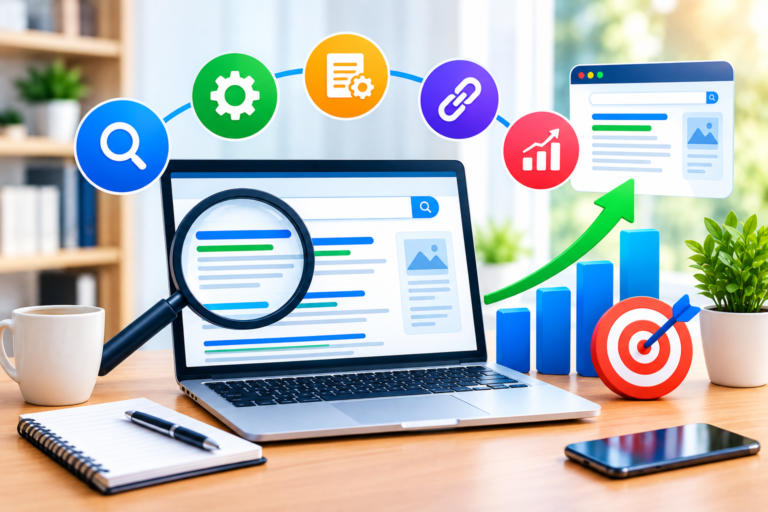

Search Engine Optimization (SEO) is the foundation of digital marketing. Whether you’re running an e-commerce site, a local business, or a personal blog, ranking higher in search results is essential for visibility, traffic, and conversions.
In this comprehensive guide by Appledew UK, we’ll cover everything you need to know about SEO in 2025 — including strategies, tools, and techniques that work today.
What is SEO and Why It Matters
Search Engine Optimization (SEO) refers to the practice of enhancing a website’s visibility in organic (non-paid) search engine results. When users type queries into search engines like Google, SEO determines whether your site shows up — and how high it ranks.
Why SEO matters:
- Increases traffic without paid ads
Increases traffic without paid ads by optimizing your website for search engines through techniques like keyword targeting, content creation, on-page SEO, and backlink building. This organic visibility allows your website to appear in search results when potential customers look for relevant products, services, or information—without the need for ongoing advertising spend. Unlike paid ads that stop generating traffic once your budget ends, SEO delivers continuous traffic as long as your content remains relevant and optimized.
- Improves brand credibility
Improves brand credibility because users tend to trust websites that appear at the top of search engine results. Ranking well on Google signals that your site is authoritative, trustworthy, and relevant to user queries. SEO also enhances user experience by improving site speed, mobile responsiveness, and content structure—all of which contribute to a professional and reliable online presence. As your website consistently shows up in searches, it builds familiarity and trust among your target audience.
- Delivers long-term ROI
Delivers long-term ROI by providing sustained results over time. While SEO requires an initial investment of time and resources, its benefits accumulate and compound. Unlike paid ads that generate short-term results, SEO content can drive traffic, leads, and sales for months or even years with minimal ongoing costs. As your rankings improve and stabilize, your website can become a consistent source of organic business, offering a high return on investment compared to other marketing channels.
- Drives qualified leads and sales
Drives qualified leads and sales by targeting users who are actively searching for what you offer. SEO brings in visitors with specific intent—people looking for solutions, products, or services that match your offerings. This means the traffic is not only higher in volume but also more relevant, resulting in higher conversion rates. By optimizing for commercial keywords and local searches, SEO helps attract ready-to-buy customers, increasing both sales and business growth.
Did You Know?
75% of users never scroll past the first page of Google search results.
How Search Engines Work
Search engines like Google operate in three major stages:
- Crawling: Bots scan websites and collect data.
Crawling is the first step in how search engines understand and discover content on the web. Search engines like Google use automated programs called “crawlers” or “spiders” (e.g., Googlebot) to systematically visit web pages, follow links, and gather information. These bots scan each page’s content, structure, images, metadata, and internal links. If your website is crawlable—meaning it’s accessible without being blocked by a robots.txt file—then these bots can collect all necessary data to move on to the next step. Regular crawling also helps search engines stay updated on any changes or additions to your site.
-
 Indexing: Collected data is stored and organized.
After a crawler visits a page, the information it gathers is processed and stored in the search engine’s massive index—a giant digital database of all web content. During indexing, search engines analyze the page’s content, keywords, structure, and overall context. They decide what the page is about, how it’s connected to other pages, and whether it’s valuable enough to be shown in search results. Factors like mobile-friendliness, loading speed, and duplicate content also affect how well a page is indexed. If a page is not indexed, it won’t appear in search results, regardless of its quality.
- Ranking: Algorithms determine the order of search results based on relevance.
Once content is indexed, search engines use complex ranking algorithms to determine where and how it should appear in the search results for a given query. These algorithms evaluate hundreds of factors, including keyword relevance, content quality, backlinks, page speed, mobile usability, and user engagement metrics. The most relevant and authoritative pages are ranked higher in the search engine results pages (SERPs). Ranking is dynamic—it changes frequently based on content updates, user behavior, algorithm changes, and the competition. The ultimate goal is to deliver the most useful and accurate content to users at the top of the results.
Google uses 200+ ranking factors, including content quality, mobile responsiveness, site speed, backlinks, and user intent.
The goal of SEO is to align your site with these ranking factors.
Types of SEO: On-Page, Off-Page, and Technical
There are three core pillars of SEO:
On-Page SEO:
Focuses on optimizing elements within your website, such as:
- Keywords
Keywords are the specific words and phrases that users type into search engines to find information. In SEO, targeting the right keywords helps your website appear in search results for relevant queries. These keywords should reflect what your target audience is searching for. Proper keyword usage involves placing them naturally in titles, headings, body content, image alt text, and URLs. Using both primary (main) and secondary (related) keywords helps search engines understand the topic and intent of your page.
- Meta tags
Meta tags are HTML elements that provide metadata about your web page to search engines and users. The most important meta tags for SEO include the meta title (which appears as the clickable headline in search results) and the meta description (a brief summary shown below the title). Well-written meta tags improve click-through rates and help search engines determine the relevance of your page. Including targeted keywords in meta tags can also enhance your page’s visibility.
- Headings
Headings (like H1, H2, H3, etc.) organize your content into logical sections, making it easier for both users and search engines to read and understand. The H1 tag should contain the main topic of the page, while H2s and H3s break down subtopics and supporting points. Proper heading hierarchy improves content readability, boosts SEO, and helps crawlers quickly identify the page structure and relevance of each section.
- Content structure
Content structure refers to how your content is organized and presented on the page. A well-structured page includes a clear introduction, body sections with headings, bullet points, visuals, and a conclusion. Structuring content with logical flow improves user engagement and dwell time—important factors for SEO. It also helps search engines extract featured snippets and other rich results from your content.
- Internal links
Internal links are hyperlinks that connect one page of your website to another. They help distribute page authority (link juice) across your site, guide visitors to related content, and improve crawlability for search engines. Strategic internal linking ensures that important pages are easily accessible and indexed. It also helps reduce bounce rate and keeps users engaged longer by encouraging further exploration of your site.
Off-Page SEO:
Deals with activities outside your website to build authority:
- Backlinks
Backlinks are links from other websites that point to your own. They are one of the most important ranking factors in SEO because they act as a vote of confidence, signaling to search engines that your content is valuable and trustworthy. High-quality backlinks from authoritative and relevant websites can significantly boost your search engine rankings. Not all backlinks are equal—those from spammy or irrelevant sites can harm your SEO, while natural, earned links from reputable sources can drive traffic and improve domain authority.
- Guest posts
Guest posts involve writing content for other websites or blogs in your niche in exchange for a backlink to your site. This is a powerful strategy for building authority, expanding your reach, and improving SEO. When done on high-quality, relevant websites, guest posting can drive referral traffic and establish your brand as an industry expert. The key is to provide valuable, original content and include a contextual, non-spammy backlink to your own site.
- Influencer outreach
Influencer outreach is the process of connecting with influential individuals in your industry or niche to promote your content, products, or services. These influencers often have large, engaged audiences across blogs, social media, or YouTube. When they mention or link to your website, it can generate high-quality traffic, backlinks, and brand credibility. Effective outreach involves building genuine relationships, offering value, and creating content that aligns with the influencer’s audience.
- Social sharing
Social sharing refers to the act of promoting your website content across social media platforms like Facebook, Twitter, LinkedIn, Instagram, and Pinterest. While social signals are not a direct ranking factor for SEO, increased visibility and engagement can lead to more traffic, backlinks, and brand recognition. Content that performs well on social media often gets picked up by bloggers, journalists, or other websites, resulting in additional organic backlinks and SEO benefits.
Technical SEO:
Ensures that your website is easy for search engines to crawl and index:
- XML sitemaps
XML sitemaps are structured files that list all the important pages of your website in a format easily readable by search engines like Google. They help crawlers find and index your content efficiently, especially for large websites or those with deep page hierarchies. An updated XML sitemap ensures that new pages, blog posts, and changes are discovered quickly. Submitting your sitemap through tools like Google Search Console improves indexing and search visibility.
- Robots.txt
Robots.txt is a file located in the root directory of your website that tells search engine crawlers which parts of your site they are allowed or not allowed to access. This file is used to control indexing behavior, prevent duplicate content issues, and block access to sensitive directories (like admin areas or login pages). Proper configuration of robots.txt helps optimize crawl budget and ensures search engines focus on the most important content.
- SSL encryption
SSL encryption (Secure Sockets Layer) protects data transferred between a user’s browser and your web server by encrypting the connection. It ensures security, privacy, and trust—especially for sites that collect personal or payment information. Google also considers SSL a ranking factor, so websites using HTTPS instead of HTTP tend to rank higher in search results. Browsers label non-HTTPS sites as “Not Secure,” which can discourage users from staying on your site.
- Core Web Vitals
Core Web Vitals are a set of performance metrics defined by Google that measure real-world user experience. They include Largest Contentful Paint (LCP) for load speed, First Input Delay (FID) for interactivity, and Cumulative Layout Shift (CLS) for visual stability. Optimizing these metrics improves your site’s loading speed and usability—both important for user experience and SEO rankings. Google prioritizes websites that deliver fast, smooth, and responsive performance.
- Mobile-friendliness
Mobile-friendliness refers to how well your website works on smartphones and tablets. A mobile-friendly site adjusts its layout, text size, buttons, and navigation to provide an optimal user experience on smaller screens. Since Google uses mobile-first indexing, it primarily evaluates the mobile version of your site when determining rankings. A responsive, mobile-optimized website improves usability, reduces bounce rates, and is essential for both SEO and user engagement.
Mastering all three areas is crucial for SEO success.
Keyword Research: The Backbone of SEO
Keyword research helps you understand what your audience is searching for.
How to Conduct Effective Keyword Research:
- Use tools like Google Keyword Planner, Ahrefs, or Ubersuggest
To build an effective SEO strategy, it’s crucial to start with proper keyword research using reliable tools. Platforms like Google Keyword Planner, Ahrefs, and Ubersuggest provide valuable insights into what your audience is searching for. These tools help you discover relevant keywords, evaluate their performance, and understand how competitive they are. Google Keyword Planner is ideal for identifying high-volume search terms, while Ahrefs offers advanced features like keyword difficulty scores, backlink analysis, and SERP comparisons. Ubersuggest is user-friendly and helpful for generating content ideas based on keyword trends.
- Identify short-tail and long-tail keywords
 Understanding the difference between short-tail and long-tail keywords is equally important. Short-tail keywords consist of one or two words, such as “marketing” or “laptops.” These are highly competitive and often lack specific intent, making them harder to rank for. In contrast, long-tail keywords are more specific phrases, like “best laptops under $1000 for students.” They have lower competition and are more likely to attract users who are closer to making a purchase or taking action, leading to better conversion rates.
- Analyze search volume, competition, and user intent
When analyzing keywords, it’s essential to evaluate search volume, competition level, and user intent. Search volume tells you how many times a keyword is searched per month. High-volume keywords can drive more traffic but may be harder to rank for. Competition or keyword difficulty indicates how challenging it will be to outrank existing pages. Most importantly, user intent reveals what the searcher is really looking for—whether they want to buy something, find information, or compare options. Choosing keywords that match the right intent ensures your content reaches the right audience.
- Consider local keywords for regional SEO
Lastly, considering local keywords is vital if your business serves a specific geographic area. Regional or location-based keywords like “plumber in Manchester” or “best pizza near Lahore” help target users searching for services in a particular area. These keywords improve visibility in local search results and on Google Maps, making them an essential part of regional SEO strategies. Optimizing for local terms increases your chances of attracting nearby customers who are ready to engage.
Pro Tip:
Use question-based keywords like “how to” or “what is” to target informational queries.
Crafting SEO-Optimized Content
Content is still king — but only if it’s relevant, valuable, and optimized.
Best Practices for SEO Content Writing:
- Focus on E-E-A-T: Experience, Expertise, Authoritativeness, Trustworthiness
Creating SEO-optimized content involves several best practices that improve both search visibility and user engagement. A fundamental part of modern SEO is focusing on E-E-A-T, which stands for Experience, Expertise, Authoritativeness, and Trustworthiness. This framework is emphasized by Google’s Search Quality Evaluator Guidelines and encourages you to publish content written by credible authors with real-world experience and proven knowledge in their field. For example, a cybersecurity blog post is more impactful when authored by a certified security professional or someone with hands-on experience in website protection. Demonstrating trustworthiness—through clear citations, a transparent about page, and secure site practices—further builds reader confidence and search engine favor.
- Naturally integrate keywords in titles, headers, and body
When writing content, it’s important to naturally integrate keywords into critical areas such as titles, headers (H1–H3), and the body of your text. This helps search engines understand the context of your content while keeping the reading experience smooth for users. Keyword stuffing or forced placement should be avoided; instead, the goal is to weave keywords in organically where they make sense.
- Use bold, italic, and highlighting for emphasis
For enhanced readability and to draw attention to key points, use formatting like bold, italic, or highlighting. This not only improves the visual appeal but also helps readers quickly scan through the article and absorb important information. Emphasizing certain words or phrases can also guide users toward calls-to-action or crucial insights.
- Include internal and outbound links
Internal and outbound links are essential for building SEO authority and improving content structure. Internal links help distribute link equity across your website and guide visitors to related pages, boosting engagement and lowering bounce rates. Outbound links to high-authority, trustworthy sources can also improve your credibility in the eyes of search engines. For instance, linking to an official Google support article or a recognized industry blog reinforces the reliability of your own content.
- Add images with ALT text
Lastly, always add images with descriptive ALT text. ALT text not only improves accessibility for users with visual impairments but also allows search engines to better understand the visual elements of your content. Optimized images with appropriate filenames and ALT tags can appear in image search results, driving additional traffic to your site. Alt text should describe the image clearly and, where relevant, include target keywords—without being spammy.
Avoid keyword stuffing and prioritize user readability.
On-Page SEO Elements You Must Optimize
Make sure the following on-page elements are optimized:
- Title Tags: Include primary keyword, keep under 60 characters
Title Tags are one of the most important on-page SEO factors. These appear as the clickable headline in search engine results and should include your primary keyword near the beginning for better visibility. Ideally, keep the title tag under 60 characters to prevent it from being cut off in search results. A well-optimized title tag not only improves ranking potential but also encourages users to click through to your page.
- Meta Descriptions: Summarize content, ~155 characters
Meta Descriptions provide a brief summary of the content found on a webpage. Although they don’t directly impact rankings, they can greatly influence click-through rates. A strong meta description should be around 155 characters, clearly explaining what the user can expect and why they should visit the page. Including a call-to-action and relevant keywords can improve its effectiveness and make your listing more appealing.
- Headers (H1-H6): Structure your content
Headers (H1 to H6) are used to organize and structure content both for readers and search engines. The H1 tag should be used for the main title of the page, and it should contain your primary keyword. Subsequent headers (H2, H3, etc.) break content into readable sections, making it easier for users to scan, and helping search engines understand the hierarchy and topical relevance of the content.
- Image ALT Text: Improves accessibility and image SEO
Image ALT Text is crucial for accessibility and SEO. It provides a textual description of an image for users who rely on screen readers and also gives search engines context about the image’s content. By writing clear, descriptive ALT attributes that include relevant keywords where appropriate, you enhance your site’s image SEO and increase the chance of appearing in Google Image Search results.
- URL Slugs: Use clean, keyword-rich URLs
URL Slugs refer to the specific portion of a URL that comes after the domain name (e.g., yoursite.com/seo-basics). Clean, concise slugs that include relevant keywords help both users and search engines understand what the page is about. Avoid long, confusing URLs filled with numbers or irrelevant words; instead, aim for something like /website-hardening-guide for clarity and SEO benefit.
- Internal Linking: Helps with site navigation and crawling
Internal Linking is the practice of linking to other relevant pages within your own website. This improves site navigation, allowing users to explore related content easily, and helps search engine crawlers discover and index more pages. It also distributes page authority across your site, strengthening the overall SEO structure. A strategic internal linking setup keeps users engaged longer and improves topical relevance in the eyes of search engines.
Each page should target one primary keyword and 2–3 related terms.
Link Building Strategies for 2025
Backlinks are among the top ranking signals for Google. Quality over quantity is the rule in 2025.
Effective Link Building Tactics:
- Guest blogging on high-authority sites
Guest blogging on high-authority sites involves writing informative, high-quality content for well-established websites in your niche. In return, you typically receive a backlink to your own site. This not only improves your site’s domain authority but also exposes your brand to a wider audience. When done correctly—by targeting relevant, reputable websites—it helps build credibility, drive referral traffic, and boost search rankings.
- Creating shareable infographics
Creating shareable infographics is an effective strategy for gaining backlinks and increasing user engagement. Infographics simplify complex data into visually appealing content that people are more likely to share on blogs and social media. When other websites embed your infographic or reference it in their articles, they often link back to your site, improving your backlink profile and enhancing your visibility.
- Building resource pages
Building resource pages means creating a comprehensive, valuable page on your website that others in your industry will want to reference. This could include lists of tools, tutorials, statistics, or step-by-step guides. Once your resource page is live, you can reach out to bloggers, educators, or content creators who might find it useful and request they include it as a reference. This approach earns organic backlinks over time.
- Broken link outreach
Broken link outreach is a white-hat link-building method where you find broken (dead) links on other websites and suggest replacing them with a link to your relevant content. This helps the website owner fix usability issues while earning you a backlink. Tools like Ahrefs or Broken Link Checker can help identify opportunities. It’s a mutually beneficial method that also contributes to better web hygiene.
- Press releases and digital PR
Press releases and digital PR are effective for creating buzz around new products, services, partnerships, or company milestones. By submitting well-written press releases to reputable media outlets or PR platforms, you can generate backlinks from trusted news sources. Additionally, digital PR campaigns—such as interviews, data-driven studies, or media features—can earn high-authority links and significantly boost your online reputation and search engine visibility.
Pro Tip:
Use tools like Ahrefs to analyze competitors’ backlinks and target similar sources.
Technical SEO: Improve Site Performance
Technical SEO lays the groundwork for a healthy, crawlable site.
Technical Essentials:
- HTTPS/SSL: Secure your site with an SSL certificate
HTTPS/SSL involves securing your website with an SSL (Secure Sockets Layer) certificate, which encrypts data transmitted between the user’s browser and your server. Websites using HTTPS are not only safer for visitors—especially during transactions or form submissions—but are also favored by search engines. Google considers HTTPS a ranking factor, and browsers like Chrome mark HTTP sites as “Not Secure,” which can damage user trust.
- Mobile-Friendliness: Ensure responsive design
Mobile-Friendliness ensures that your website is responsive and adapts seamlessly to various screen sizes and devices, especially smartphones and tablets. With mobile-first indexing, Google predominantly uses the mobile version of content for indexing and ranking. A mobile-friendly site improves user experience, reduces bounce rates, and is crucial for SEO success in today’s mobile-centric world.
- Page Speed: Optimize images, use caching, and minify code
Page Speed refers to how fast your website loads for users. Optimizing page speed involves compressing and resizing images, using browser caching, enabling lazy loading, reducing redirects, and minifying HTML, CSS, and JavaScript files. Faster websites provide a better user experience, improve engagement metrics, and are rewarded with higher search rankings by Google’s algorithm.
- Structured Data: Use schema markup for enhanced search features
Structured Data uses schema markup (code added to your HTML) to help search engines better understand your content. This can enhance your appearance in search results with rich snippets, such as star ratings, event times, or product prices. Implementing structured data increases your site’s visibility, click-through rates, and credibility in the SERPs (Search Engine Results Pages).
- Core Web Vitals: Focus on load speed, interactivity, and visual stability
Core Web Vitals are a set of user-centered performance metrics introduced by Google that include:
- Largest Contentful Paint (LCP): Measures loading performance; should occur within 2.5 seconds.
- First Input Delay (FID): Assesses interactivity; users should be able to interact within 100 milliseconds.
- Cumulative Layout Shift (CLS): Evaluates visual stability; content should not shift unexpectedly while loading.
Focusing on these metrics ensures your website provides a smooth, fast, and reliable experience for users, which directly impacts SEO rankings and overall site performance.
Google’s algorithm rewards technically sound websites.
Local SEO for Small and Regional Businesses
Local SEO helps your business appear in “near me” searches and Google Maps.
Steps to Boost Local SEO:
- Create and verify a Google Business Profile
To enhance local SEO, start by creating and verifying a Google Business Profile (formerly Google My Business). This allows your business to appear in local search results and Google Maps, helping nearby customers find your services more easily. Make sure all details—like business name, address, phone number, and hours—are accurate and consistently used across the web.
- Get listed in online directories (Yelp, Bing, etc.)
Next, get listed in reputable online directories such as Yelp, Bing Places, Apple Maps, and industry-specific platforms. These citations strengthen your business’s credibility and improve your chances of appearing in local search results.
- Use local keywords
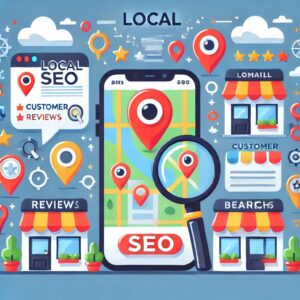 In your content strategy, use local keywords that reflect your city, neighborhood, or service area (e.g., “web design in Manchester” or “London malware removal”). This ensures your site is optimized for people searching within a specific geographic area.
- Collect customer reviews
It’s also vital to collect customer reviews, especially on platforms like Google and Yelp. Positive reviews build trust, influence purchasing decisions, and signal authority to search engines. Encourage satisfied clients to leave feedback, and respond professionally to all reviews to boost engagement.
- Add location schema to your site
Finally, add location-based schema markup (local business schema) to your website. This structured data helps search engines understand your business’s geographic relevance and increases the chances of being featured in local rich results. Including details like your business name, address, phone number, and opening hours in schema format further boosts your visibility in local search.
80% of local searches convert within 24 hours — don’t ignore this.
SEO Tools You Should Be Using
Use these tools to analyze, audit, and optimize your SEO:
Keyword Research & SERP Tracking:
- Ahrefs
Ahrefs is a powerful all-in-one SEO tool used by professionals to analyze websites, track backlinks, explore competitors, and perform keyword research. It provides in-depth insights into a website’s organic traffic, backlink profile, and top-performing pages. Ahrefs also includes a Content Explorer tool to identify high-performing content ideas and a Site Audit feature to uncover technical SEO issues.
- SEMrush
SEMrush is another comprehensive SEO and digital marketing suite that offers tools for SEO, PPC (pay-per-click), content marketing, and competitive research. It allows users to perform keyword research, track keyword rankings, audit websites, and analyze competitor strategies. SEMrush also offers tools for social media management, backlink audits, and on-page SEO optimization.
- Google Keyword Planner
Google Keyword Planner is a free tool provided by Google Ads, designed to help marketers and website owners discover relevant keywords for their content and advertising campaigns. It provides data such as search volume, competition level, and average cost-per-click (CPC). While it’s tailored for paid ads, it’s also valuable for organic SEO planning, helping users find high-traffic, low-competition keywords for their niche.
Technical SEO & Auditing:
- Google Search Console
Google Search Console is a free tool provided by Google that helps website owners monitor, maintain, and troubleshoot their site’s presence in Google Search results. It allows you to submit sitemaps, check indexing status, identify crawling issues, and monitor keyword performance. It also alerts you to critical problems like mobile usability errors, manual penalties, or security issues such as malware or hacking attempts.
- Screaming Frog
Screaming Frog is a desktop-based website crawler used for technical SEO audits. It scans your website’s pages and provides detailed reports on broken links, duplicate content, missing meta tags, page titles, redirects, and more. Screaming Frog is especially useful for identifying structural and on-page SEO issues that might impact your site’s performance and search engine visibility.
- GTmetrix
GTmetrix is a website performance analysis tool that measures page loading speed and provides actionable insights for optimization. It uses data from Google Lighthouse and other sources to analyze Core Web Vitals, page speed scores, and specific elements slowing down your site. GTmetrix offers recommendations such as optimizing images, reducing HTTP requests, leveraging browser caching, and minimizing JavaScript and CSS to improve overall user experience and SEO.
Content Optimization:
- Surfer SEO
Surfer SEO is an advanced content optimization tool that helps you write content tailored for higher rankings in search engines. It analyzes top-performing pages for your target keywords and provides real-time data-driven recommendations, including keyword density, word count, heading usage, NLP terms, and internal linking strategies. Surfer SEO is especially valuable for creating blog posts, landing pages, and service pages that align with Google’s ranking factors.
- Yoast SEO (WordPress plugin)
Yoast SEO is a powerful WordPress plugin that simplifies on-page SEO for website owners and content creators. It provides real-time suggestions to optimize titles, meta descriptions, content readability, and keyword placement. Yoast also supports technical SEO tasks like generating XML sitemaps, managing canonical URLs, and adding structured data for rich snippets. It’s one of the most user-friendly tools for beginners and professionals managing WordPress websites.
- Grammarly for proofreading
Grammarly is a widely used AI-based writing assistant that checks grammar, spelling, punctuation, clarity, and engagement. It’s essential for proofreading blog posts, landing pages, and metadata to ensure your SEO content is polished and professional. Grammarly helps improve readability and reduces the chances of language-related errors, making your content more trustworthy and effective for both users and search engines.
Automation and insights can save you hours of manual work.
Common SEO Mistakes to Avoid
Avoid these SEO pitfalls that can damage rankings:
- Duplicate content
Duplicate content refers to blocks of content that appear on multiple pages within your site or on other websites. Search engines may struggle to decide which version to rank, leading to lower visibility or even de-indexing. It dilutes link equity and can confuse both users and crawlers. Avoiding duplicate content involves using canonical tags, redirecting duplicates, and creating unique, original content.
- Thin content with low word count
Thin content with low word count offers little to no value to users or search engines. Pages with just a few sentences, duplicate product descriptions, or generic information fail to answer user intent and often rank poorly. Google favors in-depth, comprehensive content that thoroughly addresses a topic. Always aim to provide meaningful insights and relevant details.
- Broken links and 404 errors
Broken links and 404 errors damage both user experience and crawl efficiency. Visitors who encounter non-working links or missing pages may leave your site, increasing bounce rates. For search engines, too many 404s can reduce the perceived quality of your website. Regularly audit your site for broken internal and external links, and set up proper 301 redirects when removing or renaming pages.
- Ignoring mobile optimization
Ignoring mobile optimization is a major SEO mistake in today’s mobile-first world. Google predominantly uses mobile-first indexing, meaning it crawls and ranks your site based on its mobile version. If your site isn’t responsive, loads slowly, or displays poorly on smaller screens, you risk losing rankings and traffic. Always test your site on various devices and prioritize mobile usability.
- Overusing keywords
Overusing keywords, known as keyword stuffing, makes content unnatural and spammy. This tactic used to work years ago but now violates Google’s guidelines. Instead of improving rankings, it can lead to penalties or reduced visibility. Focus on natural keyword placement and using semantic terms to support your main topics.
- Buying low-quality backlinks
Buying low-quality backlinks from spammy or irrelevant websites can severely damage your SEO efforts. While backlinks are vital for ranking, quality matters more than quantity. Paid or manipulative links from link farms or unrelated sites may trigger penalties from search engines. Instead, build authority organically through guest posting, content marketing, and genuine outreach.
Always follow ethical (white-hat) SEO practices to avoid Google penalties.
Future of SEO: What’s Coming in 2026 and Beyond
SEO is constantly evolving. Here’s what to prepare for:
- AI-powered search (like Google SGE and Bing Chat)
Search engines are becoming increasingly intelligent with the integration of AI tools such as Google’s Search Generative Experience (SGE) and Bing Chat. These tools use large language models to generate more comprehensive, conversational, and context-aware results. This shift changes how content is found and displayed, prioritizing answers over links. Website owners must focus on semantic search, structured data, and high-quality, authoritative content that satisfies more complex user queries.
- Voice search optimization
With the widespread use of voice assistants like Siri, Alexa, and Google Assistant, voice search is rapidly growing. People tend to use more conversational and question-based queries when speaking instead of typing. For SEO, this means optimizing for long-tail keywords, using natural language, and answering “who,” “what,” “where,” and “how” questions directly within your content. It’s also important to ensure your site loads quickly and is mobile-friendly, as voice searches often occur on mobile devices.
- Video and image SEO growth
Visual content is dominating the web, and search engines are increasingly indexing videos and images. Platforms like YouTube (owned by Google) play a key role in search visibility. Optimizing video titles, descriptions, and transcripts, adding alt text to images, and using structured data for visual elements can help your content appear in video carousels and image packs. Google Lens and visual search tools are also influencing how users discover information through images.
- Increased emphasis on user experience (UX)
Google’s ranking algorithm now heavily considers user experience factors, including page speed, mobile-friendliness, interactivity, and visual stability (as defined by Core Web Vitals). A well-structured, intuitive, and fast-loading website encourages users to stay longer and engage more, which reduces bounce rate and improves rankings. SEO is no longer just about keywords; it’s about delivering valuable, seamless experiences that users love.
- Zero-click results and featured snippets
Search engines are providing answers directly on the results page, often preventing users from needing to click through to a website. These zero-click results include featured snippets, People Also Ask (PAA) boxes, knowledge panels, and local packs. To stay visible, websites need to optimize content to appear in these rich results by answering questions clearly, using proper headings, lists, tables, and schema markup.
Adapt early to stay ahead of the competition.
Final Thoughts
SEO isn’t a one-time task — it’s a long-term investment. At Appledew UK, we help businesses unlock their full digital potential by implementing smart SEO strategies that bring results.
Whether you need a full SEO audit, keyword research, content strategy, or technical cleanup, our team is here to help.
Let’s Optimize Together
Contact Appledew UK today for a free SEO consultation and discover how we can get your website ranking higher, faster.
AI Implementation Prompt:
You are an expert SEO strategist. Using the blog post content provided, create a detailed, actionable plan to optimize a website according to Google Search Quality Guidelines. Include:
- Keyword research with target and long-tail keywords.
- On-page SEO recommendations (titles, meta descriptions, headings, content structure, internal links, ALT text).
- Off-page SEO tactics (backlinks, guest posts, social sharing, influencer outreach).
- Technical SEO improvements (site speed, mobile-friendliness, Core Web Vitals, SSL, structured data).
- Local SEO steps if applicable (Google Business Profile, local keywords, directory listings, reviews).
- Content optimization tips to improve E-E-A-T (experience, expertise, authoritativeness, trustworthiness).
- A checklist of SEO mistakes to avoid.
- Tools and resources to implement these strategies.
- A clear timeline and priority order for execution.
Format the output as a step-by-step plan ready for implementation.
📩 Want professional help implementing this? Contact us via our (https://appledew.co.uk/contact-us/) and Appledew UK will guide you to higher rankings and more traffic.