
Introduction to Website Design and Development
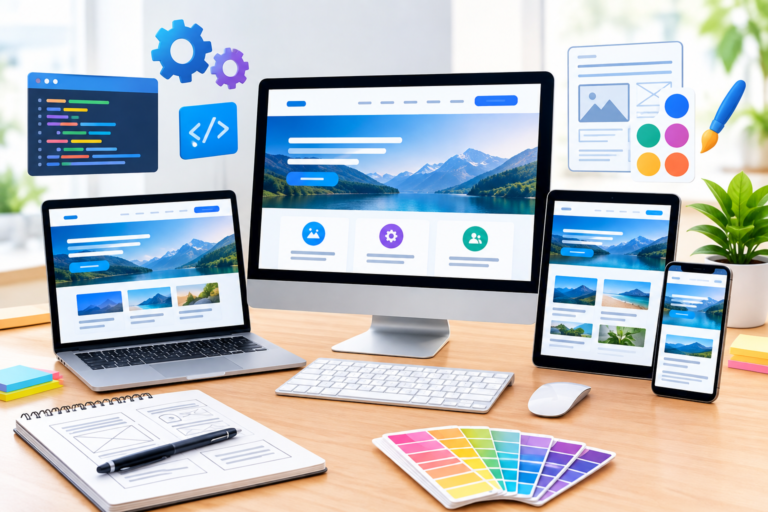
In today’s digital-first economy, website design and development have become the cornerstone of a successful online presence. Your website is often the first interaction a potential customer has with your brand, and in a world where attention spans are shrinking, first impressions matter more than ever. Website design involves the visual and creative side of building a site — the colors, typography, layout, and imagery that communicate your brand identity. Website development deals with the technical implementation, transforming designs into functional, responsive, and interactive platforms.
In 2025, the role of websites has expanded beyond static information pages. Modern sites need to be fast, responsive, secure, and optimized for multiple devices. With the rise of AI, personalization, and interactive features, users expect websites to adapt to their needs seamlessly. A slow-loading page or poor navigation can lead to instant abandonment, making performance optimization critical.
Moreover, the distinction between design and development has blurred. Today’s designers often understand coding basics, while developers are increasingly mindful of aesthetic appeal and user experience. This synergy ensures that websites are both visually captivating and technically robust.
Your website isn’t just a digital asset — it’s your 24/7 business representative. By blending creative design with reliable development, businesses can craft platforms that not only attract visitors but convert them into loyal customers. This comprehensive guide explores every facet of the process, equipping you with insights to create a site that thrives in the modern digital landscape.
The Importance of a Strong Online Presence in 2025
A strong online presence in 2025 is more than just having a functioning website — it’s about establishing a recognizable and trustworthy digital identity. The modern consumer spends most of their decision-making time online, researching products and services before making a purchase. If your business is absent from the digital stage, you risk losing relevance and customers to competitors who have embraced it.
Your website acts as the central hub of your online presence. It connects all your digital channels — social media, email marketing, e-commerce, and even offline marketing campaigns. It’s where potential customers learn about your brand, explore your offerings, and decide whether to engage further. A visually appealing, mobile-friendly, and easy-to-navigate website ensures that these first impressions are positive.
In today’s competitive market, having a website is not enough; it must be optimized for search engines so that people can actually find it. Integrating SEO strategies such as keyword targeting, fast page loading, and structured data markup significantly improves visibility. Additionally, a well-maintained website signals professionalism and reliability, which are critical for building trust.
A strong online presence also future-proofs your business. With technology constantly evolving, your website serves as the foundation for adopting new tools like chatbots, AI-driven personalization, and voice search optimization. In short, your website is not just a marketing tool — it’s an essential element of your brand’s long-term growth and survival.
Understanding the Difference Between Web Design and Web Development
Although web design and web development are closely linked, they require distinct skill sets and serve different purposes in the website creation process. Web design focuses on the look and feel of a site. This involves choosing the right color palette, typography, imagery, and layout to align with brand identity and user expectations. A designer’s role is to create a visually engaging and intuitive user experience that guides visitors smoothly through the site.
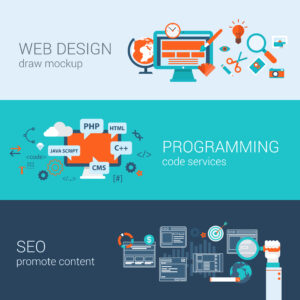 Web development, on the other hand, is about bringing those designs to life using programming languages and frameworks. Developers ensure that every element functions correctly — from clickable navigation menus to interactive features like contact forms or payment gateways. Development can be split into front-end (client-side) and back-end (server-side) work. The front-end deals with everything users see and interact with, while the back-end handles data storage, server operations, and complex functionality.
In 2025, the line between these roles is becoming increasingly blurred. Many designers have basic coding knowledge, and many developers understand design principles. This overlap improves collaboration and efficiency, allowing for a smoother workflow from concept to launch. Recognizing the distinction and interdependence of these roles ensures that a website is both beautiful and functional, delivering a superior user experience.
Core Principles of Effective Website Design
Great website design doesn’t happen by accident — it follows a set of core principles that ensure clarity, usability, and aesthetic appeal. The first principle is visual hierarchy, which arranges elements in a way that naturally guides the user’s attention toward the most important information. This can be achieved through size, color contrast, spacing, and placement.
The second principle is consistency. A cohesive color scheme, typography style, and layout structure help create a unified brand image, making navigation intuitive and enjoyable. Readability is equally important; text should be easy to scan, with legible fonts and appropriate spacing.
White space is another essential principle. It prevents the design from feeling cluttered and gives elements room to breathe. This improves focus and comprehension for the visitor. Responsiveness is now non-negotiable — your design must adapt to different screen sizes and devices without compromising on quality.
Lastly, user-centric design ensures that every decision prioritizes the visitor’s needs and preferences. Designers must think from the perspective of their target audience, crafting experiences that are not just visually appealing but also highly functional. By adhering to these principles, you create a website that is not only attractive but also effective at achieving its purpose.
Choosing the Right Design Layout for Your Brand
Selecting the right design layout is one of the most critical steps in building a successful website. Your layout dictates how information is presented, how users navigate the site, and how your brand’s personality is conveyed. In 2025, layouts are no longer just about aesthetics; they must also enhance user experience, promote engagement, and adapt seamlessly to various devices.
A clean, well-structured layout provides clarity, making it easy for visitors to find the information they need without feeling overwhelmed. Common layout styles include single-page scrolling designs, grid-based structures, and full-screen hero sections. Each has its own strengths and is best suited for specific industries and audience types. For example, a creative portfolio might benefit from a visually dynamic, image-heavy layout, while a corporate website might favor a minimalist, content-focused approach.
It’s also important to consider visual flow — the natural path that a visitor’s eyes follow on a page. Effective layouts guide this flow toward key elements like calls-to-action, forms, or featured products. Incorporating consistent spacing, alignment, and color balance ensures a harmonious look that reflects professionalism.
Ultimately, the right layout should be a reflection of your brand identity. It should communicate your values and make visitors feel connected to your business from the moment they land on the site. Combining creativity with functionality will ensure your layout is both visually appealing and strategically effective.
Responsive and Mobile-Friendly Web Design
In a world where the majority of internet traffic comes from smartphones and tablets, responsive web design is no longer optional — it’s an absolute necessity. A responsive website automatically adjusts its layout, images, and functionalities to fit any screen size, ensuring that visitors enjoy a consistent experience whether they’re browsing on a desktop computer, tablet, or mobile phone.
Mobile-friendly design is not just about resizing content; it involves rethinking how content is presented on smaller screens. Navigation menus should be simplified, buttons should be easy to tap, and text should remain legible without requiring zooming. Additionally, optimizing image sizes and reducing unnecessary scripts helps maintain fast load times, which is essential for mobile performance.
Search engines like Google also prioritize mobile-friendly websites in their rankings, meaning that a lack of responsiveness can directly impact your SEO efforts. In 2025, with more consumers making purchases and engaging with brands via mobile devices, businesses that neglect mobile optimization risk losing significant traffic and revenue.
A truly mobile-friendly design doesn’t just adapt visually; it also considers mobile user behavior. This means creating layouts that emphasize touch interaction, quick access to essential information, and streamlined checkout processes for e-commerce sites. By prioritizing responsive design, you ensure your website is accessible, functional, and engaging for all users — regardless of how they choose to access it.
The Role of UI/UX in Modern Websites
User Interface (UI) and User Experience (UX) design are two crucial elements that work together to create a website that is both attractive and highly functional. UI design focuses on the look and feel of the site, including colors, typography, buttons, and other interactive elements. UX design, on the other hand, is concerned with how users interact with the site — their journey, ease of navigation, and overall satisfaction.
In 2025, the relationship between UI and UX has become inseparable. A visually stunning UI means little if users struggle to find what they need or if navigation feels confusing. Likewise, a site with excellent UX but poor aesthetics may fail to capture and hold attention. Together, UI and UX ensure that a website not only looks appealing but also delivers a smooth, intuitive experience that keeps visitors engaged.
Effective UI/UX design starts with understanding the target audience — their needs, behaviors, and pain points. This insight informs decisions about layout structure, navigation design, content hierarchy, and interaction patterns. Modern tools and analytics allow designers to test and refine these elements continuously, ensuring optimal usability.
Ultimately, great UI/UX design increases engagement, reduces bounce rates, and boosts conversions. By prioritizing both aspects equally, you can create a digital environment where users feel comfortable, confident, and compelled to return.
Website Speed, Performance, and Optimization
Website speed is a major factor in both user satisfaction and search engine rankings. In today’s fast-paced digital world, visitors expect websites to load in under three seconds — anything slower can lead to increased bounce rates and lost revenue. Performance optimization ensures that your site delivers content quickly and efficiently, regardless of device or network speed.
Several factors influence website speed, including server response time, image optimization, browser caching, and the use of content delivery networks (CDNs). Large, uncompressed images, unnecessary code, and poorly optimized scripts can all slow down performance. Regularly auditing your site and implementing technical improvements is essential to maintaining optimal speed.
Search engines reward fast-loading websites with better rankings because speed directly impacts user experience. In 2025, Google’s Core Web Vitals play a critical role in determining search visibility. These metrics measure aspects like loading speed, interactivity, and visual stability, all of which contribute to a site’s overall usability.
Improving website performance not only benefits SEO but also enhances conversions. Users are far more likely to complete purchases or inquiries on a site that loads quickly and operates smoothly. By prioritizing speed and optimization, you create a frictionless experience that keeps visitors engaged and satisfied.
Latest Design Trends for 2025
In 2025, website design is more innovative, immersive, and user-focused than ever before. One of the biggest trends is AI-driven personalization, where websites adapt content and layouts in real time based on user behavior. This level of customization increases engagement and creates a unique browsing experience for every visitor.
 Another major trend is immersive 3D design and animation, made possible by advances in browser technology. Subtle 3D elements, interactive animations, and depth effects can create a highly engaging visual experience without overwhelming the user. Designers are also embracing minimalist, content-first layouts that focus on clarity and reduce distractions, ensuring that the most important information stands out.
Dark mode continues to grow in popularity, offering a sleek and modern aesthetic while reducing eye strain. Meanwhile, microinteractions — small animations triggered by user actions like hovering over a button — enhance usability and delight. Accessibility is also driving trends, with inclusive designs that cater to users with disabilities becoming a standard rather than an afterthought.
In addition, there’s a growing emphasis on sustainability in web design. Lightweight, fast-loading websites not only perform better but also reduce energy consumption, aligning with environmental responsibility. By staying ahead of these trends, brands can create websites that feel modern, functional, and memorable in a competitive digital landscape.
SEO-Friendly Website Development Strategies
An aesthetically pleasing website is meaningless if no one can find it, which is why SEO-friendly website development is essential. Search Engine Optimization (SEO) starts at the development stage, not after launch. In 2025, developers integrate SEO principles directly into a site’s structure to maximize visibility from day one.
Key elements include creating clean, semantic code that search engines can easily read, implementing fast-loading frameworks, and ensuring mobile responsiveness. Proper use of header tags, descriptive meta titles, and keyword-rich URLs helps search engines understand the site’s content. Internal linking structures guide both users and search bots, improving navigation and crawlability.
Schema markup is another powerful tool, enabling rich snippets in search results that increase click-through rates. Optimizing media by compressing images and using next-gen formats like WebP boosts site speed, which is a ranking factor. Developers also integrate SSL certificates for secure browsing, as Google prioritizes HTTPS websites.
By combining technical SEO with quality content creation, you lay a strong foundation for long-term organic traffic growth. SEO-friendly development is not a one-time task; it requires ongoing monitoring, updates, and improvements to keep pace with evolving algorithms. In essence, building with SEO in mind ensures your website is not just beautiful and functional but also highly discoverable.
The Importance of Secure Website Development
Security is no longer an optional feature — it’s a fundamental necessity in website development. With cyber threats becoming more sophisticated, businesses must prioritize protecting both their own data and their customers’ information. In 2025, secure development practices are integrated from the very start of a project, rather than being added later as a patch.
This includes implementing SSL encryption for all data exchanges, using secure coding practices to prevent vulnerabilities like SQL injection or cross-site scripting, and regularly updating software and plugins to close security gaps. Developers also configure firewalls, intrusion detection systems, and backups to safeguard against attacks.
E-commerce websites, in particular, must comply with PCI DSS standards to protect payment information. Beyond technical measures, educating staff on cybersecurity best practices is equally important, as human error remains a leading cause of breaches.
Search engines and users alike prioritize secure websites. Google explicitly marks insecure sites as “Not Secure,” which can deter visitors instantly. Security is also tied to brand reputation — a single breach can damage customer trust for years. By embedding robust security measures into your development process, you not only protect your business but also signal professionalism and reliability to your audience.
Integrating E-Commerce Functionality
E-commerce has become a dominant force in global trade, and integrating e-commerce functionality into your website can significantly boost revenue potential. Whether you’re selling physical goods, digital products, or services, an online store expands your reach beyond geographical limitations.
In 2025, the best e-commerce integrations focus on simplicity, security, and personalization. This includes user-friendly product catalogs, advanced search filters, secure checkout processes, and multiple payment gateways. Mobile optimization is critical, as a significant portion of online purchases are made via smartphones.
AI-driven recommendations are another valuable tool, using customer behavior data to suggest relevant products and increase sales. Integration with inventory management systems ensures accurate stock levels and prevents overselling. For global businesses, offering multi-currency and multilingual support can attract a broader customer base.
Security remains a top priority, with encryption, fraud detection, and compliance with privacy laws like GDPR being non-negotiable. By seamlessly integrating e-commerce into your website, you create a streamlined buying experience that enhances customer satisfaction and drives repeat purchases.
The Role of CMS Platforms in Development
Content Management Systems (CMS) like WordPress, Joomla, and Drupal have revolutionized website development, allowing users to manage and update content without needing advanced technical skills. In 2025, CMS platforms are more versatile than ever, supporting everything from blogs and corporate sites to large-scale e-commerce stores.
A CMS provides an intuitive interface for adding, editing, and organizing content, enabling businesses to keep their websites fresh and relevant. Many CMS platforms offer extensive plugin libraries, allowing for easy integration of SEO tools, e-commerce functionality, analytics, and more.
Customization is another strength — with thousands of themes and templates available, you can create a unique design that aligns with your brand identity. Advanced CMS platforms also support headless architecture, where the front-end and back-end are decoupled, enabling faster performance and greater flexibility.
Security updates and community support make CMS platforms a reliable choice for both small businesses and large enterprises. By choosing the right CMS, you empower your team to maintain and grow your website efficiently, without constant reliance on developers.
Designing for Accessibility and Inclusivity
An accessible website ensures that all users, including those with disabilities, can navigate and interact with your content. In 2025, accessibility is not just a moral obligation — it’s a legal requirement in many countries. Inclusive design benefits everyone by making websites easier to use and understand.
 This involves implementing features like alt text for images, keyboard navigation, and screen reader compatibility. Color contrast should be high enough for users with visual impairments, and font sizes should be adjustable. Clear headings and logical content structures help users with cognitive disabilities.
Accessible design also improves SEO, as many accessibility features align with search engine best practices. For example, descriptive alt text benefits both visually impaired users and search engine indexing. By adopting inclusive design, you expand your audience, improve user satisfaction, and protect your business from potential legal action.
Incorporating accessibility from the start ensures that your website serves all users equally, fostering a positive brand reputation and demonstrating social responsibility.
The Impact of Branding on Website Design
Branding plays a vital role in shaping the visual identity and emotional appeal of your website. Every design decision — from colors and fonts to imagery and tone of voice — should reflect your brand’s personality and values. In 2025, consistency across all digital touchpoints is essential for building trust and recognition.
A strong brand identity makes your website instantly recognizable, helping you stand out in a crowded market. This includes using a cohesive color palette, consistent typography, and imagery that aligns with your brand message. The design should evoke the emotions you want associated with your business, whether that’s professionalism, creativity, innovation, or reliability.
Branding also extends to the content you publish. The language, tone, and style should be consistent across pages and align with your overall identity. A well-branded website not only attracts your target audience but also strengthens customer loyalty by creating a memorable and trustworthy experience.
Common Mistakes to Avoid in Web Development
Even the most skilled developers can make mistakes that compromise a website’s performance, usability, or security. In 2025, some of the most common errors include neglecting mobile optimization, using outdated coding practices, and ignoring accessibility standards.
Slow-loading websites remain a major issue, often caused by uncompressed images, excessive scripts, or poor server configurations. Failing to implement proper security measures can leave sites vulnerable to cyberattacks, while neglecting SEO during development can hinder search visibility.
Another common mistake is overcomplicating navigation. If users struggle to find what they’re looking for, they’re likely to leave. Similarly, cluttered designs and inconsistent branding can confuse and alienate visitors. Regular testing, both during and after development, helps catch and correct these issues before they affect real users.
By staying updated on best practices and avoiding these pitfalls, developers can ensure their websites deliver a smooth, secure, and enjoyable user experience.
Future of Website Design and Development
The future of website design and development is shaped by emerging technologies like artificial intelligence, virtual reality, augmented reality, and voice search. AI will continue to personalize user experiences, automate design processes, and optimize performance in real time.
Websites will increasingly integrate immersive technologies, offering interactive 3D environments, virtual showrooms, and AR product previews. Voice interfaces will become more common, allowing users to navigate and search without typing. Sustainability will also play a bigger role, with energy-efficient coding practices and lightweight designs becoming standard.
In the future, the line between websites and applications will blur further, with progressive web apps (PWAs) delivering app-like functionality directly through browsers. Staying ahead of these trends will require continuous learning, experimentation, and adaptation to ensure websites remain competitive and relevant.
Conclusion: Building a Website That Works for You
Building a website in 2025 is no longer about simply having an online presence — it’s about creating a powerful, functional, and engaging platform that drives results. A successful website blends aesthetic appeal, technical performance, security, and user-centric design into a seamless experience.
From choosing the right layout to optimizing for SEO and ensuring accessibility, every detail matters. Your website should reflect your brand identity, meet the needs of your audience, and adapt to the ever-changing digital landscape. Investing in professional design and development pays off through increased visibility, higher engagement, and stronger customer loyalty.
Ultimately, a well-crafted website is an asset that works for you 24/7, attracting visitors, generating leads, and building your reputation. By following the principles and strategies outlined in this guide, you can create a digital platform that not only meets today’s standards but is also prepared for the innovations of tomorrow.
🚀 Implement What You Learned in This Guide
If you would like to apply the strategies explained in this article to your own business, you can use the AI prompt below.
Act as a senior website strategist, UI/UX expert, SEO specialist, and full-stack developer.
I want to implement the strategies discussed in the article titled:
“Website Design and Development”
My business details:
- Business Name:
- Industry:
- Target Audience:
- Location:
- Budget Range:
- Current Website Status (new website / redesign / existing site):
- Main Goal (leads / sales / brand awareness / authority building):
Now create a complete implementation plan including:
- Website structure (detailed sitemap)
- Recommended design layout and visual style
- UI/UX improvement suggestions
- Mobile responsiveness strategy
- Website speed optimization plan (Core Web Vitals focused)
- Technical SEO checklist
- On-page SEO strategy
- Security implementation checklist
- Recommended CMS or technology stack
- E-commerce setup plan (if applicable)
- Accessibility improvements
- 90-day execution roadmap
- Tools required for implementation
Make the plan structured, practical, and beginner-friendly.
💬 Need Professional Help?
If you’d prefer our expert team to implement everything for you professionally, feel free to contact us here: