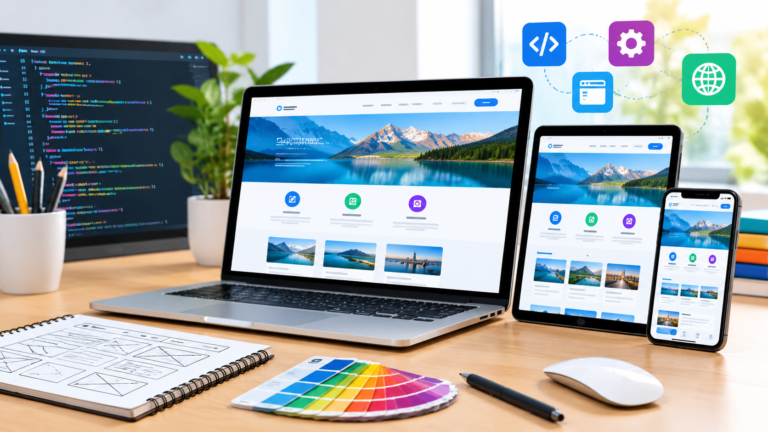

In today’s ever-evolving digital world, Website Design and Development plays a crucial role in determining how a brand presents itself online. A well-structured and beautifully designed website isn’t just about aesthetics — it’s about performance, functionality, and user experience. Whether you’re a small business owner, a digital agency, or an entrepreneur, understanding the essentials of Website Design and Development can help you build an online presence that drives growth, engagement, and trust. This comprehensive guide explores every aspect of building a successful website that stands out in today’s competitive digital landscape.
Introduction
In a world dominated by technology and innovation, a professional website serves as the digital face of your business. Website Design and Development is more than just code and graphics; it’s about creating an experience that connects your audience with your brand. Every element — from the color palette and typography to layout and navigation — shapes how users perceive your business.
At Appledew UK, we understand that your website is the foundation of your online identity. It’s the platform where first impressions are formed and conversions are made. With strategic design and robust development, a website can become a powerful marketing tool that attracts, engages, and retains customers. This guide will take you deep into the art and science of creating websites that don’t just look good but also perform seamlessly.
From the basics of design principles to the technical elements of web development, this article will help you discover how a well-crafted website can elevate your brand and drive success in a competitive online world.
Understanding the Essence of Website Design and Development
To truly appreciate the power of Website Design and Development, one must understand its dual nature — design represents creativity, while development stands for functionality. The design aspect focuses on the look and feel of the website — color schemes, typography, imagery, and overall aesthetics that align with brand identity. Meanwhile, development focuses on turning those visuals into a fully functional, responsive, and dynamic digital experience.
A successful website seamlessly combines both. A visually stunning design without solid coding is like a car without an engine — it looks great but doesn’t go anywhere. Similarly, a technically sound website without appealing visuals can fail to engage users emotionally. The true art of Website Design and Development lies in balancing these two elements harmoniously to achieve maximum impact.
Modern users expect more than just information; they demand interactive and personalized experiences. This means websites must be intuitive, fast-loading, and responsive on every device. Whether a visitor is using a smartphone, tablet, or desktop, the experience should remain consistent and smooth. Furthermore, website development involves using clean, optimized code that supports SEO and scalability for future growth.
In essence, effective website design captures attention, while strong development ensures performance and reliability. Together, they form the backbone of your digital presence, ensuring that your brand remains both visible and credible in the online marketplace.
The Importance of a Well-Designed Website for Businesses
A well-designed website is not just a luxury — it’s a necessity for every modern business. In today’s digital-first economy, consumers make instant judgments about a company based on its online appearance. Studies show that users form an impression about a website within a few seconds of landing on it. This impression determines whether they’ll stay, browse, or bounce away. That’s why investing in Website Design and Development is crucial to your brand’s success.
 A professional website reflects trust and authority. It acts as a digital storefront that is open 24/7, welcoming visitors and showcasing your products or services. A clean layout, intuitive navigation, and engaging visuals can dramatically increase user retention and conversion rates. It’s not just about attracting visitors — it’s about converting them into loyal customers.
Moreover, a website that’s designed strategically enhances credibility. Consumers today are cautious and informed; they compare multiple sites before making a purchase decision. A cluttered, outdated, or slow website signals unprofessionalism and can push potential customers toward competitors. Conversely, a modern, well-developed website conveys confidence, reliability, and quality.
In addition, website design plays a major role in search engine optimization (SEO). Search engines like Google reward user-friendly, mobile-optimized, and fast-loading websites with higher rankings. This means that design directly influences visibility and organic reach. By aligning aesthetics with functionality, businesses can create digital platforms that not only attract traffic but also deliver exceptional user experiences that drive long-term growth.
Key Elements of Effective Website Design
The difference between a good website and a great one lies in the attention to detail. Effective Website Design and Development requires a careful combination of elements that work together to create a cohesive and engaging experience. These elements include layout, typography, color, imagery, and spacing — all of which play a vital role in shaping user perception.
Layout determines how content is organized and presented. A well-structured layout guides visitors naturally through the site, making it easier to find what they’re looking for. Simplicity and clarity are key — too much clutter can overwhelm users and drive them away.
Typography is another crucial design factor. The right choice of fonts not only enhances readability but also reflects the brand’s personality. For example, sleek sans-serif fonts communicate modernity, while serif fonts convey tradition and reliability.
Color schemes influence emotion and behavior. Warm colors like red and orange can inspire excitement, while cool tones like blue and green evoke calmness and trust. A balanced color palette can significantly improve the aesthetic harmony of a site.
Finally, imagery and spacing contribute to the visual rhythm of a website. High-quality images add credibility and emotional connection, while proper spacing ensures that content doesn’t appear congested.
When these elements are aligned under a unified design strategy, they create a powerful visual narrative. In Website Design and Development, every design decision should serve a purpose — enhancing usability, reinforcing branding, and guiding users toward action.
The Role of User Experience (UX) in Website Design and Development
When it comes to Website Design and Development, User Experience (UX) is the heartbeat of every successful website. It’s not just about creating visually appealing designs; it’s about understanding how users interact with your site and ensuring their journey is smooth, intuitive, and enjoyable. A good UX design bridges the gap between what users want and what your business offers.
The foundation of UX design lies in empathy — understanding the needs, motivations, and behaviors of your audience. This understanding allows designers and developers to craft interfaces that are not only beautiful but functional. Every button, menu, and image placement must have a purpose. A poorly structured UX can lead to confusion, frustration, and ultimately, loss of potential customers.
An effective website must be inclusive and accessible to all users. To ensure compliance with international accessibility standards, your website should follow Web Content Accessibility Guidelines (WCAG) for usability, readability, and assistive technology compatibility.
Furthermore, responsive design is an essential component of UX. With millions accessing websites through mobile devices, it’s vital that your site adjusts seamlessly across all screen sizes. Accessibility also plays a major role — websites should be designed for everyone, including users with disabilities.
Incorporating UX best practices doesn’t just enhance user satisfaction; it also strengthens brand loyalty. A website that’s easy to navigate, fast to load, and enjoyable to explore encourages visitors to stay longer and engage more deeply with your content. Ultimately, a strong UX is what transforms casual visitors into committed customers, proving that design isn’t just how it looks — it’s how it works.
The Power of Responsive Web Design
In the era of smartphones and tablets, responsive web design has become a cornerstone of modern Website Design and Development. Gone are the days when websites were designed solely for desktop users. Today, more than 70% of online traffic comes from mobile devices, making responsiveness a critical factor in a website’s success.
Responsive design ensures that a website automatically adjusts its layout, images, and content according to the screen size and device being used. Whether it’s a large desktop monitor or a small smartphone screen, users should experience the same functionality and visual harmony. This adaptability improves accessibility and boosts engagement.
From a technical standpoint, responsive design relies on flexible grids, scalable images, and CSS media queries. These elements work together to make content fluid and dynamic. But beyond coding, responsive design represents a shift in mindset — prioritizing user convenience above all else.
Search engines also favor mobile-friendly websites. Google’s algorithm gives preference to responsive sites when ranking results, which means that implementing responsive design directly enhances your SEO performance. A non-responsive site, on the other hand, can suffer from poor visibility, lower rankings, and reduced organic traffic.
Moreover, responsive web design improves conversion rates. When users have a smooth experience, regardless of device, they’re more likely to stay, browse, and take desired actions — whether it’s signing up, purchasing, or contacting your business.
Ultimately, responsive design is about providing consistency. In today’s fast-paced digital world, where users switch between devices constantly, consistency builds trust. It tells visitors that your brand is professional, reliable, and adaptable — qualities that are essential for success in the competitive realm of web development.
Front-End vs Back-End Development Explained
To truly master Website Design and Development, it’s vital to understand the difference between front-end and back-end development — the two halves that make a website function beautifully and efficiently.
Front-end development is everything users see and interact with. It includes layouts, buttons, colors, and animations — essentially, the client side of the website. Front-end developers work with languages such as HTML, CSS, and JavaScript to translate design concepts into a functional reality. They ensure that every visual element performs well on different browsers and devices while maintaining an engaging, responsive interface.
Back-end development, on the other hand, deals with the server side — the behind-the-scenes structure that powers a website. It manages databases, server requests, user authentication, and data flow. Common back-end technologies include PHP, Python, Ruby, and Node.js. Without the back-end, even the most beautiful website would be static and lifeless.
A successful website depends on harmony between the two. The front-end must communicate effectively with the back-end to ensure smooth operation and data integrity. For instance, when a user fills out a contact form, the front-end displays the form and validates the input, while the back-end processes the data and sends it to the database or email system.
In modern development, full-stack developers often handle both aspects, allowing for seamless coordination. The fusion of front-end creativity and back-end logic results in websites that are not only visually compelling but also technically robust. Understanding both sides of development empowers businesses to create digital experiences that are fast, secure, and reliable.
The Role of Content in Website Design and Development
No matter how beautiful a website looks, it’s content that gives it life. In the realm of Website Design and Development, content is often referred to as “the king,” and rightly so. It’s the medium through which your brand communicates its story, values, and offerings to the audience.
High-quality, engaging content establishes credibility and trust. It helps users understand who you are and what you offer. From blog posts and product descriptions to images, videos, and calls to action — every piece of content must serve a clear purpose. Content should be relevant, informative, and aligned with the target audience’s needs.
Moreover, content plays a crucial role in SEO. Search engines prioritize websites that consistently produce original and valuable content. Integrating keywords strategically, like Website Design and Development, without overstuffing, helps your site rank higher and attract the right audience.
Design and content must work hand in hand. A visually stunning site with weak content won’t retain users, and strong content with poor design won’t get noticed. Typography, spacing, and visual hierarchy should enhance readability, ensuring users can easily consume the information presented.
Additionally, interactive and multimedia content — such as infographics, animations, and videos — adds depth to the user experience. These elements keep visitors engaged longer and increase the likelihood of conversions.
In summary, content is not just a supporting element — it’s the driving force behind effective web design. It connects your audience emotionally and intellectually, turning casual visitors into long-term followers. A truly successful website harmonizes design, development, and content to deliver an immersive brand experience.
SEO Integration in Website Design and Development
Search Engine Optimization (SEO) must be integrated during the development phase, not after launch. Structuring your website with clean code, fast loading times, mobile responsiveness, and proper metadata ensures better visibility in search engines. To align your website with official ranking standards, you should follow Google Search Quality Guidelines when implementing E-E-A-T principles (Experience, Expertise, Authoritativeness, Trustworthiness).
Effective SEO begins during the development phase, not after. Structuring your website with clean code, fast loading times, and mobile responsiveness all contribute to better search engine performance. URLs should be descriptive and keyword-rich, helping search engines understand the context of your content.
Title tags, meta descriptions, and image alt texts are essential elements that enhance SEO performance. Using the focus keyword — Website Design and Development — naturally throughout the site helps improve search ranking while maintaining readability. Internal linking, where relevant pages connect to each other, also supports both user navigation and SEO structure.
Moreover, technical SEO elements like XML sitemaps, HTTPS security, and schema markup ensure your site meets modern search standards. Search engines reward well-structured, secure, and user-friendly sites with higher rankings.
SEO doesn’t end with launch — it’s an ongoing process. Regularly updating your site with fresh, optimized content keeps it relevant and boosts authority. Integrating analytics tools such as Google Search Console and Google Analytics helps monitor performance and refine strategies over time.
In essence, SEO and Website Design and Development are inseparable. A site designed with SEO in mind from the ground up not only attracts visitors but also sustains long-term organic growth. It’s the foundation of digital success, ensuring your business stays visible, competitive, and future-ready.
The Impact of Visual Design on User Perception
Visual design is one of the most influential aspects of Website Design and Development because it directly shapes how users perceive your brand. Human brains process visuals 60,000 times faster than text, which means visitors form opinions about your site almost instantly based on its visual appeal. A thoughtfully crafted visual design not only captures attention but also communicates trust, professionalism, and brand personality.
Colors, typography, imagery, and composition work together to create a brand narrative. For example, a tech company might use clean layouts and cool color tones to communicate innovation and reliability, while a creative agency might opt for bold colors and dynamic visuals to express energy and originality. These design elements, when strategically combined, build emotional connections with visitors.
 However, visual design isn’t just about beauty — it’s about balance. Every element must serve a functional purpose. Overly flashy designs or excessive animations can distract users, while a minimalist design can make navigation seamless and enjoyable. The key lies in maintaining harmony between creativity and usability.
Consistency is another essential principle in visual design. Fonts, colors, button styles, and imagery must remain uniform across all pages to create a cohesive identity. Inconsistent visuals can confuse users and diminish brand recognition. Furthermore, spacing and alignment play an important role in maintaining readability and visual hierarchy.
From a conversion standpoint, good visual design encourages action. Whether it’s signing up for a newsletter or completing a purchase, strategic placement of visuals and call-to-action elements can guide users effortlessly through the site.
Ultimately, effective visual design transforms your website from a static page into an immersive brand experience. In Website Design and Development, visuals are not merely decorative — they are a powerful communication tool that defines how users feel, interact, and engage with your brand from the very first moment.
The Role of Website Speed and Performance
In the digital age, speed equals success. The performance of your website is a decisive factor in both user experience and search engine ranking. When it comes to Website Design and Development, ensuring optimal speed and performance should be a top priority.
Research shows that users expect a page to load in under three seconds. If it takes longer, more than half will abandon the site and move elsewhere. This behavior directly impacts bounce rates, conversions, and even brand perception. A slow-loading site can frustrate visitors and convey a lack of professionalism, regardless of how visually appealing it is.
Website speed directly affects bounce rates, conversions, and search rankings. Google prioritizes fast-loading websites, making performance optimization essential. You can evaluate your site’s loading performance using Google PageSpeed Insights, which provides detailed reports and improvement suggestions. Developers should also follow modern performance optimization techniques outlined in Web Performance Best Practices to minimize load times, optimize assets, and enhance overall responsiveness.
Moreover, using Content Delivery Networks (CDNs) helps distribute website content across multiple global servers, reducing load times for users in different locations. Hosting quality also plays a vital role; reliable and scalable hosting ensures consistent uptime and responsiveness.
Performance optimization doesn’t just improve user satisfaction — it boosts SEO as well. Search engines like Google prioritize fast-loading websites because they provide a better user experience. Speed is one of the most significant ranking factors in modern SEO algorithms.
In short, speed and performance are not optional add-ons — they’re foundational. A well-optimized website reflects technical excellence, improves engagement, and increases conversions. As the saying goes, every second counts, and in Website Design and Development, those seconds can determine whether you gain or lose a customer.
The Importance of Mobile-First Design
With mobile users now dominating the web, the mobile-first approach has become a core principle in Website Design and Development. It prioritizes designing for smaller screens first, then scaling up for desktops and larger devices. This method ensures that mobile users — who often have different behaviors and needs — receive a seamless experience.
A mobile-first strategy focuses on simplicity, accessibility, and speed. It emphasizes essential content and functionality, ensuring that nothing crucial is hidden behind complicated layouts. As mobile devices often have limited screen space, designers must make every element count — from navigation menus to buttons and images.
Google’s mobile-first indexing further reinforces this trend. The search engine now primarily uses the mobile version of a website for ranking and indexing. This means that if your mobile site isn’t optimized, your overall search visibility could suffer. Mobile responsiveness is no longer optional — it’s a requirement for online success.
Beyond technical optimization, mobile-first design enhances user engagement. A clutter-free, easy-to-navigate interface improves usability, while larger touch targets and legible fonts make browsing comfortable on small screens. Fast loading times and minimal scrolling further elevate the user experience.
Moreover, mobile-first design aligns perfectly with modern browsing behavior. Users frequently switch between devices throughout the day — researching on mobile, purchasing on desktop, and revisiting later on tablets. A consistent experience across devices builds trust and reinforces brand reliability.
By designing for mobile first, developers ensure adaptability and scalability. The result is a website that’s optimized for all users, regardless of their device. In today’s competitive landscape, adopting a mobile-first approach in Website Design and Development isn’t just smart — it’s essential for growth, engagement, and long-term digital success.
Integrating Security in Website Design and Development
Security is one of the most overlooked yet critical aspects of Website Design and Development. A beautiful and functional website means nothing if it’s vulnerable to attacks. With increasing cases of data breaches, malware infections, and hacking attempts, security must be an integral part of the design and development process from day one.
A secure website protects not only your data but also your users’ trust. Implementing HTTPS encryption ensures that all data transferred between the user and the server is safe from interception. Google also prioritizes HTTPS-enabled websites, which means it’s not just about protection — it’s also about SEO advantage.
Developers must follow best practices such as input validation, secure authentication, and regular software updates. Weak passwords, outdated plugins, and unsecured databases are common entry points for cyber threats. By adopting proactive security measures, you can prevent these vulnerabilities before they cause damage.
Additionally, firewalls, SSL certificates, and regular backups provide layers of protection against potential breaches. Security plugins and monitoring tools can alert administrators to suspicious activities, allowing quick responses to threats.
User data protection laws, such as GDPR, further emphasize the importance of secure design. Websites must handle personal data responsibly, ensuring transparency and compliance. Ignoring security not only risks data loss but can also lead to legal penalties and reputational harm.
In essence, security should never be an afterthought. It’s a continuous commitment. Integrating strong security measures into Website Design and Development ensures that your digital presence remains trustworthy, reliable, and resilient — qualities that every professional business should prioritize.
Choosing the Right Platform for Website Development
Selecting the right platform is a foundational step in the process of Website Design and Development. The platform you choose determines the website’s functionality, scalability, and ease of management. With numerous options available — including WordPress, Shopify, Wix, Joomla, and custom-coded solutions — making the right decision can significantly impact your online success.
WordPress remains the most popular content management system (CMS) due to its flexibility and vast plugin ecosystem. It’s ideal for businesses seeking full control over design and content without requiring deep coding knowledge. On the other hand, Shopify is perfect for e-commerce brands that prioritize simplicity and reliable transaction management.
For more complex and large-scale projects, custom development using frameworks like Laravel, React, or Django offers greater control, security, and performance. While this approach requires more technical expertise and investment, it delivers tailor-made results that align precisely with business goals.
When choosing a platform, businesses should consider several factors — scalability, budget, maintenance requirements, and available technical support. Additionally, platform compatibility with SEO tools, analytics, and third-party integrations plays a crucial role in long-term success.
The right platform not only supports smooth Website Design and Development but also ensures easy updates and future scalability. As technology evolves, your website should be able to adapt without requiring a complete rebuild. A solid foundation today ensures flexibility tomorrow.
In conclusion, selecting a website platform isn’t just a technical decision — it’s a strategic one. The right choice sets the stage for growth, efficiency, and innovation, empowering your brand to thrive in an ever-changing digital ecosystem.
The Importance of Website Maintenance and Updates
Creating a website is only the beginning; maintaining it is where the real work starts. In the realm of Website Design and Development, regular maintenance ensures that your site remains secure, up-to-date, and optimized for peak performance. Just like a physical store needs cleaning, restocking, and upkeep, a website requires consistent monitoring and improvements to deliver the best user experience.
Maintenance involves updating software, plugins, and themes to prevent compatibility issues or security vulnerabilities. Outdated systems are one of the most common entry points for hackers, making timely updates essential. Regular backups are also crucial — they provide a safety net in case of data loss, technical errors, or cyberattacks.
Performance optimization should also be part of your maintenance strategy. Over time, unused files, bloated databases, and outdated scripts can slow down your site. Conducting periodic clean-ups and speed tests helps maintain fast loading times and a smooth user experience.
Another vital aspect is content updating. Fresh and relevant content signals to search engines that your website is active and authoritative. It also keeps your audience engaged with new information, products, or services.
Broken links, outdated images, or malfunctioning contact forms can negatively impact user trust. Routine testing ensures that all features, from navigation to checkout processes, work flawlessly across all devices and browsers.
In essence, website maintenance is an ongoing process that guarantees long-term success. Without it, even the most beautifully designed and developed site can quickly become outdated or vulnerable. A well-maintained website not only enhances credibility but also ensures that your Website Design and Development efforts continue to pay off over time.
The Rise of Artificial Intelligence in Website Design and Development
Artificial Intelligence (AI) is reshaping the digital landscape, and its influence on Website Design and Development is nothing short of revolutionary. From automating tasks to personalizing user experiences, AI technologies are making websites smarter, faster, and more intuitive than ever before.
AI-driven tools like chatbots, voice assistants, and recommendation systems are becoming standard features. They enhance user engagement by providing instant support and personalized interactions. For instance, AI chatbots can guide users, answer questions, and even help them make purchasing decisions — all without human intervention.
In the design process, AI can analyze user data and behavior patterns to suggest optimal layouts, color schemes, and navigation flows. This data-driven approach ensures that websites are designed not only based on aesthetics but also on real-world usability insights. Machine learning algorithms can predict user preferences, allowing developers to create tailored experiences for different audience segments.
AI also plays a significant role in SEO and content optimization. It helps identify trending keywords, optimize meta tags, and even generate high-quality content recommendations. For developers, AI-powered testing tools can detect bugs, security vulnerabilities, and performance issues more efficiently than manual methods.
Moreover, with the rise of voice search and natural language processing, websites need to adapt to conversational search patterns. Integrating AI ensures that websites remain accessible and relevant in this new era of digital communication.
In conclusion, Artificial Intelligence is not just a trend — it’s the future of Website Design and Development. It enables businesses to create smarter, more efficient, and user-focused websites that evolve alongside technology and consumer expectations.
How Branding and Design Work Together
A website isn’t just a digital platform — it’s a visual representation of a brand’s identity. In Website Design and Development, branding and design go hand in hand, shaping how a business communicates its values and personality to the world.
A strong brand identity is reflected through consistent use of logos, colors, typography, and messaging across the entire website. These elements create a sense of familiarity and trust among visitors. For instance, using brand colors consistently helps reinforce recognition, while tone and imagery convey the company’s culture and mission.
Website design translates brand strategy into visual storytelling. Every aspect — from layout and content style to imagery and micro-interactions — should reflect the brand’s promise and connect emotionally with the audience. A website for a luxury brand, for example, should evoke sophistication and exclusivity, while a creative agency’s site might emphasize innovation and boldness.
Moreover, branding extends beyond visuals. The user experience, responsiveness, and even loading speed contribute to brand perception. A slow or confusing website can damage credibility, while a sleek, intuitive experience reinforces professionalism and trust.
In the modern digital space, consistency is everything. Visitors should immediately recognize your brand across all digital touchpoints — your website, social media, and marketing campaigns. This alignment strengthens brand authority and encourages loyalty.
In short, Website Design and Development and branding are inseparable. When executed cohesively, they create a unified identity that resonates with audiences, builds trust, and transforms visitors into advocates.
The Future of Website Design and Development
As technology continues to evolve, the future of Website Design and Development promises even greater innovation and personalization. The next decade will see websites becoming more interactive, intelligent, and immersive, driven by advancements in AI, virtual reality (VR), augmented reality (AR), and 5G connectivity.
The focus is shifting from static web pages to experiential digital spaces. Websites of the future will adapt dynamically to user preferences, behaviors, and real-time data. For example, AI-powered personalization will allow websites to display different content for each visitor based on their interests and browsing history.
 Voice interfaces will continue to grow, allowing users to navigate and interact with websites using natural speech. Similarly, immersive technologies like VR and AR will transform industries such as real estate, retail, and education by enabling users to explore products or environments virtually.
On the technical front, low-code and no-code development platforms are democratizing website creation, empowering non-developers to build complex, responsive sites. Meanwhile, cybersecurity, data privacy, and ethical design will remain top priorities as digital threats evolve.
Sustainability will also become a major focus. Eco-friendly web design practices — such as optimizing performance, reducing energy consumption, and using green hosting — will define responsible digital presence.
In essence, the future of Website Design and Development lies in creating smarter, faster, and more human-centered experiences. The boundaries between design, technology, and interaction will continue to blur, opening new opportunities for creativity and innovation.
Measuring Success: Analytics and User Feedback
A successful website isn’t just launched — it’s continuously analyzed, refined, and improved. Measuring success is a crucial step in the Website Design and Development process because it helps businesses understand what’s working and where improvements are needed.
Website analytics tools like Google Analytics, Hotjar, and Microsoft Clarity provide detailed insights into user behavior, traffic sources, and engagement metrics. These insights reveal how visitors interact with your site — what pages they visit, how long they stay, and where they drop off. By analyzing this data, businesses can make informed decisions to enhance performance and user satisfaction.
Conversion tracking is another essential element. Understanding how users complete desired actions, such as signing up, downloading, or purchasing, allows you to identify bottlenecks in the user journey. A/B testing different layouts, headlines, or call-to-action buttons can help determine what resonates best with your audience.
User feedback is equally important. Surveys, reviews, and direct customer interactions provide qualitative insights that analytics alone can’t capture. Listening to your audience helps refine design, content, and functionality to better meet their needs.
Continuous improvement is the hallmark of digital excellence. A website that evolves based on data and feedback will always outperform one that remains static. In the fast-paced world of Website Design and Development, adaptability ensures long-term relevance, engagement, and success.
Conclusion
In the ever-changing digital ecosystem, a powerful website is more than just an online presence — it’s the foundation of business growth and customer trust. Website Design and Development merges creativity with technology, turning ideas into functional, high-performing digital experiences that drive results.
At Appledew UK, we believe every website should tell a story, connect emotionally, and deliver measurable outcomes. From design aesthetics and responsive layouts to performance optimization and SEO integration, every detail matters. The perfect website doesn’t just attract visitors — it converts them, retains them, and builds lasting relationships.
As digital trends evolve, staying ahead requires continuous learning, adaptation, and innovation. Businesses that invest in high-quality Website Design and Development today are shaping the online experiences of tomorrow. The future belongs to those who combine creativity, strategy, and technology — transforming simple websites into powerful digital ecosystems that inspire, engage, and succeed.
How to Use This Article in Practice (AI Implementation Prompt)
After reading this blog post, you can use AI Tools to practically implement everything discussed above for your own website or project.
Simply copy the prompt below and paste it into your preferred AI tool.
📌 AI Implementation Prompt (Copy & Paste)
Prompt:
You are a senior Website Design and Development consultant.
I have just read the blog post titled:
“Crafting Digital Excellence: The Complete Guide to Website Design and Development.”Based on the concepts explained in this article, please do the following:
- Create a step-by-step implementation plan for my website.
- Suggest design improvements (UI & UX) aligned with modern best practices.
- Recommend technical development enhancements (front-end, back-end, performance, and security).
- Ensure the website follows mobile-first and responsive design principles.
- Integrate SEO best practices according to Google Search Quality Guidelines (E-E-A-T).
- Identify common mistakes to avoid in website design and development.
- Provide a checklist I can use before launching or redesigning my website.
My website details are:
- Website URL: [ADD YOUR WEBSITE URL]
- Business type: [ADD BUSINESS TYPE]
- Target audience: [ADD TARGET AUDIENCE]
- Primary goals (leads, sales, branding, etc.): [ADD GOALS]
Please give clear, actionable, and practical recommendations, not generic advice.
💡 Need Expert Help?
If you’d like our team to implement everything for you professionally, feel free to reach out via our contact form:
👉 [https://appledew.co.uk/contact-us/]