Introduction
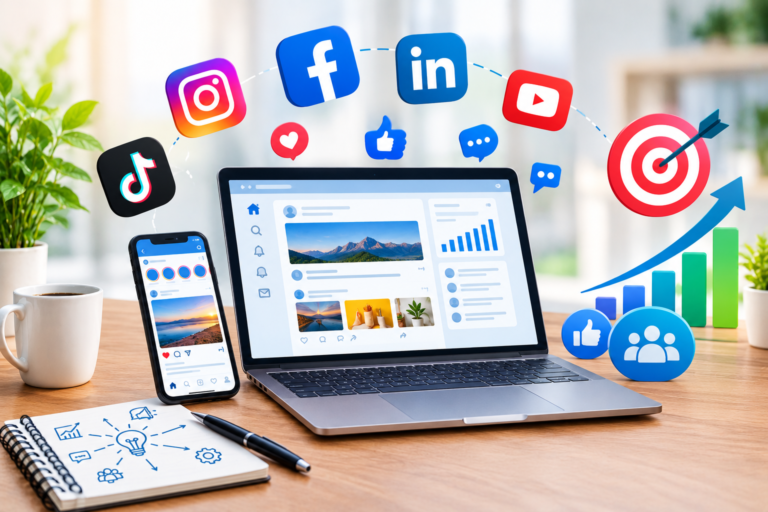
Social media has transformed how businesses connect with customers. Millions of people in the UK scroll through Facebook, Instagram, LinkedIn, and TikTok every single day — and your audience is among them. The question is not whether your business should be on social media, but how effectively you’re using it.
Social Media Marketing is no longer just about posting photos or status updates. It is now a powerful sales, branding, customer service, and lead generation channel. From building trust with your audience to driving traffic to your website, the impact of social platforms is undeniable for businesses of all sizes.
According to Google Search Central – Search Quality Evaluator Guidelines, strong online presence and credibility (E-E-A-T) are critical for long-term digital success. Social media plays a major role in supporting that authority and trust.
Whether you run a startup, local business, or established company, this guide will show you:
- How Social Media Marketing works
- Which platforms matter most
- How to create a successful strategy
- How paid advertising improves results
- Common mistakes to avoid
- Best practices that lead to growth
At Appledew UK, we help businesses build strong social media presences that convert views into loyal customers. In this guide, we share proven knowledge so you can understand, apply, and grow.
What is Social Media Marketing?
Social Media Marketing (SMM) is the process of using social media platforms to promote a brand, connect with customers, and drive business growth. It involves creating and sharing content such as posts, images, videos, stories, and advertisements on platforms like Facebook, Instagram, LinkedIn, TikTok, and X (formerly Twitter) to reach a targeted audience and encourage engagement.
The main goal of social media marketing is not just to gain likes or followers, but to build meaningful relationships with users that lead to trust, loyalty, and conversions. Businesses use social media to increase brand awareness, generate leads, drive website traffic, and improve customer service. Through regular posting, responding to comments, and running paid ad campaigns, companies can stay connected with their audience in real time.
One of the biggest advantages of social media marketing is its ability to target specific users based on age, interests, behavior, and location. This makes marketing more personal and effective compared to traditional advertising. Whether it’s a small startup or a global company, social media marketing allows every business to compete online, grow their presence, and achieve measurable results in a cost-effective way.
It includes:
- Creating and sharing content
- Engaging with followers
- Running paid advertisements
- Analyzing performance data
- Building online community
- Increasing brand awareness
- Generating leads and sales
Unlike traditional marketing, social media is interactive. Your audience responds, shares, comments, and contacts you directly. This makes it a two-way communication channel instead of one-way promotion.
Why Social Media Marketing is Important for Businesses
1. Better Brand Visibility
etter brand visibility means making your business more recognizable and memorable. Consistent presence across platforms increases exposure and builds long-term brand recall. Google emphasizes the importance of helpful, reliable content in its Google Search Essentials. Social content that supports your website strengthens your digital footprint. In today’s digital world, where people scroll through hundreds of posts and ads every day, standing out is essential. When your brand has strong visibility, customers are more likely to remember your name, recognize your logo, and trust your services when they are ready to make a purchase.
Brand visibility is built through consistent online presence across social media platforms, websites, search engines, and digital advertisements. Posting valuable content, using eye-catching visuals, and maintaining a clear brand message helps your business stay in front of potential customers. The more your audience sees your brand in a positive and helpful way, the stronger your reputation becomes.
Better brand visibility also increases customer confidence. When people frequently come across your business online, they begin to see you as reliable and professional. This leads to higher engagement, better word-of-mouth promotion, and stronger customer loyalty.
In simple terms, the more visible your brand is, the easier it is for customers to find you, remember you, and choose you over competitors. Improved visibility turns unfamiliar audiences into aware customers and helps your business grow continuously in a competitive market.
2. Direct Customer Connection
Direct customer connection refers to the ability of a brand to communicate with its audience in real time through digital platforms, especially social media and messaging channels. Instead of relying only on traditional advertising, businesses can now interact directly with customers through comments, messages, reviews, and live chats. This creates a more personal and meaningful relationship between a brand and its audience.
When customers feel heard and valued, they are more likely to trust a brand. Responding to questions, addressing concerns, and thanking users for feedback shows that a business truly cares about its customers. This type of interaction builds emotional connection and improves customer satisfaction.
Direct communication also allows businesses to understand their customers better. By paying attention to comments, messages, and reactions, brands can learn what customers like, what they want improved, and what motivates them to buy. This helps in creating better products, services, and marketing strategies.
Another advantage is faster problem-solving. Issues can be resolved quickly before they become bigger problems, protecting the brand’s reputation.
Overall, direct customer connection turns one-time buyers into loyal customers and helps businesses grow stronger relationships that lead to long-term success.
3. Increased Website Traffic
Increased website traffic means attracting more visitors to your website from different online sources, especially social media platforms and digital marketing channels. When combined with strong technical foundations following Google Page Experience Guidelines, increased traffic can improve performance and visibility.
Website traffic is one of the strongest indicators of online business growth and brand awareness.
Social media posts, ads, and shared content act as pathways that guide users to your website. When businesses publish valuable content such as blogs, offers, videos, and promotions with links to their site, they encourage users to click and learn more. The more engaging and helpful the content is, the higher the chances of users visiting your website.
Increased traffic also improves your online visibility. Search engines notice when more people frequently visit and interact with your website, which can positively impact your search rankings. Higher rankings lead to even more visitors, creating continuous growth.
Another benefit is better understanding of customer behavior. Website analytics help businesses track where visitors come from, what pages they view, and how long they stay. This data allows brands to optimize content, improve user experience, and design better marketing strategies.
More visitors mean more business opportunities, making increased website traffic a key goal for long-term success.
4. Cost-Effective Marketing
Cost-effective marketing means promoting your business in a way that delivers strong results without spending unnecessary money. In today’s competitive digital environment, businesses want maximum exposure and growth while keeping budgets under control, and this is where cost-effective marketing becomes essential. Platforms offer detailed audience segmentation, which improves ROI and aligns with performance-focused strategies recommended by Google Ads Best Practices. It focuses on using smart strategies that bring measurable returns instead of wasting money on methods that don’t perform.
Digital marketing and social media platforms allow businesses to reach a large audience at a much lower cost compared to traditional advertising like TV, radio, or newspapers. Even with a small budget, companies can run targeted campaigns to reach specific users based on interests, location, age, and behavior. This ensures your marketing budget is spent only on people who are most likely to be interested in your services.
Cost-effective marketing also helps small businesses compete with bigger brands. Through organic content, social media engagement, and low-cost online ads, startups can build visibility without huge investments. Another major benefit is the ability to track results in real time. Businesses can see what works, stop what doesn’t, and improve performance instantly.
In simple terms, cost-effective marketing helps businesses grow smarter, not just bigger, by turning limited budgets into powerful opportunities.
5. Builds Trust & Authority
Building trust and authority means creating a strong reputation that makes customers feel confident in choosing your business. E-E-A-T (Experience, Expertise, Authoritativeness, Trustworthiness) plays a major role in long-term visibility according to Google Search Quality Guidelines. In a crowded digital market, people prefer brands they believe are reliable, knowledgeable, and professional. When your business consistently provides value and communicates clearly, it naturally gains credibility and respect.
Trust is built through honesty, consistency, and quality. Sharing helpful content, responding quickly to customer queries, and delivering on promises shows that your brand can be depended on. When customers see positive reviews, engaging responses, and useful information from your brand, they are more likely to feel safe doing business with you.
Authority, on the other hand, comes from positioning your business as an expert in your field. By posting insightful content, industry updates, and practical tips, you show that you understand your audience’s needs and challenges. This makes people view your brand as a trusted source of information rather than just another seller.
As trust and authority grow, customers become more loyal and are more willing to recommend your brand to others. Over time, this strong reputation leads to better engagement, higher conversions, and long-term success. Simply put, trust and authority are the foundation of a powerful and lasting brand.
Popular Social Media Platforms for Marketing
Each platform works differently and attracts a unique audience.
Facebook is one of the world’s most powerful social media platforms for connecting businesses with their target audience. With millions of active users every day, it provides a strong opportunity for brands to build awareness, engage customers, and promote products and services effectively. Businesses use Facebook to share updates, post images and videos, run promotions, and interact directly with followers through comments and messages.
One of Facebook’s key strengths is its advanced advertising system. Companies can create highly targeted ad campaigns based on user interests, age, location, and behavior. This allows businesses to reach the right people at the right time, making marketing more efficient and result-driven. Facebook Ads also offer different goals such as increasing website visits, generating leads, boosting engagement, and promoting online sales.
Another important benefit of Facebook is its role in customer support. Customers often contact businesses directly through Messenger to ask questions or resolve issues. Quick replies improve customer satisfaction and build stronger relationships.
Facebook Groups also help brands create communities where users can share experiences and feedback. Overall, Facebook is a powerful platform that helps businesses grow their online presence, strengthen connections, and achieve better marketing results with both organic content and paid advertising.
- Best for business pages & ads
- Suitable for both B2B and B2C
- Effective for remarketing
- Great community engagement
Instagram is a highly visual social media platform that allows businesses to connect with their audience through images, videos, stories, and short-form content known as Reels. It is especially popular among younger audiences and is ideal for brands that want to showcase their creativity, products, and lifestyle through engaging visuals. Businesses use Instagram to build a strong brand identity by sharing eye-catching content that represents their values and personality.
One of Instagram’s biggest strengths is its ability to increase engagement. Users can like, comment, share, and message brands directly, creating opportunities for meaningful interaction. Features like Stories, Highlights, and live videos allow businesses to share real-time updates, behind-the-scenes moments, and special offers, helping followers feel more connected.
Instagram also offers powerful advertising options that enable businesses to target specific audiences based on interests, behavior, and location. With tools like shopping tags and links in Stories or profiles, users can easily explore products and visit websites directly from the app.
Hashtags and location tags help content reach a wider audience, improving visibility beyond just followers. Overall, Instagram is an effective platform for building community, increasing brand recognition, and driving traffic and sales through visually appealing and interactive content.
- Focus on visual content
- Perfect for branding
- Good for ecommerce businesses
- High engagement via stories & reels
LinkedIn is a professional social media platform designed for networking, business development, and establishing thought leadership. Unlike other platforms that focus on casual social interactions, LinkedIn allows businesses and professionals to connect in a professional context, making it ideal for B2B marketing, recruitment, and industry engagement. Companies use LinkedIn to share updates, industry insights, case studies, and professional achievements, helping to build credibility and authority within their niche.
One of LinkedIn’s key advantages is its ability to target a highly professional audience. Through LinkedIn Ads, businesses can reach decision-makers, executives, and industry professionals based on job title, company, location, and interests. This precision makes it an effective platform for generating high-quality leads, attracting talent, and promoting specialized services.
LinkedIn also encourages networking and knowledge sharing. Features like LinkedIn Groups, Pulse articles, and posts allow businesses to participate in discussions, offer valuable advice, and engage with thought leaders in their field. Additionally, company pages and employee advocacy help reinforce the brand’s reputation and reach.
By leveraging LinkedIn, businesses can build professional relationships, showcase expertise, and position themselves as leaders in their industry. The platform is not only a marketing tool but also a space to grow influence, trust, and professional opportunities in a meaningful way.
- Best for B2B marketing
- Professional audience
- Lead generation
- Brand authority building
TikTok
TikTok is a fast-growing social media platform known for its short-form, engaging video content that captures the attention of millions of users worldwide. It allows businesses to creatively showcase their products, services, and brand personality in entertaining and visually appealing ways. With its algorithm-driven feed, TikTok makes it possible for content to reach a vast audience quickly, even if a brand has a small following, offering tremendous opportunities for visibility and virality.
For businesses, TikTok is more than just entertainment—it’s a marketing powerhouse. Companies can use TikTok to launch challenges, share tutorials, showcase behind-the-scenes content, and create storytelling videos that resonate with their target audience. Its interactive features, such as duets, stitches, and effects, encourage user engagement and participation, helping brands connect authentically with their community.
TikTok Ads also provide advanced targeting options, enabling brands to reach users based on demographics, interests, and behavior, making campaigns highly effective. The platform’s unique format encourages creativity, making marketing campaigns memorable and shareable.
Overall, TikTok offers businesses an innovative way to boost brand awareness, drive traffic, and engage a younger, trend-focused audience. By leveraging the platform’s dynamic content and interactive features, companies can strengthen their online presence and stay ahead in the competitive digital landscape.
- Fast-growing platform
- Great for brand exposure
- High organic reach
- Ideal for younger audiences
Twitter (X)
Twitter, now known as X, is a dynamic social media platform that allows businesses to share real-time updates, news, and engaging content with a global audience. It is widely used for quick communication, brand announcements, customer interaction, and trend participation. The platform’s fast-paced nature makes it ideal for businesses to stay relevant, share insights, and engage directly with their audience in meaningful ways.
One of the key strengths of Twitter (X) is its ability to facilitate conversations. Through tweets, replies, retweets, and mentions, businesses can interact with customers instantly, address questions, and provide support. This immediate engagement helps build trust and strengthens customer relationships. Hashtags and trending topics allow brands to join popular discussions, increase visibility, and reach users beyond their existing followers.
Twitter (X) also offers robust advertising options, including promoted tweets, trends, and accounts, enabling businesses to target specific demographics, interests, and locations. These tools help drive website traffic, generate leads, and grow brand awareness effectively.
For businesses, X is more than just a social platform—it is a powerful tool for reputation management, thought leadership, and audience engagement. By leveraging timely updates, interactive content, and targeted campaigns, companies can expand their reach, enhance brand authority, and maintain a strong online presence in a competitive digital world.
- Trending topics
- News & updates
- Customer communication
- Brand voice marketing
Building an Effective Social Media Strategy
A business without a strategy will struggle online.
Step 1: Define Your Goals
Ask yourself:
- Do you want brand awareness?
- More website visits?
- Leads and sales?
- Customer relationships?
Step 2: Know Your Audience
Understand:
- Age group
- Interests
- Behaviors
- Location
- Buying habits
Step 3: Choose Platforms Wisely
You don’t need every platform. Choose the ones where your audience exists.
Step 4: Create a Content Plan
Posting randomly does not work. Plan:
- Posting frequency
- Content types
- Campaign themes
- Promotions schedule
Step 5: Analyze & Improve
Use analytics tools to:
- Measure engagement
- Track growth
- Improve strategy
- Adjust content
Content Creation that Drives Engagement
Quality content is the heart of Social Media Marketing.
Content Types That Work Well
- Images
- Videos
- Reels & Shorts
- Infographics
- Customer reviews
- Behind-the-scenes content
- Offers & promotions
- Polls and questions
Content Tips
- Keep it short and clear
- Use consistent branding
- Create emotion-driven content
- Add a call-to-action
- Be authentic
- Focus on value
Example
A local business shares:
✅ Customer feedback
✅ Before-and-after photos
✅ Product videos
✅ Quick tips
✅ Seasonal offers
Result: Increased trust & inquiries.
Paid Social Media Advertising Explained
Organic results are limited. Paid Advertising gives faster results.
Benefits of Paid Ads
- Target specific audience
- Budget control
- Detailed analytics
- Measurable ROI
- Instant visibility
Common Ad Formats
- Image Ads
- Video Ads
- Carousel Ads
- Lead Forms
- Story Ads
- Retargeting Ads
Who Should Use Ads?
✅ Startups
✅ Ecommerce stores
✅ Service businesses
✅ Product launches
✅ Event promotions
At Appledew UK, we design ad strategies that reduce cost and increase conversions.
Common Mistakes in Social Media Marketing
Mistake #1: No Strategy
Posting without goals leads to poor growth.
Mistake #2: Ignoring Engagement
Not replying to comments hurts brand trust.
Mistake #3: Over-Promotion
Too many ads, not enough value = audience loss.
Mistake #4: Inconsistent Posting
Irregular posting kills momentum.
Mistake #5: Not Using Analytics
What isn’t measured cannot be improved.
Best Practices & Expert Tips
✅ Post consistently
✅ Use high-quality visuals
✅ Engage daily
✅ Track performance
✅ Run campaigns
✅ Create branded templates
✅ Monitor competitors
✅ Respond to DMs quickly
✅ Test content formats
✅ Improve monthly
Real-World Example Scenarios
Example 1: Local Service Business
Situation:
Low leads from social platforms.
Approach:
- New content calendar
- Paid ad campaign
- Local audience targeting
Result:
- 300% increase in inquiries
- Brand visibility improved
- Higher customer trust
Example 2: Ecommerce Brand Launch
Situation:
New store with no recognition.
Approach:
- Product videos
- Influencer collaboration
- Social ads
Result:
- Sales within first month
- Strong audience engagement
Frequently Asked Questions (FAQs)
Q: How long does Social Media Marketing take to show results?
A: Organic growth may take months, paid campaigns deliver much faster results.
Q: Is Social Media Marketing necessary for small businesses?
A: Absolutely. It builds visibility, trust, and revenue opportunities.
Q: Which platform is best for business?
A: Depends on your audience. Facebook, Instagram, and LinkedIn perform well in the UK.
Q: Is paid social media better than organic?
A: Both work best together.
Q: How often should I post?
A: Ideally 3–5 times per week.
Q: Can Appledew handle content and ads?
A: Yes. Strategy, design, posting, ads — all-in-one.
Conclusion
Without social media:
- Your business remains invisible
- Your competitors dominate attention
- Your growth remains slow
With effective Social Media Marketing:
- You build strong online presence
- You connect with customers
- You increase sales
- You grow consistently
Appledew UK doesn’t just post content — we build brands.
Whether you’re starting fresh or scaling your business, professional Social Media Marketing is not optional anymore. It’s your gateway to modern business growth.
Ready to grow your business?
👉 Contact Appledew UK today and let us manage your social media the right way.
Key Takeaways
- Social media builds brand awareness and trust
- Strategy matters more than random posting
- Content quality drives engagement
- Paid ads accelerate results
- Expert management saves time and money
AI Implementation Prompt (Use This to Apply What You’ve Read)
After reading this guide, you can use the following AI prompt to turn this strategy into action for your own business.
Copy & Paste This Prompt 👇
Prompt:
Act as a senior Social Media Marketing strategist with proven experience in growing UK-based businesses.
I have just read the blog post titled “Social Media Marketing: A Complete Guide to Growing Your Business Online.”
Based on the principles, strategies, platforms, examples, and best practices explained in this article, create a custom social media marketing plan for my business.
Please include:
- Clear social media goals (brand awareness, leads, sales, or engagement)
- Recommended platforms (Facebook, Instagram, LinkedIn, TikTok, or X) with justification
- Target audience definition (age, interests, behavior, location)
- A 30-day content plan (post types, posting frequency, content ideas)
- Organic growth strategy
- Paid advertising strategy (budget guidance, ad formats, targeting)
- Key performance metrics to track (KPIs)
- Common mistakes to avoid
- Actionable next steps I can implement immediately
Ensure the strategy follows Google Search Quality Guidelines (E-E-A-T) and focuses on real business growth, not vanity metrics.
Ask me any required questions before finalizing the plan.
Need Expert Help Implementing This?
If you’d rather save time and get professional results, our team can handle everything for you — strategy, content, ads, and growth.
👉 Want our help? Reach out via our contact form:
[https://appledew.co.uk/contact-us/]