Introduction
The modern business world is no longer built around shopfronts, brochures, or phone directories. It is built around websites. Your website has become the centre of your brand identity, the foundation of your marketing strategy, and the most reliable channel for generating leads and sales.
For UK businesses, a professional website is not a luxury — it is a necessity.
Customers today expect fast-loading pages, clean design, mobile-friendly layouts, and intuitive user experiences, aligned with Google Page Experience guidelines. When these expectations are not met, visitors quickly leave and search for a better alternative. This is why website design and development is no longer just about aesthetics. It is about performance, speed, security, usability, and conversions.
At Appledew UK, we understand that your website is your most valuable digital asset. Our website design and development services are built to help UK businesses create powerful, high-performing online platforms that attract, engage, and convert visitors into loyal customers.
This comprehensive guide will walk you through everything you need to know about professional website design and development, from strategy and planning to advanced features, common mistakes, and real-world success examples.
Why Website Design & Development Matters More Than Ever
A professionally designed website gives your business credibility, authority, and trust. Without a strong website, customers often assume your business is outdated, unreliable, or less professional than competitors.
Here is why website design and development is critical for your business success:
1. First Impressions Happen in Seconds
Users judge your business in seconds. A poorly designed website creates doubt instantly, while a professional website builds trust immediately.
2. Your Website Works 24/7
Unlike a physical shop, your website works all day and night. It answers customer questions, collects leads, showcases services, and generates sales automatically.
3. Strong Websites Improve Marketing Results
All your digital marketing — SEO, social media, paid ads — depends on your website’s quality. A weak website wastes your marketing budget, while a strong website amplifies results.
4. Mobile Users Dominate the UK Market
More than half of UK users browse on mobile devices. Responsive web design ensures your site performs perfectly on smartphones and tablets, following mobile-first indexing standards.
5. Trust and Security Are No Longer Optional
Users expect secure browsing, fast load times, and professional layouts. A strong website builds confidence and reduces friction in the buying journey.
What Makes a High-Performance Website?
A high-performance website is not just beautiful — it is strategic, fast, secure, and user-focused.
Professional User Interface (UI)
A professional user interface (UI) ensures that a website is visually appealing, intuitive, and easy to navigate. Thoughtful layout, consistent design elements, and clear calls-to-action guide users seamlessly through the site. A well-designed UI enhances user experience, builds trust, and encourages engagement. By combining aesthetics with functionality, professional UI design helps websites retain visitors, increase conversions, and establish a strong, credible online presence.
Exceptional User Experience (UX)
Exceptional user experience (UX) focuses on making websites intuitive, efficient, and enjoyable for visitors. By optimising navigation, page speed, accessibility, and interactive elements, UX design ensures users can easily find information and complete tasks. A strong UX increases engagement, builds trust, and encourages repeat visits. Prioritising the needs and expectations of users transforms a website into a high-performing platform that drives satisfaction, loyalty, and business growth.
UX focuses on how users feel when navigating your website. A great UX:
- Reduces confusion
- Improves navigation
- Increases time on site
- Encourages action
Fast Loading Speed
Fast loading speed is crucial for a high-performance website, as users expect pages to load quickly and efficiently. Optimising images, leveraging caching, and minimising code help reduce load times and enhance performance. A fast website improves user experience, decreases bounce rates, and positively impacts search engine rankings. By delivering content swiftly, businesses can engage visitors effectively, increase conversions, and maintain a competitive edge in the digital landscape.
Mobile-First Development
Mobile-first development prioritises designing and optimising websites for mobile devices before scaling to larger screens. With the majority of users accessing sites via smartphones and tablets, this approach ensures responsive layouts, fast load times, and touch-friendly navigation. Mobile-first websites deliver seamless experiences, improve accessibility, and enhance search engine rankings. By focusing on mobile usability, businesses can engage a wider audience, boost conversions, and build a high-performing, future-ready online presence.
SEO-Friendly Structure
An SEO-friendly structure ensures that a website is easily discoverable and understood by search engines. Clear navigation, well-organised content, proper use of headings, and optimised URLs improve indexing and ranking. This structure enhances user experience by making information accessible and intuitive. By integrating SEO best practices into the site architecture, businesses can increase organic traffic, improve visibility, and align with Google Search Essentials to achieve higher engagement and conversions.
Secure Infrastructure
A secure infrastructure is essential for protecting websites and user data from cyber threats. Implementing SSL certificates, firewalls, regular updates, and secure hosting ensures that sensitive information remains safe, following HTTPS security best practices. Strong security builds trust with visitors, prevents data breaches, and maintains website integrity. By prioritising a robust and secure infrastructure, businesses can deliver reliable, high-performing websites that safeguard users while supporting long-term growth and credibility in the digital landscape.
The Complete Website Design & Development Process
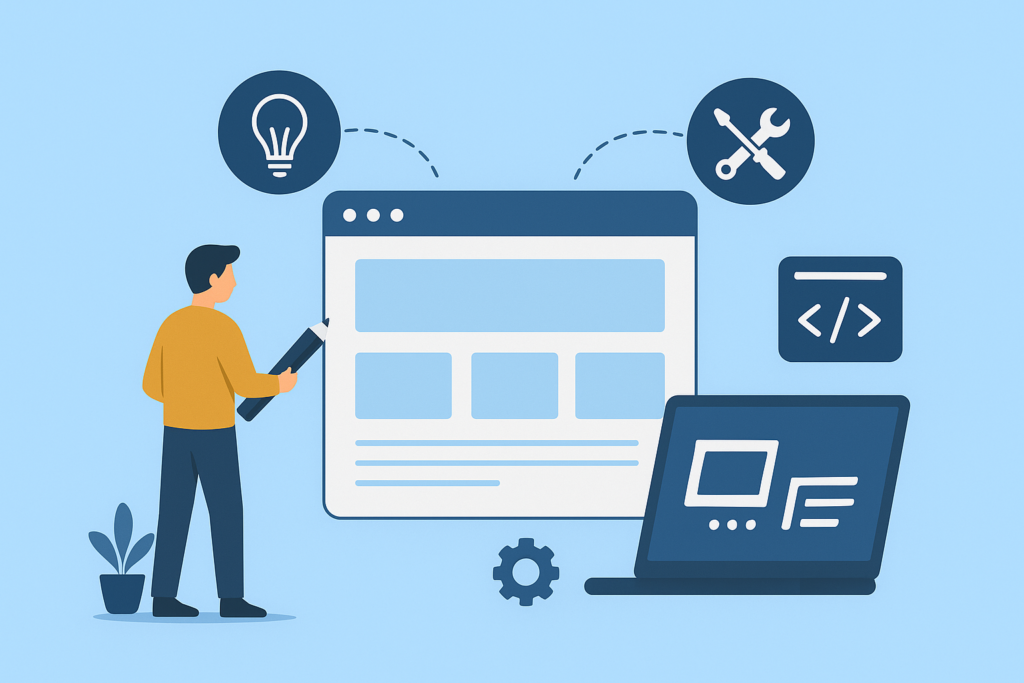
At Appledew UK, we follow a proven, results-driven process to ensure every website delivers real business value.
1. Discovery & Strategy Planning
The discovery and strategy planning phase is the foundation of every successful website project. During this stage, businesses collaborate with designers and developers to understand goals, target audiences, market trends, and competitors. This research ensures the website aligns with the brand’s vision and business objectives while identifying opportunities for differentiation.
Based on these insights, a clear strategy is created, outlining site structure, features, content requirements, and technical specifications. This planning phase guides the design and development process, minimises risks, and ensures that the final website delivers an engaging user experience, optimised performance, and measurable results.
We start by understanding:
- Your business goals
- Your target audience
- Your competitors
- Your brand identity
This phase builds the foundation for your website’s structure and messaging.
2. Website Architecture & Wireframing
Website architecture and wireframing establish the structural blueprint of a website. During this phase, designers organise content, define navigation paths, and create a logical layout that ensures users can easily find information. Clear site architecture improves user experience, supports SEO, and provides a roadmap for efficient development.
Wireframes are visual guides representing page layouts, key elements, and functional components without final design details. They allow stakeholders to review structure, provide feedback, and make adjustments early in the process. By focusing on organisation and usability first, this phase ensures the final website is intuitive, cohesive, and ready for successful design and development.
Before design begins, we create wireframes that outline:
- Page structure
- Navigation
- Content layout
- Call-to-action placement
Wireframes ensure clarity before visual design begins.
3. Visual Design Phase
The visual design phase brings a website’s concept to life by transforming wireframes into visually engaging interfaces. Designers focus on branding, colour schemes, typography, imagery, and overall aesthetics to create a cohesive and appealing look that resonates with the target audience. This phase ensures the website reflects the brand’s identity and leaves a strong impression on visitors.
Interactive elements, buttons, and layout details are refined to enhance usability and engagement. Through mockups and prototypes, stakeholders can review and provide feedback before development begins. A strong visual design ensures the website is both attractive and functional, setting the stage for a successful launch.
This is where your website comes to life visually. We develop:
- Custom layouts
- Brand-aligned colour schemes
- Typography systems
- Iconography and visual assets
4. Front-End Development
Front-end development focuses on building the visual and interactive elements of a website that users directly engage with. Using technologies like HTML, CSS, and JavaScript, developers transform design mockups into responsive, dynamic web pages that function seamlessly across devices and browsers. This phase ensures that the website is visually consistent, user-friendly, and performs smoothly.
Front-end development also involves implementing animations, interactive forms, navigation menus, and other features that enhance user experience. Collaboration with designers and back-end developers ensures the website is both functional and visually appealing, creating a polished and engaging platform that meets business goals and user expectations.
5. Back-End Development
Back-end development is the backbone of a website, handling server-side operations, databases, and application logic. It ensures that data is processed securely and efficiently, powering features like user accounts, content management, and e-commerce transactions. This phase focuses on creating a robust, scalable, and secure infrastructure that supports the website’s functionality and performance.
Back-end developers work closely with front-end teams to integrate APIs, manage server configurations, and optimise database performance. By building a reliable and efficient back-end, websites can handle high traffic, deliver dynamic content, and provide seamless interactions, ensuring a smooth and dependable experience for users.
The back end powers functionality. This includes:
- CMS integration
- Database development
- User management systems
- Custom features
6. Content Integration
Content integration is the process of adding and organising text, images, videos, and other media into a website to create a cohesive and engaging user experience. During this phase, content is optimised for readability, SEO, and alignment with the brand’s messaging, ensuring that every element supports business goals and user needs.
This stage also involves setting up content management systems (CMS) to allow easy updates and future scalability. Proper content integration ensures consistency across pages, improves navigation, and enhances user engagement. By carefully combining design and content, websites become more informative, persuasive, and effective in achieving their objectives.
We add your:
- Text content
- Images and videos
- Forms
- Blogs
- Service pages
7. Testing & Quality Assurance
Testing and quality assurance ensure that a website functions flawlessly across all devices, browsers, and platforms. This phase involves checking for bugs, broken links, layout inconsistencies, and performance issues, as well as validating forms, navigation, and interactive elements. Rigorous testing ensures a seamless and reliable user experience while maintaining the site’s professionalism and credibility.
Quality assurance also includes evaluating website speed, security, and SEO compliance to meet industry standards. By identifying and resolving issues before launch, businesses can deliver a polished, high-performing website. Thorough testing and QA guarantee that the final product is stable, efficient, and ready for successful deployment.
Before launch, we perform:
- Cross-browser testing
- Mobile testing
- Performance benchmarking using PageSpeed Insights
- Speed testing
- Security checks
8. Launch & Deployment
The launch and deployment phase marks the transition of a website from development to a live, public-facing platform. This stage involves transferring the site to a production server, configuring domain settings, and ensuring that all functionalities work seamlessly in a real-world environment. Careful planning and execution during launch minimise downtime and prevent technical issues, providing a smooth experience for users from day one.
Post-launch, developers monitor website performance, security, and user interactions to address any immediate concerns. This phase also includes implementing analytics, backups, and ongoing maintenance strategies. A successful launch ensures the website is fully operational, reliable, and ready to achieve business objectives.
9. Post-Launch Support
Post-launch support is essential for maintaining a website’s performance, security, and overall functionality after it goes live. This phase includes monitoring for bugs, updating software, managing backups, and addressing any user-reported issues to ensure the site remains stable and reliable. Regular support helps prevent downtime and protects the website from potential security threats.
Additionally, post-launch support involves optimising performance, implementing new features, and making design or content updates based on user feedback and analytics. Continuous maintenance ensures the website evolves with business needs, stays competitive in the digital landscape, and provides an exceptional experience for visitors over time.
We provide ongoing:
- Maintenance
- Updates
- Security patches
- Performance monitoring
Common Website Mistakes That Hurt Business Growth
Many businesses lose customers because of simple but costly website mistakes:
Slow Load Times
Even a 2-second delay can reduce conversions dramatically.
Confusing Navigation
If users cannot find information quickly, they leave.
Weak Call-to-Actions
Unclear messaging results in lost leads and missed sales.
Outdated Design
Old-fashioned design makes your brand look less credible.
Poor Mobile Experience
If your mobile website is hard to use, you lose mobile traffic.
Ignoring SEO Fundamentals
Without proper structure, even the best-looking websites fail to attract traffic.
Advanced Features That Turn Websites into Growth Engines
Modern websites can do much more than display text and images.
E-Commerce Functionality
E-commerce functionality transforms a website into a powerful sales platform. Features like secure payment gateways, product catalogs, shopping carts, and order management streamline online transactions. By providing a seamless and user-friendly shopping experience, e-commerce websites help businesses increase sales, expand their reach, and drive sustainable growth in competitive digital markets.
Sell products and services directly through:
- Secure checkout systems
- Payment integrations
- Order management
Lead Generation Systems
Lead generation systems turn websites into effective customer acquisition tools. By integrating forms, landing pages, chatbots, and call-to-action strategies, businesses can capture visitor information and nurture prospects. These systems help convert traffic into qualified leads, driving sales growth, improving marketing ROI, and supporting long-term business development.
Capture and automate leads using:
- Contact forms
- Landing pages
- CRM integrations
Live Chat & Chatbots
Live chat and chatbots enhance user engagement by providing instant support and personalised interactions. They answer queries, guide visitors, and improve customer experience around the clock. By automating communication and reducing response times, these tools help increase conversions, build trust, and streamline customer service for business growth.
Booking & Appointment Systems
Booking and appointment systems simplify scheduling for businesses and customers. By allowing users to book services online, check availability, and receive confirmations, these systems enhance convenience and efficiency. They reduce administrative workload, prevent scheduling conflicts, and improve customer satisfaction, turning websites into effective tools for driving engagement and business growth.
Custom Dashboards
Custom dashboards provide businesses with real-time insights into website performance, user behaviour, and key metrics. By consolidating data into an intuitive interface, they enable informed decision-making, track goals, and optimise strategies. These dashboards empower teams to monitor progress, identify opportunities, and drive growth through data-driven website management.
Website Design for UK Business Types
Websites for Startups
Websites for startups focus on establishing a strong online presence quickly and effectively. They combine modern design, clear branding, and intuitive navigation to attract investors and customers. Optimised for speed and mobile devices, these websites help startups build credibility, engage audiences, and support rapid business growth from the outset.
Startups need:
- Fast development
- Scalable architecture
- Strong brand storytelling
Websites for Small Businesses
Websites for small businesses are designed to showcase products and services clearly while providing an easy-to-navigate experience. With cost-effective design, mobile optimisation, and strong branding, these websites help small businesses reach local customers, build credibility, and compete effectively online, supporting growth and long-term success in the digital marketplace.
Small businesses benefit from:
- Local SEO optimisation
- Simple navigation
- Conversion-focused layouts
Websites for E-Commerce Brands
Websites for e-commerce brands are designed to provide seamless online shopping experiences. With user-friendly navigation, secure payment gateways, and mobile optimisation, these sites enhance customer engagement and drive sales. Effective design showcases products, builds brand trust, and supports marketing strategies, helping e-commerce businesses grow and succeed in competitive markets.
Online stores require:
- Fast product pages
- Secure payments
- Inventory management
Websites for B2B Companies
Websites for B2B companies focus on professionalism, credibility, and lead generation. They feature clear service offerings, case studies, and client testimonials, along with intuitive navigation and strong calls-to-action. Optimised for performance and SEO, these websites help B2B businesses build trust, attract decision-makers, and drive meaningful business partnerships online.
B2B websites focus on:
- Trust building
- Case studies
- Lead capture systems
SEO and Website Development: A Powerful Combination
SEO and website development are closely connected, working together to create high-performing, search-optimised websites. While development ensures fast, secure, and user-friendly sites, SEO focuses on visibility, keyword optimisation, and content relevance. Integrating SEO from the start of the development process improves site architecture, URL structure, mobile responsiveness, and overall user experience. This synergy enhances organic search rankings, drives targeted traffic, and increases engagement, making websites more effective in achieving business goals and staying competitive in today’s digital landscape.
Technical SEO Best Practices
Technical SEO best practices focus on improving a website’s structure to help search engines crawl, index, and rank it effectively according to Google’s Search Quality Evaluator Guidelines. This includes optimising site speed, mobile responsiveness, secure HTTPS implementation, clean URL structures, and proper use of schema markup. By following strong technical SEO foundations, websites become more accessible to search engines, deliver better user experiences, and achieve stronger visibility in organic search results.
- Clean code structure
- Fast loading speed
- Secure HTTPS
- Mobile optimisation
On-Page SEO Structure
On-page SEO structure refers to optimising individual web pages to improve their visibility and relevance in search engine results. This includes strategic use of headings, meta titles, meta descriptions, keyword placement, internal linking, and image alt tags. A well-organised on-page structure helps search engines understand content context while enhancing readability for users. Strong on-page SEO improves rankings, increases organic traffic, and delivers a more engaging user experience.
Structured according to HTML heading best practices
- Proper heading tags (H1–H6)
- Keyword-optimised content
- Internal linking
- Optimised meta tags
Content Strategy Integration
Content strategy integration ensures that website development and SEO work together to deliver valuable, relevant, and search-optimised content. It involves planning keywords, user intent, content structure, and internal linking before development begins. By aligning content creation with technical performance and design, businesses can improve search visibility, increase user engagement, and support higher conversion rates. A strong integrated content strategy helps websites rank better and connect more effectively with their target audience.
High-quality blog content improves:
- Traffic
- Engagement
- Authority
Security and Performance in Website Development
Security and performance are critical elements of modern website development, ensuring websites remain safe, fast, and reliable for users. Strong security measures such as SSL encryption, firewalls, and regular updates protect websites from cyber threats and data breaches. At the same time, performance optimisation techniques like caching, image compression, and clean coding improve loading speeds and overall user experience. When security and performance work together, websites become more trustworthy, stable, and capable of supporting long-term business growth. A secure website builds confidence.
Essential Security Features
- SSL certificates
- Secure hosting environments
- Firewall protection
- Backup systems
Performance Optimisation
- Caching systems
- Image compression
- Code minification
- Content delivery networks (CDNs)
Why Appledew UK is the Right Website Development Partner
Appledew UK delivers more than websites — we build digital platforms focused on growth.
Our Strengths
- UK market expertise
- Custom-built solutions
- SEO-ready development
- Business-focused strategies
Our Development Philosophy
We focus on:
- Performance
- Scalability
- User satisfaction
- Business outcomes
Real-World Examples of Website Success
Example 1: Local UK Service Business
A professional services company experienced:
- 120% increase in leads
- 65% faster loading speed
- Higher enquiry quality
Example 2: E-Commerce Brand
An online store achieved:
- 80% increase in conversion rate
- Reduced cart abandonment
- Improved mobile sales
Example 3: B2B Company
A B2B firm gained:
- Better lead quality
- Higher engagement time
- Increased trust through professional design
Future Trends in Website Design & Development
Artificial Intelligence Integration
Artificial Intelligence (AI) is transforming website design and development by creating smarter, more personalized digital experiences. Through AI-powered chatbots, predictive analytics, and automated content generation, websites can now understand user behavior and deliver tailored content in real time. AI also improves website performance by optimizing load times, enhancing security, and enabling advanced search and navigation features. From intelligent customer support to dynamic product recommendations, AI integration helps businesses increase engagement, improve conversion rates, and provide seamless user journeys. As AI technology continues to evolve, it is becoming an essential component of modern, high-performing, and future-ready websites.
Voice Search Optimisation
Voice search optimisation is becoming a key trend in modern website design and development as more users rely on smart speakers and voice assistants like Siri, Alexa, and Google Assistant. Websites are now being structured to support conversational queries, natural language keywords, and featured snippets to deliver faster, more accurate results. This approach improves accessibility, enhances user experience, and increases visibility in voice search results. By optimising content for voice search, businesses can stay ahead of changing user behaviour, capture local search opportunities, and ensure their websites remain competitive, future-ready, and aligned with evolving search technologies.
Progressive Web Apps (PWAs)
Progressive Web Apps (PWAs) are revolutionising website design and development by combining the best features of websites and mobile applications. PWAs offer fast loading speeds, offline functionality, and app-like experiences directly through web browsers without requiring users to download traditional apps. They improve user engagement with push notifications, smooth animations, and responsive design across all devices. PWAs are also more cost-effective to develop and maintain than native apps, making them an ideal choice for businesses. As demand for speed and seamless performance grows, PWAs are becoming a future-focused solution for modern digital experiences.
Accessibility-Focused Design
Accessibility-focused design is becoming a major priority in modern website design and development, ensuring digital experiences are inclusive for users of all abilities. By implementing features such as keyboard navigation, screen reader compatibility, high-contrast visuals, and clear content structure, websites become easier to navigate for everyone, including people with visual, auditory, or motor impairments. This approach not only improves user experience but also helps businesses meet legal and ethical standards for digital accessibility. Accessible websites reach wider audiences, build stronger brand trust, and create more engaging, user-friendly platforms for the future. Accessibility standards should follow WCAG 2.1 guidelines to ensure inclusive digital experiences.
Frequently Asked Questions (FAQs)
How long does it take to build a website?
Most websites take between 2–8 weeks depending on complexity.
Is SEO included in website development?
Yes, proper SEO structure is part of professional development.
Can I update my website myself?
Yes, we build user-friendly CMS platforms for easy updates.
Do you offer ongoing support?
Yes, Appledew UK provides maintenance and support after launch.
Key Takeaways
Professional website design and development is not just about looking good — it is about:
- Building trust
- Improving visibility
- Increasing conversions
- Driving business growth
Your website is your most powerful business tool. When built professionally, it becomes a 24/7 sales engine that consistently delivers results.
Call to Action
Ready to build a powerful, high-performing website for your business?
Contact Appledew UK today to start your website design and development journey and turn your online presence into a growth engine for your business.
How to Implement This Guide Using AI
After reading this guide, you can use AI tools to help implement the strategies discussed above for your own website.
Copy the prompt below, replace the blog title with this article’s title, and run it inside your preferred AI tool to receive a practical, step-by-step implementation plan based on this guide.
AI Implementation Prompt
You are a senior website design, development, and SEO specialist.
I have just read the blog post titled “Professional Website Design & Development for UK Businesses: The Complete Growth Guide”.
Based strictly on the strategies, processes, and best practices discussed in this article, create a clear and actionable implementation plan that I can apply to my own website.
Ensure your recommendations:
- Follow Google Search Quality Evaluator Guidelines (E-E-A-T)
- Focus on user experience, performance, security, and conversions
- Avoid keyword stuffing, spam, or manipulative SEO tactics
- Prioritise people-first, helpful content
Structure the output into:
- Website design improvements
- UX and UI optimisation steps
- Technical SEO and site structure
- Performance and security enhancements
- Ongoing optimisation and maintenance actions
Need Professional Help?
If you would like expert support implementing this strategy for your business, contact Appledew UK via our website contact form (https://appledew.co.uk/contact-us/), and our team will be happy to help.