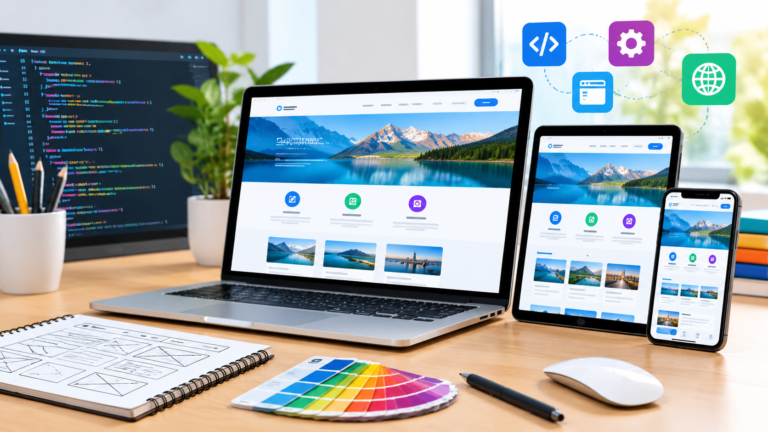

Introduction
In today’s digital-first economy, website design and development have become critical drivers of business credibility, visibility, and growth. A website is no longer just an online brochure; it is a strategic platform that influences user perception, engagement, and conversion at every stage of the customer journey.
Users expect fast, intuitive, and secure digital experiences across all devices. At the same time, search engines prioritise websites that deliver real value, strong usability, and technical reliability. Businesses that fail to meet these expectations risk losing traffic, trust, and revenue—regardless of how strong their products or services may be.
At Appledew UK, website design and development are approached as performance-focused disciplines. Every design choice and development decision is guided by user behaviour, scalability, and alignment with Google’s evolving standards. This guide explores the foundational principles of modern website design and development, explaining how businesses can build websites that support long-term digital success.
Understanding Modern Website Design Principles
Modern website design is built around clarity, usability, and purpose. Visual appeal remains important, but it must support function rather than distract from it. Effective design communicates value instantly and guides users toward meaningful interactions.
Research from Nielsen Norman Group shows that users form impressions of a website within seconds. Poor layout, cluttered interfaces, or confusing navigation can lead to immediate abandonment.
Key principles of modern website design include:
- Clear visual hierarchy to guide attention
- Consistent typography and spacing
- Intentional use of colour and contrast
- Predictable navigation patterns
- Design consistency across all pages
These principles help reduce cognitive load and make websites easier to understand and use.
The Role of User Experience (UX) in Website Design

User experience (UX) focuses on how users interact with a website and how efficiently they can achieve their goals. UX design is not limited to visuals—it encompasses navigation, accessibility, responsiveness, and interaction flow.
Google increasingly evaluates UX quality through performance and engagement signals. Websites that frustrate users with slow loading times or confusing layouts often experience higher bounce rates and lower search visibility.
Google measures UX using Core Web Vitals, which assess loading speed, interactivity, and visual stability.
Strong UX design prioritises:
- Logical information architecture
- Simple and intuitive navigation
- Clear calls to action
- Minimal distractions
- Fast interaction response
When UX is embedded into the design process early, websites perform better both for users and search engines.
Website Development as the Backbone of Performance
Website development turns design concepts into functional, scalable systems. High-quality development ensures that websites are fast, secure, and easy to maintain.
Google emphasises building websites for people first, as outlined in Google Search Essentials. Clean development practices allow search engines to crawl, index, and understand content more effectively.
Effective website development focuses on:
- Clean and maintainable code
- Cross-browser compatibility
- Performance optimisation
- Security best practices
- Scalability for future growth
Without strong development foundations, even the best designs will struggle to deliver results.
Clean and Semantic Code Structure
Semantic code improves accessibility, performance, and SEO clarity. Proper use of HTML elements helps browsers, assistive technologies, and search engines interpret content accurately.
The W3C HTML specification recommends using semantic tags such as <header>, <nav>, <main>, and <footer> to define page structure.
Benefits of semantic coding include:
- Better accessibility for screen readers
- Improved search engine understanding
- Cleaner and more maintainable code
- Faster rendering and debugging
Clean code also simplifies future updates and reduces technical debt over time.
Mobile-First Website Design and Development
Mobile devices account for the majority of global web traffic, making mobile-first development essential. Google primarily uses the mobile version of a website for ranking and indexing.
This approach is clearly explained in Google’s mobile-first indexing documentation.
Mobile-first development ensures that:
- Layouts adapt seamlessly to all screen sizes
- Navigation remains usable on touch devices
- Content parity exists across desktop and mobile
- Performance remains consistent
Designing for mobile first often results in cleaner layouts and better overall usability.
Website Performance and Page Speed Optimisation
Website speed directly affects user satisfaction and conversion rates. Slow websites lead to higher abandonment rates and weaker engagement signals.
Google evaluates speed using tools such as PageSpeed Insights, which analyse both lab data and real-world user experiences.
Performance optimisation focuses on:
- Image compression and optimisation
- Efficient CSS and JavaScript loading
- Browser caching strategies
- Reducing server response times
- Minimising unnecessary scripts
By integrating performance considerations during development, businesses avoid costly post-launch fixes.
Security as a Core Development Requirement
Website security is essential for protecting users and maintaining trust. Google confirms that secure websites are favoured in search rankings.
According to Google’s HTTPS security guidelines, encryption helps protect data integrity and user privacy.
Core security practices include:
- SSL certificate implementation
- Secure hosting environments
- Regular software updates
- Protection against common vulnerabilities
- Secure form handling and authentication
Security is not just a technical requirement—it is a trust signal for users.
SEO-Friendly Website Architecture

Website architecture determines how easily users and search engines can navigate content. Poor structure can prevent important pages from being discovered or indexed properly.
Google’s crawling and indexing guidance highlights the importance of logical internal linking and hierarchy.
An SEO-friendly architecture includes:
- Clear URL structures
- Logical category organisation
- Internal links between related pages
- Proper heading usage
- XML sitemaps for search engines
Planning architecture during development leads to stronger long-term SEO performance.
Content and Design Alignment
Design and content must work together to communicate value effectively. Strong content loses impact when buried under poor design or cluttered layouts.
Google’s Helpful Content guidance emphasises clear, people-first content presentation.
Effective alignment involves:
- Readable typography
- Adequate white space
- Visual cues that support reading flow
- Design elements that reinforce messaging
This alignment improves engagement metrics such as time on page and scroll depth.
Accessibility in Website Design and Development
Accessibility ensures that websites are usable by people of all abilities. Inclusive design improves usability for everyone and aligns with global standards.
The Web Content Accessibility Guidelines (WCAG) provide clear recommendations for accessible website design.
Accessibility best practices include:
- Proper colour contrast
- Keyboard navigation support
- Alt text for images
- Clear form labels
- Structured content hierarchy
Accessible websites often outperform inaccessible ones due to improved usability and reach.
Advanced Website Design and Development Strategies
As digital competition increases, foundational best practices alone are no longer enough. Websites must be built with adaptability, scalability, and conversion performance in mind. Advanced website design and development strategies focus on aligning technical precision with business objectives.
Google encourages site owners to optimise experiences continuously based on user behaviour and performance insights, rather than relying on static design decisions. Websites that evolve over time tend to perform better in search and engagement metrics.
Advanced strategies focus on:
- Data-driven design decisions
- Conversion-centred layouts
- Technical SEO integration
- Long-term scalability planning
Conversion-Focused Website Design
A visually appealing website does not automatically convert visitors into customers. Conversion-focused design ensures that every element supports a clear user action, whether it is submitting a form, making a purchase, or initiating contact.
According to Nielsen Norman Group, users respond best to interfaces that minimise friction and provide clear next steps.
Conversion-focused design principles include:
- Clear and visible calls to action
- Logical content flow
- Strategic placement of trust signals
- Simplified forms and checkout processes
- Consistent messaging across pages
Design decisions guided by user intent increase engagement and measurable outcomes.
Integrating Technical SEO into Development
Technical SEO must be embedded during development rather than added later. Websites built with SEO in mind are easier to crawl, index, and rank effectively.
Google outlines technical expectations in its Search Essentials documentation, emphasising accessibility, crawlability, and performance.
Key technical SEO considerations include:
- Optimised HTML structure
- Proper heading hierarchy
- Clean internal linking
- Structured data implementation
- Optimised meta information
By integrating SEO during development, websites gain a stronger foundation for organic growth.
Structured Data and Search Visibility
Structured data helps search engines understand content context more accurately. It can enhance search appearance through rich results such as FAQs, reviews, and product details.
Google provides clear guidance through structured data documentation, encouraging accurate and compliant implementation.
Benefits of structured data include:
- Improved search result appearance
- Higher click-through rates
- Better content classification
- Enhanced visibility opportunities
When used correctly, structured data strengthens how content is presented in search results.
CMS Selection and Scalability Planning
Choosing the right content management system (CMS) affects scalability, performance, and long-term flexibility. A CMS should support growth without introducing technical limitations.
Google recommends maintaining consistent content access for search engines, regardless of platform choice, as outlined in JavaScript SEO guidelines.
Scalability planning includes:
- Modular page templates
- Flexible content structures
- Performance-friendly plugins or extensions
- Future integration readiness
Scalable systems reduce redevelopment costs and support evolving business needs.
Website Maintenance and Long-Term Performance

A website is not a one-time project. Ongoing maintenance ensures security, performance, and relevance over time. Google encourages regular updates and technical upkeep to maintain search visibility.
Maintenance best practices include:
- Software and dependency updates
- Performance monitoring
- Broken link checks
- Content freshness reviews
- Security audits
Regular maintenance protects both user experience and search performance.
Analytics-Driven Design Improvements
Analytics provide insights into how users interact with a website. Data-driven decisions reduce guesswork and improve outcomes.
Google recommends analysing real user behaviour through tools aligned with Core Web Vitals to identify performance and usability gaps.
Analytics can reveal:
- High-exit pages
- Low-engagement content
- Navigation issues
- Conversion drop-off points
Continuous optimisation based on analytics leads to steady performance improvements.
Common Website Design and Development Mistakes
Despite access to best practices, many websites still underperform due to avoidable mistakes. These issues often stem from prioritising aesthetics over functionality or neglecting technical foundations.
Common mistakes include:
Ignoring Mobile-First Design
Many websites are still designed primarily for desktop users, despite Google using mobile-first indexing. Poor mobile layouts, small text, and unresponsive elements lead to high bounce rates and reduced visibility.
Slow Page Loading Speed
Heavy images, unoptimised scripts, and poor hosting choices often result in slow websites. Page speed directly affects user experience and is measured through Core Web Vitals, making performance optimisation essential.
Poor Navigation Structure
Complex menus and unclear site structure make it difficult for users and search engines to find content. Ineffective navigation reduces engagement and limits proper crawling and indexing.
Overloading Pages with Visual Effects
Excessive animations, sliders, and pop-ups may look appealing but often distract users and slow down performance. Design should enhance usability, not compete with content.
Lack of SEO-Friendly Architecture
Missing heading hierarchy, unclear URLs, and weak internal linking prevent search engines from understanding page context, limiting organic growth potential.
Neglecting Accessibility Standards
Ignoring accessibility elements such as colour contrast, alt text, and keyboard navigation excludes users and negatively impacts overall usability and compliance.
Failure to Maintain and Update the Website
Outdated content, plugins, or software can lead to security risks, broken functionality, and declining search performance over time.
Google has stated that poor user experience and performance negatively affect visibility, reinforcing the importance of avoiding these errors.
Frequently Asked Questions
Q1. Why is website design important for SEO?
Website design affects usability, engagement, and crawlability. Google prioritises websites that provide positive user experiences and clear structure.
Q2. How does page speed influence rankings?
Page speed is a ranking factor measured through PageSpeed Insights and Core Web Vitals.
Q3. What is mobile-first development?
Mobile-first development prioritises mobile usability, aligning with mobile-first indexing.
Q4. How does UX impact conversions?
Good UX reduces friction and helps users complete actions more easily, improving conversion rates.
Q5. What role does accessibility play in web design?
Accessibility improves usability for all users and aligns with WCAG guidelines.
Q6. Is HTTPS necessary for modern websites?
Yes. Google confirms HTTPS as a ranking signal through HTTPS security.
Q7. How often should a website be updated?
Websites should be reviewed regularly for content relevance, performance, and security updates.
Q8. Does structured data improve rankings?
Structured data does not directly boost rankings but improves search appearance and click-through rates.
Q9. Why is clean code important?
Clean code improves performance, accessibility, and long-term maintainability.
Q10. Can website design affect brand trust?
Yes. Consistent design, security, and usability directly influence credibility and trust.
Final Conclusion
Website design and development are foundational to digital success. A well-structured, fast, secure, and user-focused website supports search visibility, engagement, and business growth over time. From UX and mobile-first development to performance optimisation and technical SEO, every element plays a role in shaping user experience and search performance.
At Appledew UK, website design and development are guided by strategy, data, and Google-aligned best practices. By focusing on long-term performance rather than short-term trends, businesses can build digital platforms that adapt, scale, and succeed in an ever-changing online landscape.
How to Implement This Guide Using AI
You can use the prompt below in ChatGPT to turn the strategies discussed in this article into a clear, step-by-step implementation plan for your own website.
AI Implementation Prompt
Prompt:
Act as a senior website design, development, and technical SEO expert.Based on the article “Strategic Website Design and Development for Digital Growth”, create a practical implementation checklist for my website.
Include recommendations for:
- UX-focused website design improvements
- Mobile-first design and responsiveness
- Page speed and Core Web Vitals optimisation
- SEO-friendly site architecture and internal linking
- Website security best practices
- Accessibility improvements (WCAG aligned)
- Technical SEO and structured data
- Ongoing website maintenance and performance monitoring
Ensure all suggestions follow Google Search Quality Guidelines and Helpful Content guidelines.
Need Expert Help?
If you would like our team to implement these strategies for you, please get in touch via our contact form:
👉 (https://appledew.co.uk/contact-us/)