

Introduction
In a highly competitive digital landscape, Branding & Graphic Design have become essential pillars for building trust, recognition, and long-term business growth. A strong brand is no longer defined only by a logo or colour scheme—it is shaped by consistency, emotional connection, usability, and credibility across every digital touchpoint.
For businesses like Appledew UK, branding and design are strategic tools that influence how users perceive quality, professionalism, and authority. Search engines also evaluate these signals when determining rankings, especially through user engagement, experience, and trust indicators.
Modern branding aligns closely with Google’s quality standards, where pages are expected to demonstrate experience, expertise, authority, and trustworthiness. Visual identity and brand clarity directly support these expectations by improving usability, reducing confusion, and reinforcing authenticity.
Understanding Branding in the Digital Era
Branding is the collective impression a business leaves on its audience. It encompasses visual identity, messaging, tone, and user experience across platforms. In digital environments, branding must communicate value instantly and consistently.
According to Harvard Business Review, strong brands simplify customer decision-making and create emotional loyalty, which leads to higher lifetime value and retention.
Effective branding answers three critical questions for users:
- Who is this brand?
- What problem does it solve?
- Why should I trust it?
When these questions are answered clearly, users are more likely to stay, engage, and convert.
The Strategic Role of Graphic Design
Graphic design is the visual language of branding. It translates strategy into tangible experiences through layout, typography, colour, and imagery. Well-executed design improves comprehension, accessibility, and emotional appeal.
Research from Adobe highlights that brands maintaining visual consistency across channels experience significantly higher recognition and user trust.
Core graphic design elements include:
- Logo systems and variations
- Typography hierarchy
- Colour psychology
- Grid-based layouts
- Visual consistency across platforms
When these elements work together, they reinforce credibility and improve overall user experience.
Branding, Graphic Design, and User Trust

Trust is the foundation of both conversions and search visibility. Users form judgments about a website within milliseconds, largely based on visual cues.
According to Nielsen Norman Group, users associate clean, professional design with credibility, while cluttered or inconsistent design increases distrust and bounce rates.
Strong branding supports trust by:
- Creating visual familiarity
- Reducing cognitive friction
- Establishing professionalism
- Reinforcing brand authenticity
These factors align closely with Google’s definition of high-quality pages that serve user needs effectively.
Visual Consistency Across Digital Touchpoints
Consistency is one of the most important branding principles. Whether users interact with a website, social media post, or marketing asset, the experience should feel unified.
The Interaction Design Foundation explains that consistent interfaces improve usability, reduce learning curves, and increase user confidence.
Consistency applies to:
- Colours and typography
- Iconography and imagery style
- Tone of voice
- Layout patterns
For Appledew UK, maintaining consistency strengthens recognition and reinforces brand authority across all digital channels.
Branding and Google’s Quality Expectations
Google evaluates websites beyond keywords and backlinks. User experience, trust signals, and brand clarity play an increasingly important role.
Google’s own documentation explains that high-quality pages are those that provide value, clarity, and trust to users. This aligns with principles outlined in the Google Search Quality Evaluator Guidelines, which emphasise experience and credibility.
Strong branding helps meet these expectations by:
- Clearly communicating purpose
- Establishing brand legitimacy
- Supporting user satisfaction
- Enhancing perceived expertise
Well-branded websites often experience improved engagement metrics, which indirectly support SEO performance.
Typography and Brand Personality
Typography is more than aesthetics—it communicates tone and personality. Serif fonts may convey tradition and authority, while sans-serif fonts often reflect modernity and clarity.
According to Smashing Magazine, typography choices directly affect readability, user trust, and emotional response.
Effective typography systems:
- Use limited font families
- Maintain consistent hierarchy
- Support accessibility standards
- Enhance content scannability
A refined typography system ensures content feels professional and easy to consume.
Colour Psychology in Branding
Colours influence perception, emotion, and behaviour. Strategic colour usage helps brands evoke specific feelings and reinforce messaging.
Research shared by Verywell Mind explains how colours impact mood, trust, and decision-making.
Examples include:
- Blue: trust and reliability
- Green: growth and balance
- Black: authority and sophistication
- Orange: creativity and energy
When colour choices align with brand values, they strengthen emotional connection and recognition.
Logo Design and Brand Recall
A logo is often the first visual element users remember. It must be simple, scalable, and aligned with brand identity.
According to 99designs, effective logos are distinctive, timeless, and adaptable across platforms.
Strong logos:
- Work at multiple sizes
- Maintain clarity on all backgrounds
- Reflect brand positioning
- Support long-term recognition
A well-designed logo strengthens brand recall and supports consistency across digital assets.
Branding and User Experience (UX)
Branding and UX are deeply connected. Design decisions influence how users navigate, interpret, and interact with content.
The UX Collective highlights that strong branding enhances usability by creating predictable patterns and intuitive interfaces.
Good UX-driven branding:
- Reduces friction
- Improves accessibility
- Encourages exploration
- Increases time on site
For Appledew UK, aligning branding with UX principles ensures a seamless and engaging digital experience.
The Relationship Between Branding and SEO
Branding indirectly influences SEO by improving engagement signals such as dwell time, bounce rate, and return visits.
Search engines aim to rank pages that users find helpful and trustworthy. Strong branding supports this by creating clarity and credibility.
According to Search Engine Journal, branded searches and user trust signals are increasingly important ranking considerations.
Key branding-driven SEO benefits include:
- Higher engagement metrics
- Improved click-through rates
- Increased brand searches
- Enhanced backlink trustworthiness
Branding and SEO work best when aligned strategically.
Content Presentation and Visual Hierarchy
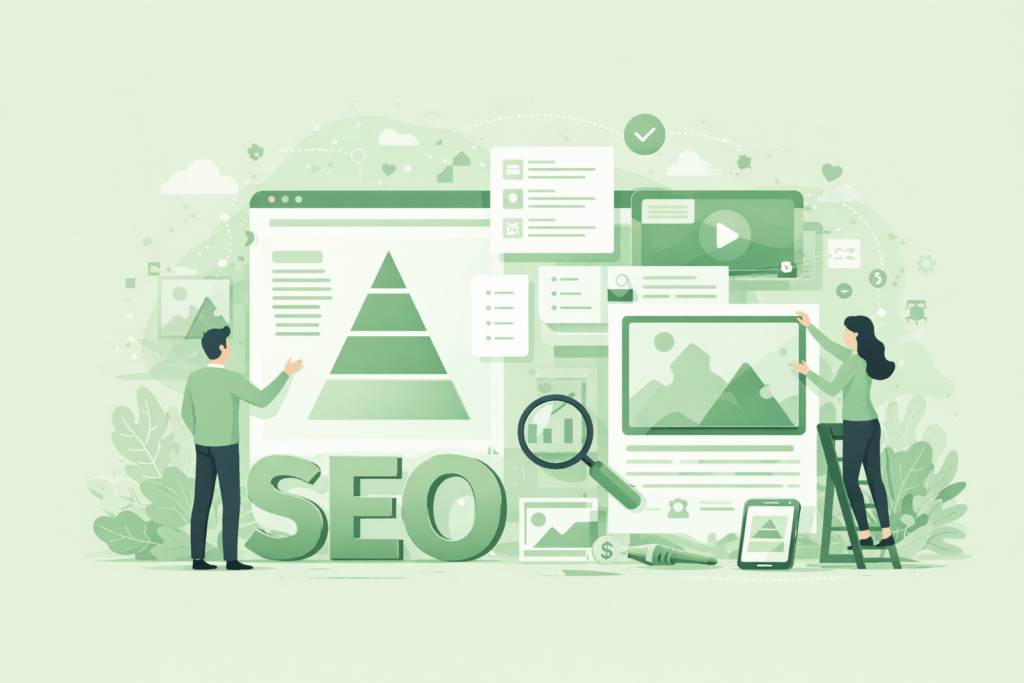
Visual hierarchy guides users through content effortlessly. Headings, spacing, imagery, and typography determine how information is consumed.
The Content Marketing Institute emphasises that structured content improves readability and user satisfaction.
Effective hierarchy:
- Highlights key messages
- Improves scannability
- Reduces cognitive load
- Enhances content retention
Strong visual hierarchy supports both branding and content performance.
Branding for Long-Term Business Growth
Branding is not a short-term tactic—it is a long-term investment. Consistent branding builds familiarity, trust, and loyalty over time.
According to Forbes, brands that invest in cohesive identity and design experience stronger market positioning and customer retention.
Long-term branding benefits include:
- Stronger customer relationships
- Higher perceived value
- Competitive differentiation
- Sustainable digital growth
For Appledew UK, branding and graphic design are foundational to scaling authority and visibility.
Brand Storytelling and Emotional Connection
Brand storytelling is the process of communicating values, mission, and purpose through consistent visual and verbal narratives. People connect with stories more than features, which is why storytelling has become a core branding principle.
According to Harvard Business School, emotionally connected customers are more than twice as valuable as highly satisfied customers because emotion drives loyalty and advocacy.
Effective brand storytelling:
- Humanises the brand
- Creates emotional resonance
- Builds authenticity
- Improves message retention
When branding and graphic design visually support storytelling, users feel a deeper connection to the brand.
Visual Identity Systems and Brand Cohesion
A visual identity system ensures that branding remains consistent across all platforms and materials. It defines how visual elements interact and scale.
The Interaction Design Foundation explains that structured design systems improve usability, speed up production, and maintain brand integrity.
A strong visual identity system includes:
- Logo usage rules
- Colour palettes
- Typography guidelines
- Iconography styles
- Image treatment standards
For Appledew UK, a defined system ensures consistency while allowing flexibility across digital channels.
Branding Across Digital Platforms
Branding must adapt without losing consistency. Websites, social media, email campaigns, and digital ads all require tailored yet unified design.
Research from Sprout Social shows that consistent branding across platforms increases audience trust and recognition.
Key adaptation principles:
- Maintain colour and typography consistency
- Adjust layouts for platform behaviour
- Keep tone of voice aligned
- Preserve core visual identity
Platform-specific flexibility combined with brand cohesion strengthens visibility and engagement.
Graphic Design and Conversion Optimisation
Design plays a direct role in guiding users toward action. Visual cues, spacing, contrast, and hierarchy influence decision-making.
According to CXL, design-driven clarity can significantly improve conversion rates by reducing friction and uncertainty.
Design elements that support conversions:
- Clear call-to-action placement
- Readable typography
- Strategic white space
- Visual emphasis on key actions
Brand-consistent design increases confidence, which directly impacts conversions.
Branding and Accessibility Standards
Accessibility is a critical aspect of modern branding. Inclusive design ensures that all users, regardless of ability, can interact with digital content.
The W3C highlights that accessible design improves usability for everyone, not just users with disabilities.
Accessibility considerations include:
- Sufficient colour contrast
- Readable font sizes
- Clear navigation
- Logical content structure
Accessible branding improves user experience, trust, and compliance with best practices.
The Importance of Brand Voice and Tone
Brand voice defines how a brand communicates verbally, while tone adjusts based on context. Together, they ensure consistent communication.
According to Nielsen Norman Group, consistent tone of voice improves usability and builds familiarity.
A strong brand voice:
- Reflects brand personality
- Remains consistent across channels
- Supports user expectations
- Enhances clarity and trust
Visual design should reinforce this voice through typography, spacing, and imagery choices.
Branding Mistakes That Weaken Trust
Even well-intentioned brands can undermine trust through poor branding decisions. Recognising these mistakes helps prevent long-term damage.
Common branding mistakes include:
- Inconsistent visual identity
- Overcomplicated design
- Poor typography choices
- Misaligned messaging
- Ignoring user experience
The UX Collective notes that inconsistency and clutter are major contributors to user frustration and abandonment.
Avoiding these pitfalls preserves brand credibility and usability.
Rebranding: When and Why It Matters
Rebranding is not about change for the sake of change. It is a strategic decision often driven by growth, repositioning, or evolving audiences.
According to Forbes, successful rebrands are grounded in strategy, not trends.
Valid reasons for rebranding include:
- Business expansion
- Market repositioning
- Outdated visual identity
- Mergers or acquisitions
Thoughtful rebranding strengthens relevance without losing recognition.
Branding and Long-Term SEO Performance
While branding does not directly alter rankings, it strongly influences behavioural signals that search engines monitor.
According to Search Engine Land, branded searches, trust signals, and engagement metrics contribute to long-term visibility.
Branding supports SEO by:
- Increasing brand searches
- Improving click-through rates
- Reducing bounce rates
- Encouraging backlinks from authoritative sources
Strong brands naturally attract trust and visibility.
Authority Signals and External Trust
Linking to high-authority sources improves perceived credibility and content quality. It demonstrates alignment with expert consensus.
Google’s quality framework prioritises trustworthy information sources, as outlined in the Google Search Quality Evaluator Guidelines searchqualityevaluatorguideline….
External authority signals include:
- References to reputable publications
- Citations from industry leaders
- Consistent messaging across platforms
These signals reinforce brand legitimacy and content reliability.
Branding Metrics That Matter
Brand performance should be measured using both qualitative and quantitative metrics.
According to HubSpot, tracking branding performance improves strategic decision-making.
Important branding metrics include:
- Brand awareness
- Engagement rates
- Repeat visits
- Conversion attribution
- Audience sentiment
Design consistency improves these metrics over time.
Future Trends in Branding & Graphic Design
Branding continues to evolve alongside technology and user expectations. Staying adaptable ensures long-term relevance.
The Adobe Blog highlights emerging trends such as minimalism, adaptive branding systems, and motion-based identity.
Key trends include:
- Responsive logos
- Motion graphics
- AI-assisted design
- Personalised visual experiences
Future-focused branding balances innovation with consistency.
Branding as a Competitive Advantage
In saturated markets, branding becomes a primary differentiator. Users often choose brands they recognise and trust, even when alternatives exist.
According to McKinsey & Company, strong branding supports pricing power and customer loyalty.
Competitive branding advantages:
- Higher perceived value
- Stronger emotional connection
- Increased market authority
- Sustainable growth
For Appledew UK, branding and graphic design serve as long-term strategic assets.
Frequently Asked Questions
Q1. Why is branding important for digital businesses?
Branding builds trust, recognition, and emotional connection, which directly influence engagement and conversions.
Q2. How does graphic design affect user trust?
Professional design signals credibility and improves usability, reducing bounce rates.
Q3. Can branding impact SEO?
Yes, branding improves engagement metrics and branded searches, which support SEO indirectly.
Q4. What makes a strong visual identity?
Consistency, clarity, scalability, and alignment with brand values.
Q5. How often should branding be updated?
Only when strategy, audience, or positioning changes significantly.
Q6. Why is consistency important in branding?
Consistency builds recognition and trust across platforms.
Q7. What role does typography play in branding?
Typography communicates tone, improves readability, and enhances perception.
Q8. How does branding support conversions?
Clear design reduces friction and increases user confidence.
Q9. Is accessibility part of branding?
Yes, inclusive design improves experience and trust for all users.
Q10. What is the biggest branding mistake to avoid?
Inconsistency across visual and messaging elements.
Conclusion
Branding & Graphic Design are essential components of modern digital success. They shape perception, influence trust, and support sustainable growth across channels.
By aligning visual identity, user experience, and authoritative references, brands strengthen both credibility and visibility. For Appledew UK, investing in cohesive branding supports trust, engagement, and long-term digital authority.
Strong branding is not just about appearance—it is about experience, consistency, and connection.
Need Help Implementing This Guide?
“Want to implement these strategies or need help with Branding & Graphic Design for your website? Reach out to us via our https://appledew.co.uk/contact-us/ and we’ll guide you step by step.”