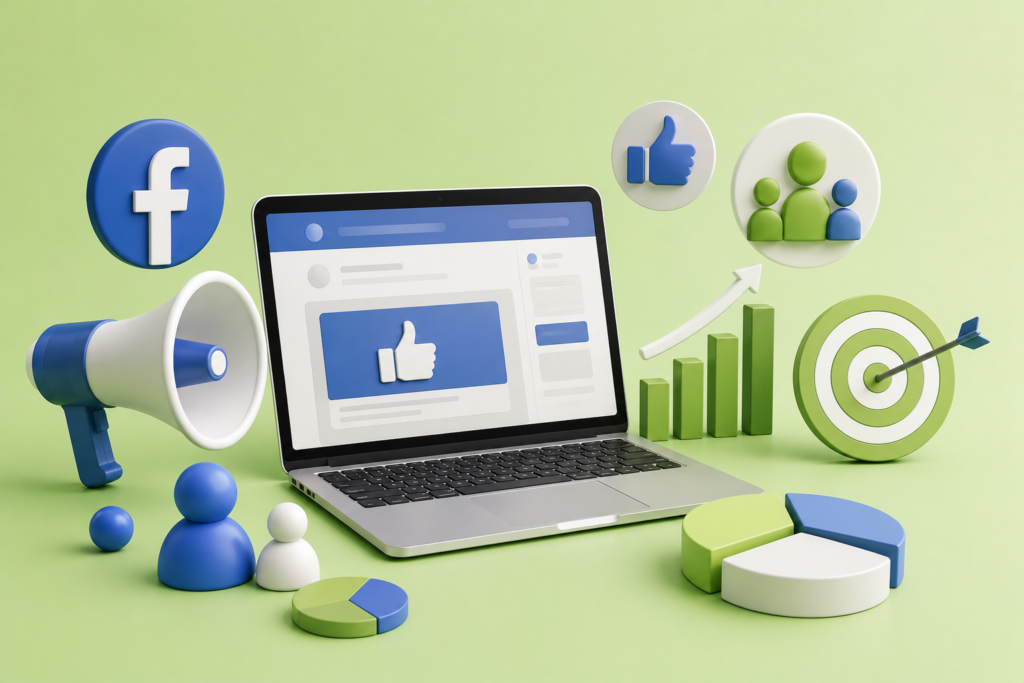
Learn how Facebook Advertising helps businesses generate qualified leads, increase sales, reduce advertising costs, and maximize ROI through strategic audience targeting, compelling creatives, and data-driven campaign optimization.
Introduction
In today’s competitive digital marketplace, Facebook Advertising remains one of the most effective ways for businesses to reach highly targeted audiences, generate qualified leads, and increase revenue. With billions of active users across Facebook, Instagram, Messenger, and the Meta Audience Network, businesses can connect with potential customers at every stage of the buying journey. Unlike traditional advertising, Facebook’s advanced targeting capabilities allow marketers to deliver personalized messages based on demographics, interests, behaviors, and purchasing intent, making every advertising pound work harder.
At Appledew UK, we believe successful Facebook advertising is built on strategy rather than guesswork. Businesses that combine audience research, compelling creative assets, data-driven optimization, and continuous testing consistently outperform competitors that rely solely on boosting posts or generic advertisements. Whether you’re a local business, eCommerce brand, B2B company, or service provider, a structured advertising strategy can dramatically improve your online visibility and return on investment.
Throughout this comprehensive guide, you’ll discover how to build profitable Facebook advertising campaigns, avoid common pitfalls, optimize campaign performance, understand Meta’s latest advertising features, and create sustainable growth through proven marketing principles. Every recommendation follows industry best practices and aligns with Google’s emphasis on creating trustworthy, helpful, experience-based content that genuinely assists readers in making informed decisions.
Facebook Advertising and Why It Matters for Modern Businesses
Facebook Advertising has evolved far beyond simple social media promotions. Today, it is one of the world’s most sophisticated digital advertising ecosystems, enabling businesses to reach highly qualified audiences through intelligent machine learning, behavioural targeting, and campaign automation. Whether your objective is increasing website traffic, generating leads, promoting local services, driving online purchases, or building long-term brand awareness, Facebook provides scalable advertising solutions suitable for organisations of every size.
Unlike many advertising platforms that depend heavily on keyword searches, Facebook introduces products and services to users based on their interests, online activities, purchasing behaviours, demographics, and engagement history. This proactive approach allows businesses to create demand instead of waiting for customers to search. As Meta’s artificial intelligence continues improving campaign optimisation, advertisers benefit from increasingly accurate audience matching and smarter budget allocation that enhances campaign efficiency over time.
Successful Facebook Advertising is built on strategic planning rather than simply launching advertisements. Businesses should define measurable objectives, understand customer personas, create persuasive messaging, develop visually compelling creatives, and continuously analyse campaign data. Following Google’s recommendations for creating helpful, user-focused content and maintaining transparent business practices also supports stronger advertising performance because landing pages deliver better user experiences.
Helpful Resources
Understanding the Facebook Advertising Ecosystem
The Facebook Advertising ecosystem extends well beyond Facebook itself. Through Meta Ads Manager, advertisers can simultaneously deliver campaigns across Facebook, Instagram, Messenger, Facebook Marketplace, Facebook Stories, Reels, and the Meta Audience Network. This integrated ecosystem provides exceptional reach while allowing advertisers to manage every campaign from one central platform.
Meta’s machine learning algorithms analyse thousands of signals to determine which users are most likely to complete desired actions. Rather than manually selecting every placement, advertisers increasingly benefit from automated campaign delivery that dynamically allocates budgets toward the highest-performing placements. This optimisation improves campaign efficiency while reducing manual management.
Understanding campaign hierarchy is equally important. Every campaign consists of three levels: Campaign, Ad Set, and Advertisement. The campaign defines marketing objectives, the ad set determines targeting, budget, placements, and optimisation, while individual advertisements contain images, videos, headlines, descriptions, and calls to action. A clear understanding of this structure helps marketers organise campaigns logically while simplifying reporting and ongoing optimisation.
Setting Clear Advertising Objectives Before Spending Budget
Many businesses waste advertising budgets because they launch campaigns without defining clear objectives. Facebook Advertising offers multiple campaign objectives designed for different stages of the customer journey, including Awareness, Traffic, Engagement, Leads, App Promotion, and Sales. Selecting the appropriate objective helps Meta optimise delivery toward users most likely to complete your desired action.
Awareness campaigns introduce new audiences to your business, while Traffic campaigns encourage website visits. Lead Generation campaigns collect customer information directly through Facebook Instant Forms or landing pages, making them ideal for service businesses. Sales campaigns focus on generating purchases, subscription sign-ups, or other high-value conversions. Aligning objectives with business goals significantly improves advertising efficiency.
Clearly defined Key Performance Indicators (KPIs) also play an essential role in campaign success. Rather than focusing solely on impressions or clicks, advertisers should measure Cost Per Lead (CPL), Return on Ad Spend (ROAS), Cost Per Acquisition (CPA), Conversion Rate, Customer Lifetime Value (CLV), and Average Order Value (AOV). Monitoring these metrics enables continuous optimisation based on meaningful business outcomes rather than vanity metrics.
Building Highly Targeted Audiences That Convert
Audience targeting remains one of Facebook Advertising’s greatest strengths. Rather than advertising to everyone, successful campaigns identify specific customer segments based on demographics, interests, online behaviours, purchasing patterns, education, employment, life events, geographic location, and device usage. Highly targeted campaigns typically achieve better engagement while lowering advertising costs.
Custom Audiences allow businesses to reconnect with website visitors, previous customers, email subscribers, video viewers, and social media followers. Retargeting users who have already interacted with your business often produces significantly higher conversion rates because these individuals have demonstrated prior interest. Businesses should segment audiences based on user behaviour, enabling personalised messaging throughout different stages of the sales funnel.
Lookalike Audiences expand campaign reach by identifying users who closely resemble existing customers. Meta analyses behavioural patterns and similarities among current customers before identifying new prospects with comparable characteristics. Combining first-party customer data with Lookalike Audiences allows businesses to scale advertising campaigns while maintaining audience quality and improving long-term profitability.
Creating High-Converting Facebook Advertisements
Compelling creative assets are often the deciding factor between successful and unsuccessful campaigns. Users scroll rapidly through social media feeds, meaning advertisements have only seconds to capture attention. High-performing Facebook advertisements combine engaging visuals, concise copy, persuasive headlines, and strong calls to action that immediately communicate value.
Visual consistency also strengthens brand recognition. Businesses should use high-quality images, professionally produced videos, readable typography, and consistent colour palettes that reinforce their brand identity. Short-form video content, carousel advertisements, and vertical creative formats frequently achieve stronger engagement because they align with modern user behaviour across mobile devices.
Equally important is persuasive copywriting. Rather than focusing exclusively on product features, advertisements should highlight customer benefits, solve specific problems, address common objections, and encourage immediate action. Clear calls to action such as “Book Today,” “Request Your Quote,” or “Learn More” help users understand exactly what to do next, reducing friction throughout the customer journey.
Landing Pages That Turn Clicks Into Customers
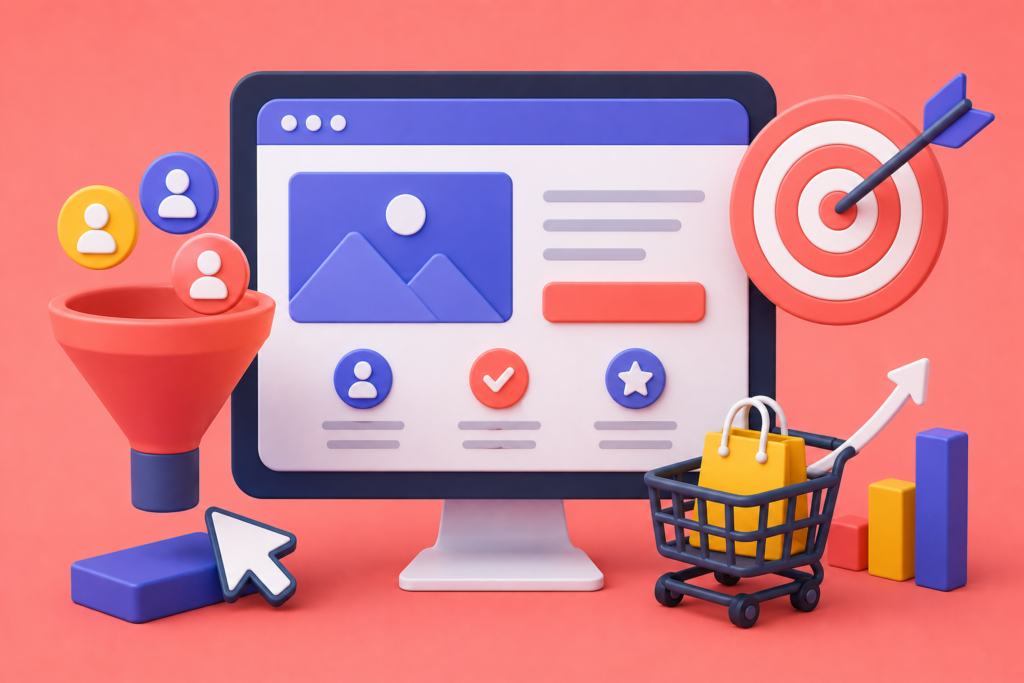
Even outstanding Facebook advertisements cannot compensate for poor landing pages. Advertising success depends on maintaining consistency between advertisement messaging and landing page content. When users click an advertisement promising a specific offer, they should immediately find matching information without confusion or unnecessary navigation.
Landing pages should feature compelling headlines, concise supporting copy, trust indicators, testimonials, customer reviews, frequently asked questions, clear contact information, and straightforward conversion forms. Mobile responsiveness is especially critical because most Facebook users browse on smartphones. Slow-loading pages or complicated forms often result in high abandonment rates regardless of advertisement quality.
Website performance also influences advertising success. Google’s guidance on creating fast, secure, user-friendly websites benefits both search engine optimisation and paid advertising campaigns. Businesses should regularly evaluate page speed, Core Web Vitals, HTTPS implementation, accessibility, and user experience to maximise conversion rates.
Recommended Resources
Using Facebook Pixel and Conversion Tracking Effectively
Accurate measurement forms the foundation of profitable advertising. The Meta Pixel enables businesses to monitor user behaviour after advertisement clicks, providing valuable insights into conversions, purchases, lead submissions, page views, and customer journeys. Without reliable tracking, campaign optimisation becomes largely based on assumptions rather than measurable data.
Businesses should configure standard events such as Page View, View Content, Add to Cart, Initiate Checkout, Lead, Complete Registration, Purchase, and Contact Form Submission. These events allow Meta’s machine learning algorithms to optimise campaign delivery toward users most likely to complete valuable actions. Server-side tracking through the Conversions API can further improve data accuracy while supporting evolving privacy standards.
Integrating Facebook advertising data with Google Analytics provides even deeper marketing insights by comparing advertising performance alongside other traffic sources, customer acquisition channels, and user engagement metrics. Combining multiple analytics platforms enables businesses to make better strategic decisions while continuously refining campaign performance using reliable first-party data.
Authoritative Resources
Facebook Advertising Budgeting and Smart Bidding Strategies
One of the biggest misconceptions about Facebook Advertising is that success depends on having a large advertising budget. In reality, businesses of every size can achieve excellent results by allocating budgets strategically, selecting the right bidding approach, and continuously optimising campaign performance. Rather than spending more, successful advertisers focus on spending smarter. A well-planned budget allows campaigns to gather meaningful data, identify high-performing audiences, and maximise every pound invested.
Before launching any campaign, businesses should determine how much they are willing to spend daily or over the campaign’s lifetime. Daily budgets provide consistent delivery, making them ideal for ongoing lead generation or brand awareness campaigns. Lifetime budgets, on the other hand, give Meta’s algorithm greater flexibility to distribute spending based on periods when conversions are more likely. Choosing between these options depends on campaign objectives, promotional schedules, and expected customer behaviour. Regardless of the approach, budgets should always align with realistic business goals rather than arbitrary spending limits.
Facebook also offers several bidding strategies designed to optimise campaign outcomes. Depending on your objectives, advertisers can optimise for conversions, link clicks, impressions, landing page views, or purchases. Automated bidding works exceptionally well because Meta’s machine learning adjusts bids in real time based on the likelihood of achieving your selected objective. Businesses should avoid making frequent budget adjustments, as constant changes can reset the learning phase and reduce campaign stability. Instead, analyse performance over several days before making informed optimisation decisions.
A/B Testing and Continuous Campaign Optimisation
Successful Facebook Advertising is never a “set it and forget it” process. Even high-performing campaigns require ongoing optimisation to maintain strong results as audience behaviour, competition, and platform algorithms evolve. A/B testing—also known as split testing—is one of the most effective ways to improve campaign performance while reducing advertising costs over time. Rather than guessing what works, advertisers can rely on data-driven decisions.
A/B testing involves comparing two versions of an advertisement while changing only one variable at a time. For example, you might test different headlines, images, videos, audience segments, call-to-action buttons, or landing pages. By isolating individual variables, businesses can identify which elements contribute most to higher click-through rates, stronger engagement, and improved conversions. This structured testing process removes assumptions and replaces them with measurable insights.
Optimisation should extend beyond advertisements themselves. Businesses should regularly review audience performance, placement effectiveness, conversion rates, frequency scores, and customer feedback. Campaigns that initially perform well may gradually decline as audiences become saturated. Refreshing creatives, expanding audience segments, updating offers, and refining messaging can help maintain campaign momentum. Continuous testing and optimisation ensure long-term advertising success while maximising return on investment.
Leveraging AI, Automation, and Meta’s Smart Advertising Features
Artificial intelligence has transformed Facebook Advertising by enabling advertisers to automate complex processes that previously required extensive manual management. Meta’s AI-powered algorithms analyse billions of data points every day to identify users most likely to complete desired actions. This automation allows businesses to improve campaign efficiency while spending less time making manual adjustments.
One of the platform’s most valuable innovations is automated audience optimisation. Instead of relying solely on detailed manual targeting, Meta increasingly uses machine learning to expand audience reach intelligently while maintaining campaign relevance. Automated placements similarly distribute advertisements across Facebook, Instagram, Messenger, Reels, Stories, and the Audience Network based on where users are most likely to engage. These intelligent delivery systems often outperform manually selected placements.
Dynamic Creative Optimisation further enhances campaign performance by automatically testing combinations of headlines, descriptions, images, videos, and calls to action. Rather than creating dozens of separate advertisements manually, advertisers can upload multiple creative assets and allow Meta’s algorithm to assemble the most effective combinations for different audience segments. Businesses that embrace automation while maintaining strong creative strategies often achieve better scalability and stronger long-term advertising performance.
Measuring Performance with Meaningful Marketing Metrics
Clicks and impressions provide useful information, but they rarely tell the complete story. Effective Facebook Advertising focuses on business outcomes rather than vanity metrics. Measuring the right performance indicators enables businesses to understand campaign profitability, identify improvement opportunities, and make informed investment decisions based on real commercial value.
Among the most important metrics are Click-Through Rate (CTR), Cost Per Click (CPC), Cost Per Acquisition (CPA), Cost Per Lead (CPL), Conversion Rate, Return on Ad Spend (ROAS), Average Order Value (AOV), and Customer Lifetime Value (CLV). While CTR indicates how engaging an advertisement is, ROAS measures actual financial returns generated by advertising spend. Similarly, CLV helps businesses understand the long-term value of acquired customers rather than evaluating campaigns based only on immediate purchases.
Regular reporting is essential for identifying trends and making strategic adjustments. Businesses should establish consistent reporting schedules, compare results across campaigns, and monitor performance over time rather than reacting to daily fluctuations. Combining Meta Ads Manager insights with Google Analytics provides a more comprehensive understanding of user behaviour before, during, and after conversions, enabling smarter optimisation decisions across the entire marketing funnel.
Helpful Resources
Scaling Facebook Advertising for Sustainable Business Growth
Once campaigns consistently generate profitable results, businesses often look for opportunities to scale their advertising efforts. However, increasing budgets too quickly can disrupt campaign performance. Sustainable scaling requires a structured approach that balances growth with stability while allowing Meta’s algorithm sufficient time to adapt to increased spending.
One effective strategy involves gradually increasing campaign budgets by small percentages rather than making dramatic changes overnight. This incremental approach helps preserve campaign learning while maintaining performance consistency. Businesses can also scale by expanding Lookalike Audiences, testing new geographic regions, introducing complementary products or services, and creating additional campaign variations targeting different customer segments.
Diversification also plays an important role in long-term success. Rather than relying on a single advertisement or audience, businesses should build multiple campaigns addressing different stages of the customer journey. Awareness campaigns introduce new audiences, consideration campaigns nurture interest, while conversion campaigns focus on generating measurable business outcomes. This balanced strategy creates a sustainable advertising ecosystem capable of adapting to changing market conditions.
Common Facebook Advertising Mistakes Businesses Should Avoid
Many businesses struggle with Facebook Advertising not because the platform is ineffective, but because avoidable mistakes reduce campaign performance. Recognising these common issues allows advertisers to improve results while avoiding unnecessary advertising expenses.
One of the most frequent mistakes is launching campaigns without clearly defined objectives. Without measurable goals, it becomes difficult to evaluate performance or optimise campaigns effectively. Another common issue is targeting audiences that are either too broad or too narrow. Overly broad targeting often wastes advertising spend, while highly restrictive targeting can limit campaign reach and increase costs.
Businesses also frequently neglect landing page optimisation, fail to install accurate conversion tracking, ignore mobile user experience, or make constant campaign adjustments before sufficient data has been collected. Poor-quality creative assets, weak calls to action, inconsistent branding, and failure to perform A/B testing further reduce advertising effectiveness. Finally, many organisations focus exclusively on acquiring new customers while overlooking valuable retargeting opportunities that often deliver significantly higher conversion rates.
Best Practices Summary
Businesses that consistently succeed with Facebook Advertising typically follow several proven principles:
- Define clear campaign objectives before spending any budget.
- Research customer audiences thoroughly before launching campaigns.
- Install Meta Pixel and configure accurate conversion tracking.
- Create compelling, mobile-friendly visual content.
- Write benefit-focused advertisement copy with strong calls to action.
- Maintain consistency between advertisements and landing pages.
- Continuously perform A/B testing to improve campaign performance.
- Monitor meaningful business metrics rather than vanity metrics.
- Use AI-powered optimisation while maintaining strategic oversight.
- Refresh creative assets regularly to prevent audience fatigue.
- Integrate Facebook Advertising with SEO, content marketing, email marketing, and analytics.
- Follow Meta advertising policies and Google’s guidance for helpful, trustworthy online experiences.
Businesses that consistently apply these best practices are better positioned to generate qualified leads, improve customer acquisition, and achieve sustainable long-term growth.
Frequently Asked Questions
1. Is Facebook Advertising suitable for small businesses?
Yes. Facebook Advertising offers flexible budgeting options that make it suitable for businesses of all sizes. Even modest budgets can produce strong results when campaigns are well targeted and continuously optimised.
2. How long does it take to see results?
Many campaigns begin generating useful performance data within the first few days. However, consistent optimisation over several weeks typically produces the most reliable long-term results.
3. What industries benefit most from Facebook Advertising?
Retail, eCommerce, healthcare, education, real estate, financial services, hospitality, legal services, home improvement, and professional service providers commonly achieve excellent results.
4. Should I use images or videos?
Both formats can perform well depending on campaign objectives. Short-form videos often generate higher engagement, while high-quality images remain highly effective for many conversion-focused campaigns.
5. How important is retargeting?
Retargeting is one of the highest-performing Facebook advertising strategies because it reconnects with users who have already shown interest in your business, products, or services.
6. Can Facebook Advertising improve brand awareness?
Absolutely. Awareness campaigns help businesses reach new audiences, strengthen brand recognition, and build familiarity before customers are ready to make purchasing decisions.
7. How often should campaigns be optimised?
Campaigns should be monitored regularly, but major changes should only be made after enough data has accumulated to support informed optimisation decisions.
8. How can I measure return on investment?
Businesses should evaluate Return on Ad Spend (ROAS), Cost Per Acquisition (CPA), Customer Lifetime Value (CLV), conversion rates, and revenue generated to determine overall campaign profitability.
Conclusion
Facebook Advertising continues to be one of the most powerful digital marketing channels available to modern businesses. When supported by strategic planning, audience research, compelling creative assets, accurate tracking, continuous optimisation, and meaningful performance analysis, it enables organisations to attract qualified prospects, increase conversions, and achieve measurable business growth.
At Appledew UK, we understand that successful advertising requires more than simply launching campaigns. It requires experience, ongoing optimisation, data-driven decision-making, and a commitment to delivering genuine value to customers. By applying the strategies outlined throughout this guide and continually refining your campaigns, your business can build a sustainable Facebook advertising strategy that delivers long-term success while adapting to future changes in the digital marketing landscape.
Want to Implement This Easily?
Prompt
You are an expert consultant. Based on the blog post titled “Facebook Advertising”, provide a step-by-step, practical implementation guide. Include tools, best practices, common mistakes to avoid, and advanced tips. Assume the reader wants to implement everything discussed in this article effectively.
Call to Action
Want our help implementing this? Just reach out to us via our website contact form: