Discover the complete guide to Graphic Design in 2026. Learn professional design principles, branding strategies, visual communication techniques, UX considerations, typography, color psychology, and best practices to create compelling designs that strengthen your brand and improve customer engagement.
Introduction
In today’s competitive digital marketplace, Graphic Design is much more than creating visually attractive images. It is a strategic communication tool that influences how customers perceive a business, interact with its products, and remember its brand. From websites and social media graphics to product packaging and advertising campaigns, effective graphic design helps businesses communicate professionalism, credibility, and trust at every customer touchpoint.
At Appledew UK, we understand that successful graphic design combines creativity with business strategy. Every visual element should support brand identity, improve user experience, and encourage meaningful customer engagement. Whether you’re launching a startup or strengthening an established brand, investing in professional graphic design can significantly improve recognition, conversions, and long-term growth.
Modern design also aligns with internationally recognized digital standards and accessibility recommendations. Following resources such as Google Search Central, Material Design, Web Content Accessibility Guidelines (WCAG), and Google PageSpeed Insights helps ensure that visual experiences are attractive, accessible, user-friendly, and performance-focused. Throughout this guide, you’ll learn practical strategies, emerging trends, and expert insights that help businesses build stronger brands through exceptional graphic design.
Understanding Graphic Design and Why It Matters More Than Ever
Graphic design is the practice of combining typography, imagery, color, layout, and visual hierarchy to communicate information clearly and effectively. While artistic creativity plays an important role, professional graphic design focuses primarily on solving communication problems. Every design decision should have a purpose, whether it’s increasing sales, improving usability, strengthening brand recognition, or educating an audience. Successful businesses understand that good design is not an expense—it is a long-term investment that supports marketing, customer experience, and overall business growth.
Modern consumers make rapid judgments based on visual presentation. Research consistently shows that first impressions are formed within seconds, and design quality significantly influences trust. A poorly designed logo, cluttered brochure, inconsistent website, or confusing advertisement can reduce confidence before customers even evaluate products or services. On the other hand, clean layouts, professional branding, readable typography, and thoughtful color selection communicate credibility, attention to detail, and reliability. These qualities directly influence customer purchasing decisions across virtually every industry.
As digital platforms continue evolving, graphic design has expanded beyond traditional print media. Designers now create assets for websites, mobile applications, email campaigns, social media platforms, digital advertising, presentations, videos, and interactive experiences. Each platform has unique requirements, making versatility essential. Businesses that embrace strategic graphic design establish stronger visual identities, maintain consistent messaging, improve user engagement, and create memorable customer experiences that support sustainable long-term success.
The Evolution of Graphic Design in the Digital Era
Graphic design has undergone remarkable transformation over the past two decades. Traditional print-focused workflows have expanded into highly interactive digital ecosystems where brands communicate through multiple devices and platforms simultaneously. Today’s designers must understand responsive layouts, digital accessibility, user behavior, animation principles, and cross-platform consistency in addition to traditional design fundamentals. This evolution has created exciting opportunities for businesses willing to invest in professional visual communication.
Technology has dramatically improved design capabilities. Cloud collaboration, vector graphics, AI-assisted workflows, advanced prototyping software, and real-time feedback systems allow designers to work more efficiently while maintaining exceptional quality. These innovations enable faster revisions, stronger collaboration between marketing and design teams, and improved consistency across campaigns. However, technology should enhance creativity rather than replace strategic thinking. Human expertise remains essential for understanding audience psychology, brand positioning, and storytelling.
Modern graphic design also emphasizes performance alongside aesthetics. Designers increasingly consider website speed, image optimization, accessibility compliance, mobile responsiveness, and usability throughout the creative process. Optimized visuals improve both user experience and technical performance, supporting stronger engagement and better search visibility. Businesses that combine creativity with technical excellence gain competitive advantages by delivering seamless visual experiences across every customer interaction.
Building a Strong Brand Identity Through Graphic Design
Brand identity represents far more than a logo. It encompasses every visual element customers associate with a business, including typography, color palettes, iconography, photography style, illustrations, layouts, marketing materials, and digital experiences. Consistency across these elements builds familiarity, reinforces trust, and strengthens recognition over time. Strong graphic design ensures every customer interaction communicates the same professional message regardless of platform.
An effective visual identity begins with understanding the organization’s mission, values, audience, and competitive landscape. Designers conduct research before creating concepts that reflect brand personality while differentiating the business from competitors. A financial institution may require a conservative, trustworthy appearance, while a creative agency may benefit from bold colors and experimental layouts. Strategic design aligns visual language with business objectives rather than following temporary design trends.
Maintaining brand consistency requires comprehensive design systems and brand guidelines. These resources document logo usage, typography rules, spacing standards, approved color palettes, imagery styles, and application examples. Clear guidelines ensure that marketing teams, designers, developers, and external partners create unified experiences across websites, presentations, advertisements, packaging, social media, and printed materials. Consistency strengthens brand equity and improves customer recognition over time.
The Psychology of Colors in Graphic Design
Color psychology plays a significant role in shaping emotional responses and influencing purchasing behavior. Different colors communicate distinct meanings that vary depending on culture, industry, and audience expectations. Professional designers carefully select color palettes based on strategic objectives rather than personal preferences. Effective color choices strengthen branding while improving readability, usability, and emotional connection.
Blue often represents trust, reliability, and professionalism, making it popular among financial institutions and technology companies. Green commonly symbolizes growth, sustainability, health, and environmental responsibility. Red attracts attention while conveying urgency, excitement, or passion. Yellow creates optimism and energy, whereas black frequently communicates sophistication, luxury, and authority. Understanding these associations helps designers create experiences aligned with business goals and audience expectations.
Successful color systems also prioritize accessibility. Adequate contrast between text and backgrounds improves readability for all users, including individuals with visual impairments. Designers should test palettes across multiple devices, lighting conditions, and accessibility standards to ensure consistent usability. Thoughtful color selection enhances aesthetics while supporting inclusivity, better user experiences, and stronger communication across both digital and printed materials.
Typography: The Foundation of Effective Visual Communication
Typography is one of the most influential aspects of graphic design because it directly affects readability, comprehension, and emotional perception. Well-selected typefaces guide users through information, establish hierarchy, reinforce brand personality, and improve overall communication. Poor typography can make even valuable content difficult to understand, reducing user engagement and weakening credibility.
Professional typography involves more than choosing attractive fonts. Designers consider font families, weights, spacing, line height, alignment, contrast, and responsive behavior across different screen sizes. Headlines should capture attention while body text remains highly readable. Consistent typographic hierarchy helps readers quickly identify important information, improving both usability and content effectiveness. Every typographic decision should contribute to a clear, organized reading experience.
Modern brands typically limit themselves to two or three complementary typefaces to maintain consistency. Combining a strong heading font with a clean body font creates visual balance without overwhelming readers. Designers also ensure typography performs well across websites, mobile applications, printed materials, presentations, and marketing campaigns. Careful typographic planning strengthens branding while supporting accessibility, professionalism, and long-term recognition.
Visual Hierarchy and Layout Principles That Improve User Engagement
Visual hierarchy determines how users process information within a design. Effective layouts naturally guide attention toward the most important content using size, contrast, spacing, alignment, positioning, and color emphasis. Without clear hierarchy, audiences may become confused, overlook key messages, or abandon content entirely. Strategic graphic design simplifies communication by presenting information in logical, intuitive sequences.
Whitespace is one of the most powerful yet frequently underestimated design elements. Rather than filling every available space, professional designers intentionally create breathing room around content. Appropriate spacing improves readability, reduces cognitive overload, highlights important elements, and creates elegant, modern compositions. Minimalist layouts often perform better because users can easily identify actions, headlines, and supporting information without distraction.
Grid systems further improve consistency and organization across digital and print projects. Structured layouts ensure alignment, predictable spacing, and proportional relationships between elements. Whether designing websites, brochures, reports, presentations, or social media graphics, grid-based design creates visual harmony while simplifying responsive adaptation across different screen sizes. Combined with strong hierarchy, thoughtful layouts improve engagement, usability, and overall customer satisfaction.
Graphic Design for Digital Marketing Success
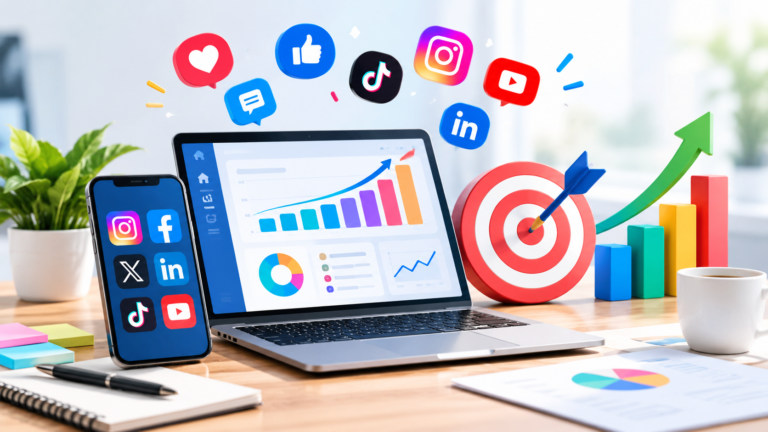
Graphic design has become a cornerstone of modern digital marketing because visual content consistently outperforms text-only communication in attracting attention and encouraging interaction. Businesses use professionally designed graphics across websites, search campaigns, email marketing, paid advertising, social media, and content marketing to strengthen messaging and improve campaign performance. Consistent branding across every channel reinforces trust while increasing audience recognition over time.
Social media platforms particularly reward compelling visual content. Professionally designed graphics encourage likes, shares, comments, and saves by communicating messages quickly within crowded news feeds. Effective social media design combines engaging imagery, clear typography, recognizable branding, and platform-specific formatting. Maintaining visual consistency across campaigns strengthens brand identity while improving overall marketing effectiveness.
Graphic design also contributes significantly to conversion optimization. Landing pages, call-to-action banners, infographics, downloadable resources, email templates, and promotional advertisements all rely on thoughtful visual communication to guide users toward desired actions. Strategic use of hierarchy, contrast, whitespace, persuasive imagery, and brand consistency helps businesses generate more qualified leads while delivering positive customer experiences.
Graphic Design for Website User Experience (UX) and User Interface (UI)

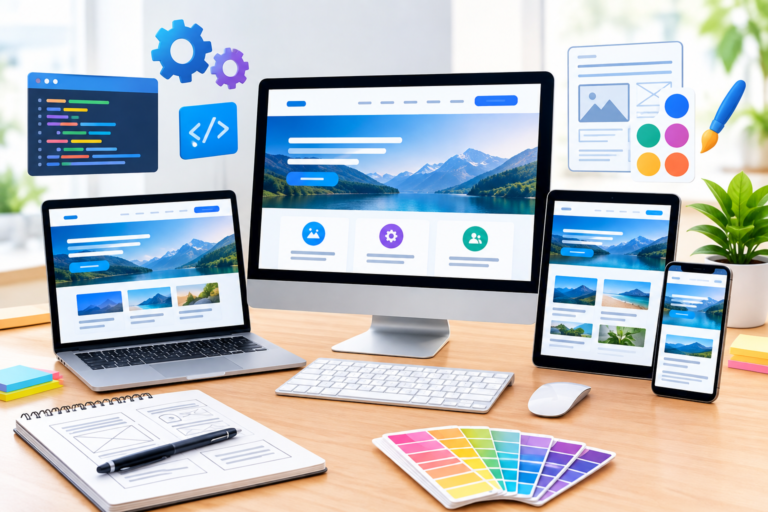
Graphic design plays a fundamental role in creating exceptional User Experience (UX) and User Interface (UI). While UX focuses on how users interact with a digital product, UI concentrates on the visual elements that make those interactions intuitive, engaging, and efficient. A visually appealing website alone is not enough—it must also be easy to navigate, accessible, and capable of guiding visitors toward meaningful actions. Businesses that integrate graphic design with UX principles create digital experiences that build trust, reduce frustration, and improve customer satisfaction.
An effective website begins with a clear visual hierarchy. Headlines should immediately communicate value, navigation should remain simple and consistent, and call-to-action buttons should stand out naturally without overwhelming the page. Designers use spacing, typography, color contrast, imagery, and alignment to create logical reading paths that help visitors find information quickly. Responsive layouts ensure that designs perform equally well across desktops, tablets, and smartphones, providing a seamless experience regardless of screen size. Accessibility is equally important, requiring sufficient color contrast, readable typography, descriptive icons, and keyboard-friendly navigation to support users of all abilities.
Graphic design also influences website performance and conversion rates. Optimized images, properly sized graphics, scalable vector icons, and compressed media reduce loading times while maintaining excellent visual quality. Clean layouts eliminate distractions and encourage visitors to complete desired actions such as making purchases, submitting enquiries, or downloading resources. Businesses that prioritize user-centered graphic design benefit from increased engagement, lower bounce rates, and stronger customer loyalty because visitors enjoy intuitive and visually consistent experiences.
Print Graphic Design vs Digital Graphic Design
Although both print and digital graphic design rely on the same fundamental design principles, each medium requires unique planning, technical knowledge, and production methods. Understanding these differences enables businesses to produce marketing materials that look professional regardless of where they are viewed. Successful designers adapt layouts, typography, imagery, and color systems to suit the specific characteristics of each medium while maintaining consistent branding across all channels.
Print design includes brochures, business cards, flyers, posters, packaging, magazines, banners, catalogues, and corporate stationery. These materials require high-resolution imagery, CMYK color profiles, precise bleed settings, print-safe margins, and careful paper selection. Designers must consider physical dimensions, printing techniques, finishing options, and tactile experiences that cannot be replicated digitally. A professionally printed brochure, for example, creates a lasting impression through texture, premium finishes, and exceptional print quality that strengthens brand perception.
Digital design, by contrast, focuses on websites, social media graphics, email campaigns, online advertising, presentations, mobile applications, and interactive content. Digital assets must load quickly, display consistently across devices, and remain responsive to varying screen sizes. RGB color profiles, optimized image compression, scalable vector graphics, and accessibility standards become critical considerations. Businesses often benefit from integrated campaigns where print and digital assets complement one another, creating a unified visual identity that strengthens customer recognition and reinforces marketing effectiveness across every touchpoint.
Essential Graphic Design Tools for Modern Businesses
Professional graphic designers rely on a diverse toolkit that supports creativity, collaboration, efficiency, and consistency throughout the design process. While artistic ability remains essential, selecting appropriate software allows designers to streamline workflows, maintain quality standards, and deliver assets suitable for multiple platforms. Businesses should invest in tools that align with project requirements, team collaboration, and long-term scalability rather than simply choosing the most popular applications.
Vector illustration software enables designers to create logos, icons, illustrations, and scalable brand assets that remain sharp regardless of size. Raster editing applications provide advanced photo manipulation, retouching, compositing, and digital artwork capabilities. Layout software simplifies the production of brochures, magazines, annual reports, catalogues, and marketing materials requiring consistent typography and page structures. Collaborative design platforms further improve productivity by allowing teams to review prototypes, leave comments, manage design systems, and share updates in real time. These collaborative environments reduce revision cycles and improve communication between designers, marketers, developers, and stakeholders.
Beyond design software, businesses increasingly use digital asset management systems to organize brand resources efficiently. Libraries containing approved logos, templates, icons, photography, color palettes, and typography ensure consistency across all projects. Version control prevents outdated assets from being distributed while simplifying collaboration with internal teams and external partners. Combined with organized workflows and documented brand guidelines, modern design tools help businesses maintain professional standards while improving productivity and reducing operational inefficiencies.
Graphic Design Trends Shaping 2026 and Beyond
Graphic design continues evolving alongside technology, consumer expectations, and digital innovation. While timeless design principles remain essential, emerging trends provide opportunities for businesses to modernize visual communication without sacrificing usability or brand consistency. Understanding these trends enables organizations to remain competitive while creating memorable customer experiences that reflect current market expectations.
One significant trend is the increasing emphasis on simplicity and purposeful minimalism. Modern audiences appreciate clean layouts, generous whitespace, clear typography, and focused messaging that reduce cognitive overload. Designers are moving away from excessive visual clutter in favour of strategic compositions that improve readability and highlight essential information. Bold typography, geometric shapes, subtle gradients, and carefully selected accent colours create visually engaging experiences while maintaining clarity. Sustainable design practices are also gaining momentum, encouraging businesses to create evergreen brand assets that remain effective beyond short-lived visual trends.
Artificial intelligence is becoming an important assistant within creative workflows rather than replacing human creativity. AI-powered tools accelerate background removal, image enhancement, content-aware resizing, colour suggestions, and repetitive production tasks, allowing designers to dedicate more time to strategic thinking and storytelling. Motion graphics, lightweight animations, immersive illustrations, 3D elements, and interactive visual experiences are also becoming increasingly popular across websites and digital marketing campaigns. Businesses that thoughtfully adopt these innovations while maintaining strong branding, accessibility, and usability will continue building meaningful relationships with modern audiences.
Measuring the Success of Graphic Design
Creating visually appealing designs is only one part of the process. The true measure of success lies in how effectively those designs help achieve business objectives. Professional graphic design should improve brand awareness, strengthen customer engagement, increase conversions, and enhance the overall user experience. By defining measurable goals before starting a project, businesses can evaluate whether their investment is delivering meaningful results.
One of the most valuable performance indicators is user engagement. Businesses should monitor metrics such as website session duration, bounce rate, click-through rate (CTR), social media engagement, email open rates, and conversion rates. For example, a redesigned landing page with improved visual hierarchy and clearer calls to action may generate more enquiries or product purchases than the previous version. Similarly, professionally designed social media graphics often achieve higher shares, comments, and interactions, expanding brand visibility organically.
Brand consistency is another critical success factor. Customers should immediately recognize a business regardless of whether they encounter its website, brochure, social media advertisement, email newsletter, or product packaging. Consistent typography, colors, imagery, and messaging create familiarity that builds long-term trust. Businesses should also gather customer feedback through surveys, usability testing, and analytics to understand how audiences perceive their visual identity. Continuous testing and refinement ensure that graphic design evolves alongside customer expectations while supporting sustainable business growth.
The Future of Graphic Design
Graphic design will continue evolving as technology, consumer behavior, and digital experiences become increasingly sophisticated. However, the core objective will remain unchanged: communicating ideas clearly while creating meaningful connections between businesses and their audiences. The future belongs to designers who combine creativity with strategic thinking, technical expertise, and a deep understanding of user behavior.
Artificial intelligence will continue supporting designers by automating repetitive production tasks, improving image editing workflows, generating layout suggestions, and assisting with content personalization. Rather than replacing creative professionals, AI enables designers to focus more on storytelling, innovation, branding, and solving complex communication challenges. Businesses that embrace AI responsibly while maintaining human creativity will benefit from faster workflows and improved efficiency without compromising originality.
Emerging technologies such as augmented reality (AR), virtual reality (VR), interactive 3D graphics, immersive web experiences, and personalized digital interfaces will further expand the role of graphic design. Sustainability will also influence design decisions, encouraging brands to adopt timeless visual identities instead of constantly changing trends. Accessibility, inclusivity, and ethical design practices will become even more important as organizations seek to serve diverse audiences worldwide. Companies that invest in adaptable, user-focused design strategies today will be well positioned to succeed in tomorrow’s rapidly changing digital landscape.
Common Graphic Design Mistakes Businesses Should Avoid
Even experienced businesses sometimes make graphic design decisions that reduce effectiveness and weaken their brand image. One of the most common mistakes is prioritizing personal preferences over audience needs. Design should always focus on communicating with the intended audience rather than satisfying internal opinions. Every visual decision should support business objectives, improve clarity, and enhance the customer experience.
Another frequent mistake is inconsistency. Using different fonts, colors, logo variations, or visual styles across marketing materials creates confusion and weakens brand recognition. Without clear brand guidelines, teams often produce materials that appear unrelated despite representing the same organization. Inconsistent design reduces professionalism and makes it more difficult for customers to remember the brand.
Many businesses also overcrowd designs with excessive text, numerous colors, unnecessary effects, and competing visual elements. Overly complex layouts overwhelm users and distract them from important information. Poor image quality, low-resolution logos, unreadable typography, inadequate spacing, and ignoring accessibility standards further reduce effectiveness. Failing to optimize graphics for websites can also slow loading times, negatively affecting user experience and search visibility. Avoiding these mistakes helps businesses create cleaner, more professional, and higher-performing visual communications.
Best Practices Summary
Successful graphic design combines creativity, strategy, usability, and consistency. Businesses should begin every project with a clear understanding of their audience, objectives, and brand positioning before creating visual concepts. Every element—including typography, imagery, color, spacing, and layout—should support communication rather than simply adding decoration.
Maintaining consistency across digital and print materials strengthens recognition and builds trust over time. Establishing comprehensive brand guidelines ensures that every marketing asset reflects the same professional identity. Regular design reviews, user testing, accessibility evaluations, and performance analysis help identify opportunities for continuous improvement while ensuring designs remain relevant and effective.
Finally, businesses should treat graphic design as an ongoing investment rather than a one-time project. Consumer expectations, technology, and marketing channels continue evolving, making periodic updates essential. By combining timeless design principles with modern innovation, organizations can create memorable customer experiences, strengthen their brands, and support sustainable long-term growth.
Frequently Asked Questions
1. Why is professional graphic design important for businesses?
Professional graphic design builds trust, improves brand recognition, enhances customer engagement, and communicates information more effectively. Strong visual branding also supports higher conversion rates and long-term business growth.
2. How often should a business update its graphic design?
Major rebranding is not always necessary. However, businesses should review their visual identity regularly to ensure it remains modern, consistent, accessible, and aligned with current customer expectations.
3. What is the difference between graphic design and branding?
Graphic design focuses on creating visual assets, while branding represents the complete perception of a business. Graphic design is one of the primary tools used to communicate and strengthen a brand.
4. Does graphic design affect website SEO?
Yes. Optimized images, improved user experience, mobile-friendly layouts, accessibility, and faster loading times all contribute to better website performance and can indirectly support stronger search visibility.
5. How does graphic design improve marketing campaigns?
Well-designed marketing materials attract attention, communicate messages clearly, strengthen brand consistency, and encourage customers to take action, leading to higher engagement and improved campaign performance.
6. Should small businesses invest in professional graphic design?
Absolutely. Professional design helps small businesses compete with larger organizations by creating credibility, improving customer confidence, and establishing a memorable brand identity from the beginning.
7. What are the most important principles of effective graphic design?
The key principles include balance, contrast, alignment, hierarchy, repetition, proximity, whitespace, consistency, readability, accessibility, and user-centered design.
8. What graphic design trends will dominate beyond 2026?
AI-assisted workflows, minimalist interfaces, motion graphics, immersive experiences, personalized visuals, sustainable branding, inclusive design, and accessibility-focused design practices are expected to shape the future of graphic design.
Conclusion
Graphic design has become one of the most valuable business investments for organizations seeking sustainable growth in today’s digital-first environment. Effective design strengthens brand recognition, improves customer experiences, enhances marketing performance, and builds lasting trust with audiences. Rather than focusing solely on aesthetics, successful graphic design combines creativity, strategic thinking, usability, accessibility, and consistent branding to deliver measurable business value.
At Appledew UK, we believe that exceptional graphic design should communicate purpose, inspire confidence, and support meaningful business results. Whether developing a new brand identity, redesigning a website, creating marketing materials, or improving digital experiences, investing in professional graphic design enables businesses to stand out in competitive markets while building stronger relationships with their customers for years to come.
Want to Implement This Easily?
Prompt
You are an expert consultant. Based on the blog post titled “Graphic Design”, provide a step-by-step, practical implementation guide. Include tools, best practices, common mistakes to avoid, and advanced tips. Assume the reader wants to implement everything discussed in this article effectively.
Call to Action
Want our help implementing this? Just reach out to us via our website contact form: