Introduction
Your brand is not just what your logo looks like. It’s not your website alone. It’s not your slogan, colour, or font. Your brand is what people think and feel when they hear your business name.
In a world where customers have unlimited choices, businesses no longer win on product or price alone. They win on perception. They win by building trust, emotional connection, authority, and recognition — all of which come from professional branding and graphic design.
Every successful company, from startups to large enterprises, relies on one key asset: its brand. Branding isn’t decoration; it’s strategy. It is the difference between being chosen or ignored, remembered or forgotten, trusted or doubted.
For UK businesses today, competition is fierce in almost every industry. Whether you are running a local trade business, an online store, a service company, or a growing brand, your visual identity plays a direct role in how customers:
- Judge your professionalism
- Perceive your value
- Decide whether to contact you
- Choose you over competitors
At Appledew UK, we help businesses across the UK build brands that don’t just look good — they perform. This guide explains everything you need to know about branding and graphic design, how they work together, and how you can use them to grow stronger, faster, and more confidently.
What Branding Really Means in Today’s Business World
Branding goes far beyond visual design. It is the entire experience someone has with your business — from seeing your logo to speaking with customer support, visiting your website, receiving emails, or seeing your social media content.
Branding Is Perception
You do not decide what your brand is — your audience does.
Branding exists in the minds of customers, not in your office. It’s formed through:
- Experiences
- Design
- Communication
- Tone of voice
- Customer service
- Online presence
- Visual identity
- Messaging
If your brand looks scattered, unclear, or inconsistent, customers assume your business is the same.
Branding Is Emotional
People buy based on emotion first, logic second. Branding creates emotional triggers such as:
- Trust
- Excitement
- Security
- Confidence
- Professional authority
A strong brand makes customers feel something — and feeling drives decisions.
Branding Is Business Strategy
Branding defines:
- Your positioning in the market
- Who you attract
- Who you repel
- How premium you are perceived
- How much customers are willing to pay
- How loyal your audience becomes
Key Point: Branding is not design. Branding is identity, positioning, reputation, and emotion — expressed through design.
Why Branding Is Essential for UK Businesses
UK markets are highly competitive across every industry — from professional services to retail, hospitality, healthcare, tech, and trades.
Branding allows you to stand out where others blend in.
Branding Makes You Look Established (Even if You’re New)
A new business with a professional brand:
- Appears trustworthy
- Feels established
- Competes with bigger firms
- Builds instant credibility
Customers judge businesses in seconds. Strong branding levels the playing field.
Branding Increases Customer Loyalty
People don’t stay loyal to products — they stay loyal to brands. When your visuals, messaging, and values connect with your audience, customers become advocates, not just buyers.
Branding Improves Marketing Results
Good branding makes all marketing more powerful:
- Ads convert better
- Websites perform better
- Emails get higher response
- Social media grows faster
- Sales teams become more effective
Branding Creates Authority
When customers trust your brand, they stop comparing price alone. Authority gives you leverage — and leverage creates growth.
How Graphic Design Strengthens Brand Identity
Graphic design is the language of branding. It is how your brand “speaks” visually.
Visual Consistency Builds Trust
Modern consumers are visually trained. Inconsistent fonts, mismatched colours, or messy layouts instantly harm trust.
Professional design ensures:
- Visual harmony
- Readability
- Brand recall
- Credibility
First Impressions Are Design-Driven
Customers form impressions fast:
- Website load?
- Layout clean?
- Colours professional?
- Images high quality?
Design answers these questions automatically.
Graphic Design Influences Behaviour
Strategic design:
- Guides eye movement
- Highlights key actions
- Directs attention
- Improves user experience
- Increases conversion
A good design doesn’t just look nice — it makes users act.
Design Is Communication
Design communicates:
- Professionalism
- Industry relevance
- Brand positioning
- Emotional tone
- Business values
Design is silent marketing — speaking before anyone reads your text.
Core Elements of a Strong Brand Identity
A powerful brand is built on consistency and clarity.
1. Logo Design
Logo design is the foundation of your brand identity and the first impression your business makes on customers. A professionally designed logo communicates your values, builds recognition, and creates trust across all platforms. From concept research and sketching to colour psychology and typography, every element is crafted to reflect your brand personality. A strong logo ensures consistency on websites, social media, packaging, and marketing materials, helping your business stand out and remain memorable in a competitive marketplace.
Your logo should:
- Be recognisable at small sizes
- Work in black & white
- Reflect your industry
- Feel modern
- Be timeless
A logo is not artwork; it’s a strategic tool.
2. Brand Colours
Brand colours play a vital role in how customers perceive and remember your business. The right colour palette evokes emotions, builds recognition, and creates a consistent visual identity across all platforms. Carefully selected colours reflect your brand personality, values, and industry while helping you stand out from competitors. From websites and social media to packaging and advertisements, consistent use of brand colours strengthens trust and professionalism, ensuring your brand looks polished, recognisable, and memorable in every customer interaction.
Colours trigger emotional reactions:
- Blue = trust
- Black = luxury
- Green = growth
- Red = energy
- Yellow = optimism
- Purple = creativity
Choosing colours randomly destroys message clarity.
3. Typography
Typography shapes how your brand communicates and how your message is received by your audience. The right fonts improve readability, express personality, and create a consistent visual tone across all materials. From headlines and logos to websites and brochures, carefully chosen typography enhances clarity and strengthens brand identity. Professional font pairing and spacing ensure your content looks polished and trustworthy while guiding the reader’s attention. Strong typography helps your brand appear more professional, engaging, and memorable in every design.
Fonts set personality:
- Serif fonts = tradition and authority
- Sans-serif = modern and accessibility
- Script = elegance
- Bold fonts = confidence
Typography affects:
- Readability
- Trust
- Emotional response
4. Brand Voice & Tone
Brand voice and tone define how your business communicates with its audience and builds emotional connection. Your brand voice represents your personality, while tone adapts to different situations and platforms. Whether professional, friendly, or bold, a consistent voice helps customers recognise and trust your brand. From website content and social media to emails and advertisements, maintaining the right tone strengthens identity and engagement. A clear brand voice ensures your message is authentic, relatable, and memorable across every customer touchpoint.
Your brand also sounds like something:
- Professional
- Friendly
- Premium
- Technical
- Casual
Your tone must match your audience.
5. Imagery Style
Imagery style defines the visual mood and personality of your brand across all platforms. The right images create emotional impact, support your message, and strengthen brand recognition. From photography and illustrations to icons and graphics, a consistent imagery style ensures your brand looks professional and cohesive. Carefully chosen visuals reflect your values, target audience, and industry while enhancing storytelling. A strong imagery style makes your content more engaging, trustworthy, and memorable, helping your brand stand out in a crowded market.
Do you use:
- Photography?
- Illustrations?
- Icons?
- Minimalism?
- Lifestyle visuals?
Visual direction must be intentional — not random.
The Psychology of Colour, Typography, and Visual Design
Why Design Controls Emotion
Humans process visuals 60,000 times faster than text. Before a customer reads your website, they have already judged it visually.
Colour Psychology
Colour psychology explores how different colours influence human emotions, decisions, and behaviour. In branding, the right colours can communicate trust, excitement, luxury, or reliability without words. Each colour carries meaning and can shape how customers perceive your business. By applying colour psychology strategically, brands create stronger emotional connections and improve recognition. When chosen carefully, colours guide attention, influence buying decisions, and enhance user experience, helping your brand communicate its message clearly and effectively across every platform.
Colours establish mood before logic:
- Dark colours = seriousness
- Bright colours = excitement
- Muted tones = calm
- Warm tones = inviting
- Cool tones = professional
Typography Psychology
Typography psychology focuses on how fonts and text styles influence perception and emotion. Different typefaces convey different messages, such as trust, elegance, strength, or creativity. The right typography helps shape how customers feel about your brand before they even read the words. Font size, spacing, and weight also impact readability and user experience. By choosing typography carefully, businesses can build credibility, guide attention, and create a strong visual identity that connects emotionally with their audience.
Fonts communicate:
- Confidence
- Security
- Energy
- Trust
- Innovation
Poor typography damages perception even if content is excellent.
Layout Psychology
Layout psychology studies how the arrangement of visual elements affects perception, attention, and decision-making. An effective layout guides the viewer’s eye, highlights key information, and creates a balanced, engaging experience. Strategic use of spacing, alignment, and hierarchy improves readability and enhances comprehension. By understanding how people process visual information, brands can design layouts that communicate messages clearly, evoke the desired emotions, and encourage action. Strong layout psychology ensures your content feels organized, professional, and visually compelling across all platforms.
Layout shapes experience:
- White space calms the eye
- Alignment creates balance
- Hierarchy improves clarity
- Contrast drives attention
Design is not decoration — it’s discipline.
Branding vs Marketing: Understanding the Difference
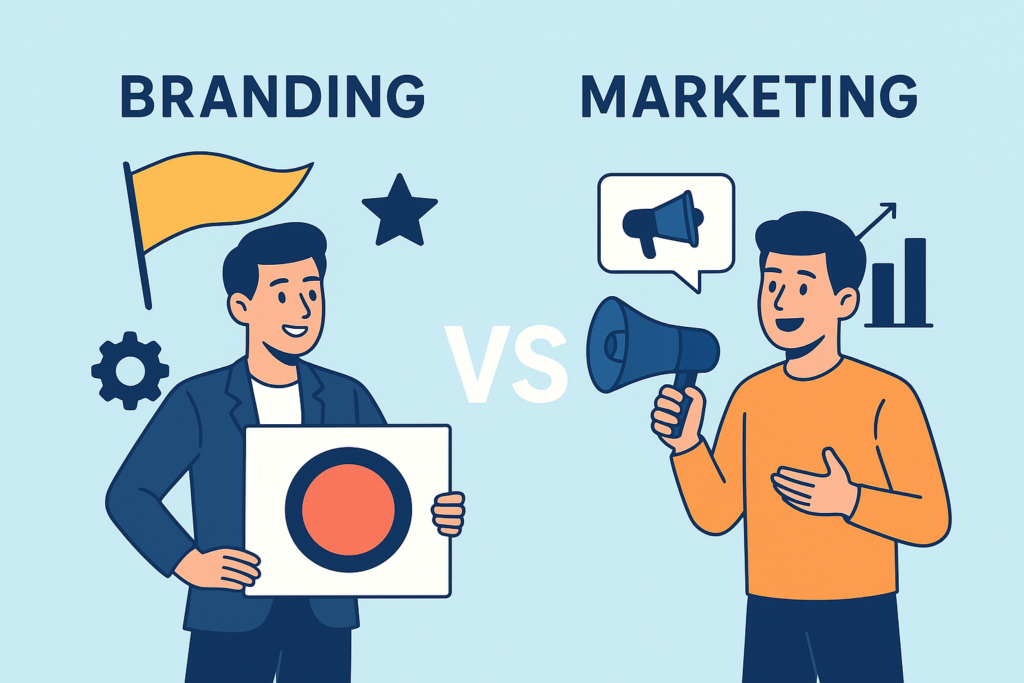
Branding and marketing are related — but very different.
Branding Is Identity
Branding is more than just a logo or colour palette—it is the identity of your business. It defines how your company is perceived, communicates your values, and sets you apart from competitors. A strong brand identity creates recognition, builds trust, and fosters emotional connections with your audience. Every element, from visual design and typography to tone of voice and messaging, works together to reflect who you are and what you stand for. When branding is consistent and authentic, it not only attracts customers but also strengthens loyalty, credibility, and long-term business growth.
Marketing Is Promotion
Marketing is the strategic process of promoting your products or services to reach the right audience and drive business growth. It involves communicating your brand’s value, benefits, and solutions through multiple channels, including social media, email, advertising, and content marketing. Effective marketing not only raises awareness but also engages customers, builds trust, and encourages action. By understanding customer needs and crafting targeted messages, businesses can maximize visibility, generate leads, and increase sales. Promotion is a key part of marketing, ensuring your brand stands out, remains memorable, and connects meaningfully with its audience.
Branding creates the message.
Marketing delivers it.
Branding defines:
- Who you are
- Why you exist
- How you differ
Marketing communicates:
- Offers
- Campaigns
- Promotions
- Messages
You cannot market effectively without branding — because marketing without identity is noise.
Common Branding Mistakes to Avoid
Mistake #1: Designing Without Strategy
Design without purpose equals design without impact. Branding must follow business goals.
Mistake #2: Inconsistency
Using different colours, fonts, and styles confuses customers and weakens brand memory.
Mistake #3: Copying Competitors
Your brand should not look like everyone else — differentiation builds power.
Mistake #4: Ignoring User Experience
If your website looks good but works badly, your brand suffers.
Mistake #5: No Brand Guidelines
Without guidelines, branding breaks over time и becomes chaotic.
Mistake #6: DIY Identity on a Business Level
Templates may save money now — but cost reputation later.
Professional Branding Process at Appledew UK
We do not create random designs. We create brands with purpose.
Step 1: Brand Discovery
Brand discovery is the process of uncovering and defining the core elements that make your business unique. It involves researching your audience, competitors, values, and mission to create a clear brand identity. This foundation guides all branding decisions, from visuals and messaging to marketing strategies. Effective brand discovery ensures your brand resonates with your target audience, communicates your purpose clearly, and stands out in a competitive market.
We understand:
- Your business model
- Your audience
- Your goals
- Your competitors
- Your values
Step 2: Strategy Development
Strategy development is the process of planning and outlining a clear roadmap to achieve your business goals. It involves identifying target audiences, defining objectives, and selecting the right tactics and channels. A well-crafted strategy ensures all branding, marketing, and communication efforts are aligned, efficient, and effective. By providing direction and focus, strategy development helps businesses make informed decisions, maximize resources, and drive consistent growth and long-term success.
We define:
- Brand positioning
- Tone of voice
- Visual personality
- Messaging direction
- Communication goals
Step 3: Visual Identity Design
Visual identity design creates the visual representation of your brand, including logos, colours, typography, and imagery. It ensures consistency across all platforms, making your brand instantly recognizable and memorable. A strong visual identity reflects your brand’s personality, values, and vision, helping to build trust and credibility with your audience. By combining creativity and strategy, visual identity design strengthens brand perception and enhances overall engagement in a competitive market.
We design:
- Custom logo
- Colour system
- Typography kit
- Brand visual direction
- Layout systems
Step 4: Brand Guidelines
Brand guidelines are a set of rules that ensure consistent and cohesive use of your brand’s elements, including logos, colours, typography, imagery, and tone of voice. They serve as a reference for internal teams and external partners to maintain brand integrity across all platforms. Clear guidelines help strengthen recognition, build trust, and create a professional, unified brand presence that resonates with your audience and supports long-term growth.
We build:
- Logo usage rules
- Typography guidelines
- Colour applications
- Messaging guide
- Visual consistency rules
Step 5: Implementation
Implementation is the process of bringing your brand strategy and visual identity to life across all touchpoints. It involves applying brand guidelines consistently in marketing materials, digital platforms, packaging, and communications. Effective implementation ensures that your brand message is clear, cohesive, and memorable to your audience. By executing strategies with precision and consistency, businesses can strengthen recognition, build trust, and create a lasting impact in the market.
We apply branding across:
- Website
- Marketing material
- Social media designs
- Print assets
- Advertising templates
Step 6: Brand Support
Brand support involves maintaining, protecting, and enhancing your brand’s identity over time. It includes providing guidance, resources, and updates to ensure consistency across all platforms and communications. Effective brand support helps address challenges, adapt to market changes, and reinforce brand values. By offering ongoing assistance and monitoring, businesses can strengthen recognition, build customer trust, and ensure their brand remains relevant, professional, and impactful in a competitive marketplace.
We support:
- Rebrands
- Brand refreshes
- Website redesigns
- Marketing design
- Ongoing creative
Real-World Branding Scenarios
Example 1: Local Service Business
For local service businesses, branding is essential to stand out in a competitive community. A strong brand builds trust, communicates professionalism, and highlights unique offerings. Consistent visual identity, messaging, and customer experience help attract and retain local clients. Effective branding ensures your business is memorable, fosters loyalty, and encourages word-of-mouth referrals, ultimately driving growth and establishing a reliable reputation within your local market.
A trades business with generic branding struggles with credibility. After rebranding:
- Website conversions increase
- Customer trust increases
- Pricing improves
- Enquiries rise
Example 2: E-commerce Brand
For e-commerce brands, strong branding is key to building trust and standing out in a crowded online marketplace. Consistent visuals, messaging, and user experience create a memorable and professional presence that encourages customer engagement and loyalty. Effective branding helps communicate value, showcase products, and differentiate your store from competitors, driving higher conversions, repeat purchases, and long-term growth in the digital shopping environment.
With strong identity:
- Brand loyalty improves
- Return customers increase
- Competitor comparison disappears
- Average order value rises
Example 3: Professional Services Firm
For professional services firms, branding establishes credibility, trust, and authority in the industry. A well-defined brand communicates expertise, values, and professionalism, helping attract and retain clients. Consistent visual identity, messaging, and client experience reinforce reliability and distinguish the firm from competitors. Strong branding not only enhances reputation but also supports marketing efforts, builds long-term client relationships, and positions the firm as a trusted leader in its field.
After redesign:
- Authority increases
- Website engagement improves
- Lead quality rises
- Referral growth increases
FAQs
Q: How long does branding take?
A: A complete branding project typically takes 2–6 weeks depending on complexity.
Q: Do startups really need branding?
A: Yes. Branding creates legitimacy, credibility, and trust — especially for new businesses.
Q: Can branding help with SEO?
A: Yes. Better UX, consistency, and engagement support search performance.
Q: Is a logo enough?
A: No. A logo is just one part of a full identity system.
Q: How often should branding be updated?
A: Every 3–7 years or when business direction changes significantly.
Q: Can you rebrand an existing business?
A: Yes. Rebranding modernises, refocuses, and revitalises businesses.
Conclusion & Next Steps
Branding and graphic design are not optional — they are foundational.
Your brand is the difference between being:
- Trusted or ignored
- Premium or cheap
- Chosen or skipped
- Remembered or forgotten
If your business is serious about growth, branding cannot be an afterthought.
Whether you are launching, scaling, or repositioning your business, Appledew UK helps UK companies build visual identities that connect, convert, and scale.
Ready to Elevate Your Brand?
Let’s build a brand that:
- Reflects confidence
- Attracts your ideal customers
- Communicates clearly
- Performs commercially
Contact Appledew UK today for professional branding and graphic design in the UK.
Key Takeaways
- Branding builds trust, recognition, and emotional connection
- Graphic design communicates your identity visually
- Consistency grows authority
- Brand strategy shapes business growth
- Professional branding supports sales and marketing