
Introduction
Paid advertising has become one of the most effective digital growth channels for businesses seeking immediate visibility, qualified traffic, and measurable results. In an increasingly competitive online environment, relying solely on organic strategies can limit growth potential. This is where paid advertising through Google Ads and Facebook Ads plays a crucial role—allowing brands to reach the right audience at the right time with precision and control.
At Appledew UK, we specialise in performance-driven paid advertising strategies that help businesses maximise return on investment while maintaining full transparency and scalability. Whether you are a startup looking to generate your first leads, an eCommerce brand aiming to increase online sales, or an established business seeking consistent customer acquisition, paid advertising provides a flexible and results-oriented solution.
Google Ads allows businesses to capture high-intent users actively searching for products or services, making it ideal for lead generation and direct conversions. Facebook Ads, on the other hand, excel at audience targeting and brand discovery, enabling businesses to engage potential customers based on interests, behaviours, and demographics across Facebook, Instagram, and the Meta ecosystem.
However, successful paid advertising is not just about running ads—it requires strategic planning, platform expertise, audience research, creative optimisation, and continuous performance monitoring. Poorly managed campaigns can quickly waste budget without delivering results. That’s why Appledew UK follows Google and Meta-approved best practices, data-backed decision-making, and conversion-focused strategies to ensure every campaign delivers real business value.
In this guide, we explore how Google Ads and Facebook Ads work, their key benefits, how they compare, and how Appledew UK helps businesses build scalable paid advertising campaigns that drive sustainable growth.
What Is Paid Advertising?
Paid advertising is a digital marketing strategy where businesses pay to display their ads on platforms like Google, Facebook, Instagram, or YouTube. Unlike organic marketing, paid advertising guarantees visibility by targeting specific audiences based on demographics, interests, and online behavior. This approach allows brands to reach potential customers quickly, drive traffic to their websites, and boost conversions. Popular formats include pay-per-click (PPC) ads, display ads, social media promotions, and retargeting campaigns, making it a versatile tool for businesses of all sizes.
By investing in paid advertising, companies can gain measurable results through detailed analytics, tracking impressions, clicks, and conversions. With proper optimization, paid campaigns can enhance brand awareness, generate leads, and maximize ROI. Businesses leveraging paid advertising alongside SEO and content marketing strategies can achieve a comprehensive digital presence and stay ahead of competitors in today’s fast-paced online market.
Key benefits of paid advertising include:
- Immediate visibility
- Precise targeting
- Full budget control
- Measurable ROI
- Scalable growth opportunities
When aligned with business goals, paid advertising becomes one of the most powerful tools for lead generation, sales growth, and brand awareness.
Why Paid Advertising Is Essential for Modern Businesses
In today’s competitive digital landscape, paid advertising has become essential for modern businesses aiming to grow quickly and effectively. It enables companies to reach highly targeted audiences across platforms like Google Ads, Facebook, Instagram, and LinkedIn. By investing in paid campaigns, businesses can drive instant traffic, generate quality leads, and increase sales, giving them a significant edge over competitors relying solely on organic strategies. Paid advertising also allows for precise audience segmentation based on demographics, interests, and online behavior, ensuring that marketing budgets are spent efficiently.
Moreover, paid advertising provides measurable insights through analytics tools, enabling businesses to track performance, optimize campaigns, and maximize ROI. When combined with SEO and content marketing strategies, it strengthens overall online visibility and brand authority. For modern businesses, embracing paid advertising is not just an option—it’s a critical strategy for sustainable growth and long-term digital success.
Paid ads are particularly effective because they:
- Capture high-intent users
- Shorten the sales cycle
- Complement SEO and content marketing
- Provide real-time performance data
- Allow rapid testing and optimisation
For businesses looking to scale efficiently, paid advertising is no longer optional—it is essential.
Google Ads: Capturing High-Intent Search Traffic
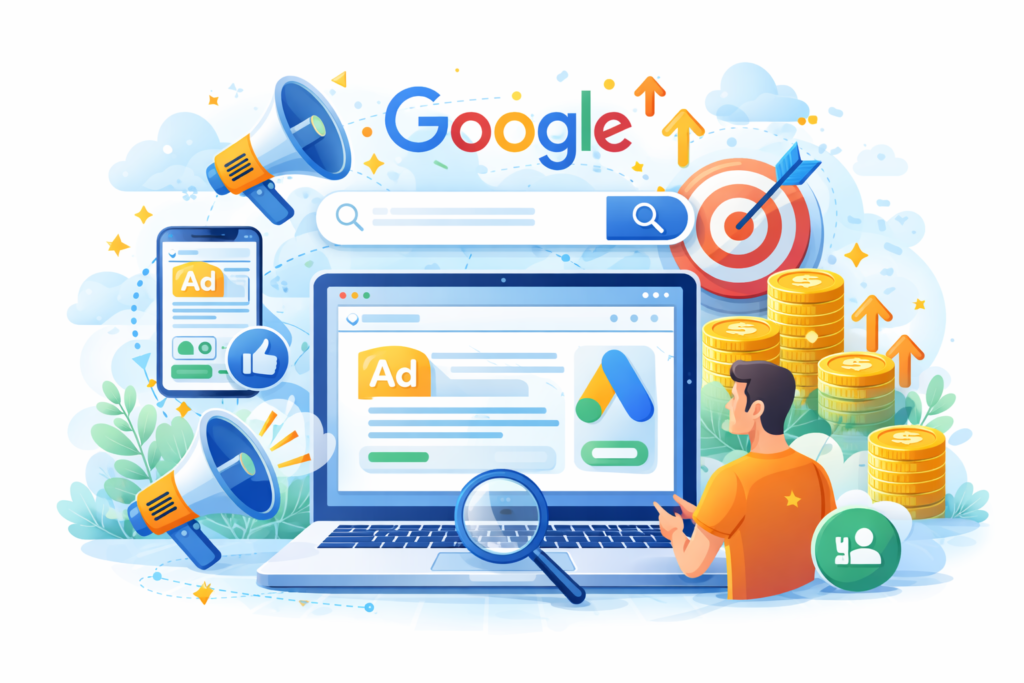
Google Ads is a powerful paid advertising platform that allows businesses to target users actively searching for specific products or services. By bidding on relevant keywords, businesses can place their ads at the top of search results, capturing high-intent traffic that is more likely to convert. Unlike organic search efforts, Google Ads delivers immediate visibility, enabling companies to attract potential customers exactly when they are looking to make a purchase or take action. This makes it a highly effective tool for driving qualified leads and boosting sales.
With features like ad extensions, audience targeting, and remarketing, Google Ads provides businesses with full control over campaign performance and budget allocation. Detailed analytics and reporting allow for continuous optimization, ensuring maximum return on investment (ROI). Leveraging Google Ads alongside SEO and content marketing strategies empowers businesses to dominate search results and achieve measurable growth in competitive markets.
How Google Ads Works
Google Ads operates on a pay-per-click (PPC) model. Advertisers bid on keywords relevant to their offerings, and ads are displayed based on a combination of bid amount, relevance, and user experience.
Google uses an auction system influenced by:
- Keyword relevance
- Ad quality
- Expected click-through rate
- Landing page experience
You can learn more about how Google evaluates ads through its official documentation on the Google Ads keyword targeting and bidding system:
Types of Google Ads Campaigns We Manage
At Appledew UK, we design and manage multiple Google Ads formats depending on your business objectives:
- Search Ads – Appear on Google search results for high-intent keywords
- Display Ads – Visual ads shown across Google’s partner websites
- Shopping Ads – Product-focused ads ideal for eCommerce businesses
- YouTube Ads – Video advertising on YouTube and Google Video Partners
- Performance Max Campaigns – AI-driven campaigns that maximise conversions across all Google channels
For scalable, AI-driven performance, we also implement Performance Max campaigns that maximise conversions across Google’s entire advertising network.
Google Ads Best Practices We Follow
Successful Google Ads campaigns require more than just bidding on keywords. At Appledew UK, we strictly align our strategies with Google Ads best practices, ensuring compliance, performance, and sustainability.
These best practices include:
- Keyword intent mapping
- High-quality ad copy
- Strong Quality Scores
- Conversion-optimised landing pages
- Smart bidding strategies
- Accurate conversion tracking
Google officially outlines these optimisation principles here:
Benefits of Google Ads for Your Business
Google Ads is ideal for businesses that want:
- Immediate leads or sales
- High buyer intent traffic
- Strong control over cost per acquisition
- Measurable ROI
- Local, national, or global reach
For service-based businesses and eCommerce brands alike, Google Ads delivers consistent, intent-driven results when managed professionally.
Facebook Ads: Precision Targeting on Social Platforms
Facebook Ads offer businesses a unique opportunity to reach highly specific audiences through advanced targeting options. By leveraging user demographics, interests, behaviors, and even custom audiences, brands can deliver personalized ads that resonate with potential customers. This precision targeting ensures that marketing budgets are used efficiently, while maximizing engagement, clicks, and conversions. Facebook Ads support a variety of ad formats, including image, video, carousel, and collection ads, allowing businesses to showcase products creatively and drive meaningful interactions on the platform.
Moreover, Facebook Ads provide detailed analytics and performance tracking, enabling businesses to measure results, optimize campaigns, and achieve a higher return on investment (ROI). Integrating Facebook Ads with Instagram campaigns further expands reach and visibility. For modern businesses, leveraging Facebook Ads is essential to build brand awareness, nurture leads, and maintain a competitive edge in today’s dynamic social media landscape.
How Facebook Ads Target Users
Facebook Ads leverage Meta’s audience targeting options to reach users based on interests, behaviours, and demographics across its platforms.
Meta’s advertising ecosystem enables advanced audience segmentation based on:
- Interests
- Behaviours
- Demographics
- Life events
- Custom audiences
- Lookalike audiences
This allows businesses to reach users who may not yet be actively searching but are highly likely to convert.
Facebook Ad Formats We Use
We design creatives that align with user behaviour and platform guidelines, including:
- Image Ads
- Video Ads
- Carousel Ads
- Collection Ads
- Lead Generation Ads
- Conversion Ads
We select creative formats based on campaign goals, using proven Facebook ad formats such as video, carousel, and lead generation ads.
Facebook Ads Best Practices We Apply
At Appledew UK, every Facebook Ads campaign follows Meta advertising best practices to ensure performance, compliance, and scalability.
Our approach includes:
- Audience segmentation
- Creative testing
- Funnel-based campaign structure
- Frequency management
- Conversion tracking optimisation
Meta’s official advertising best practice guidelines can be found here:
Benefits of Facebook Ads for Businesses
Facebook Ads are ideal for:
- Brand awareness campaigns
- Product discovery
- Retargeting website visitors
- Lead generation
- Scaling eCommerce sales
They work exceptionally well at the top and middle of the funnel, nurturing users before conversion.
Google Ads vs Facebook Ads: Which Is Right for You?
Choosing between platforms depends on objectives, as highlighted in this Google Ads vs Facebook Ads comparison provided by Meta.
| Feature | Google Ads | Facebook Ads |
|---|---|---|
| User Intent | High | Medium |
| Targeting | Keyword-based | Interest & behaviour-based |
| Funnel Stage | Bottom | Top & middle |
| Speed of Results | Immediate | Gradual |
| Best For | Lead capture, direct sales | Awareness, retargeting |
In many cases, the most effective strategy is using both platforms together.
Our Paid Advertising Strategy at Appledew UK
We believe paid advertising should be strategic, not experimental. Our structured approach ensures predictable and scalable results.
1. Business & Audience Research
We begin by understanding your:
- Business model
- Target audience
- Customer journey
- Competitive landscape
2. Funnel-Based Campaign Structure
Campaigns are mapped to different funnel stages:
- Awareness
- Consideration
- Conversion
- Retargeting
3. Conversion Tracking Setup
Accurate measurement is essential, which is why we implement tracking based on conversion tracking best practices recommended by Google.
4. Continuous Optimisation
Campaigns are refined using:
- A/B testing
- Bid optimisation
- Creative performance analysis
- Audience insights
Industries We Serve
Our paid advertising services support businesses across multiple sectors:
- E-Commerce
- SaaS
- Professional services
- Healthcare
- Education
- Startups and SMEs
Each campaign is customised to industry-specific behaviour and compliance requirements.
Why Choose Appledew UK for Paid Advertising?
Businesses choose Appledew UK because we deliver:
- Certified advertising specialists
- Platform-aligned strategies
- Transparent reporting
- ROI-focused execution
- Long-term growth planning
We don’t chase vanity metrics—we focus on conversions, revenue, and business impact.
Measuring Success in Paid Advertising
Measuring success in paid advertising is essential for understanding campaign performance and maximizing ROI. Key metrics such as click-through rates (CTR), cost per click (CPC), conversion rates, and return on ad spend (ROAS) help businesses evaluate the effectiveness of their ads. Tools like Google Analytics, Facebook Ads Manager, and other reporting platforms provide real-time insights, enabling marketers to optimize campaigns and target audiences more efficiently. Regularly analyzing these metrics allows businesses to identify top-performing ads, reduce wasted budget, and make data-driven decisions. Accurate measurement ensures that paid advertising delivers measurable growth and long-term digital success.
Success is measured through:
- Cost per lead (CPL)
- Cost per acquisition (CPA)
- Return on ad spend (ROAS)
- Conversion rate
- Lifetime customer value
Our reports provide clear insights, actionable recommendations, and performance benchmarks.
Common Paid Advertising Mistakes We Help You Avoid
Many businesses waste budget due to:
- Poor targeting
- Weak landing pages
- No conversion tracking
- Overlapping audiences
- Ignoring optimisation data
Our expert-led approach ensures these mistakes are avoided from day one.
FAQs
1. What is paid advertising?
Paid advertising is a digital marketing strategy where businesses pay platforms like Google or Facebook to display ads to targeted users, helping generate traffic, leads, or sales quickly.
2. What is the difference between Google Ads and Facebook Ads?
Google Ads targets users based on search intent, while Facebook Ads target users based on interests, behaviour, and demographics. Both serve different stages of the marketing funnel.
3. Which platform is better for my business?
It depends on your goals. Google Ads is ideal for high-intent leads and direct sales, while Facebook Ads work best for brand awareness, retargeting, and demand generation.
4. How much should I spend on paid advertising?
Budgets vary based on industry, competition, and goals. Appledew UK helps businesses define cost-effective budgets that maximise ROI without unnecessary spend.
5. How long does it take to see results from paid ads?
Google Ads can generate results almost immediately, while Facebook Ads may take a few weeks to optimise and deliver consistent performance.
6. Are paid ads suitable for small businesses?
Yes. Paid advertising is highly scalable, making it suitable for startups and SMEs with controlled budgets and targeted strategies.
7. How do you measure paid advertising success?
Success is measured using KPIs such as cost per lead (CPL), cost per acquisition (CPA), return on ad spend (ROAS), and conversion rates.
8. Do I need landing pages for paid advertising?
Yes. Optimised landing pages significantly improve conversion rates and ad performance by providing a focused user experience.
9. Can Google Ads and Facebook Ads work together?
Absolutely. Combining both platforms creates a full-funnel strategy—Facebook Ads build awareness while Google Ads capture high-intent traffic.
10. Why choose Appledew UK for paid advertising?
Appledew UK offers expert-led strategies, platform-aligned best practices, transparent reporting, and ROI-focused campaign management tailored to your business goals.
The Role of Paid Advertising in a Complete Digital Strategy
Paid advertising plays a critical role in a complete digital marketing strategy by complementing organic efforts like SEO, content marketing, and social media engagement. While organic strategies build long-term credibility and brand authority, paid campaigns provide immediate visibility and targeted reach, helping businesses attract qualified leads and drive conversions quickly. Platforms like Google Ads, Facebook Ads, and LinkedIn Ads allow marketers to reach specific audiences based on demographics, interests, and online behavior, ensuring that marketing efforts are both efficient and impactful.
Incorporating paid advertising into a broader digital strategy ensures consistent brand presence across multiple channels. By aligning paid campaigns with content marketing and social media initiatives, businesses can reinforce messaging, nurture leads through the sales funnel, and maximize engagement. This synergy enhances overall marketing performance, driving higher traffic and improved conversion rates.
Regular analysis and optimization of paid campaigns also support data-driven decision-making. By monitoring KPIs such as CTR, CPC, and ROI, businesses can refine strategies, reduce wasted spend, and achieve measurable results. Paid advertising, therefore, is not just a standalone tactic but a strategic component of a holistic digital marketing approach.
Paid advertising works best when combined with:
- SEO
- Content marketing
- CRO (conversion rate optimisation)
- Email marketing
- Analytics & tracking
Together, these channels create a sustainable growth ecosystem.
Conclusion: Drive Growth with Smarter Paid Advertising
Paid advertising is one of the most powerful tools available for businesses that want to grow faster, reach targeted audiences, and generate measurable results. When implemented strategically, Google Ads and Facebook Ads provide unmatched control, flexibility, and scalability—allowing brands to connect with potential customers at every stage of the buying journey.
Google Ads excels at capturing users with immediate intent, delivering high-quality leads and conversions for businesses ready to meet active demand. Facebook Ads, meanwhile, enable brands to build awareness, nurture interest, and retarget audiences with precision across social platforms. Together, they form a comprehensive paid advertising ecosystem capable of driving consistent and sustainable growth.
However, achieving success with paid advertising requires more than just launching campaigns. It demands deep platform knowledge, data-driven optimisation, creative testing, accurate conversion tracking, and ongoing performance analysis. Without a structured approach, businesses risk wasted budgets and missed opportunities.
At Appledew UK, we take a strategic, results-focused approach to paid advertising. Our campaigns are built around your business objectives, aligned with Google and Meta best practices, and continuously optimised to maximise return on investment. From audience research and campaign setup to performance tracking and scaling, we manage every aspect with transparency and precision.
Whether you’re looking to generate more leads, increase online sales, or strengthen your digital presence, Appledew UK paid advertising services are designed to deliver long-term value—not short-term wins. By combining expertise, technology, and proven methodologies, we help businesses turn advertising spend into real, measurable growth.
If you’re ready to scale your business with smarter paid advertising, Appledew UK is your trusted digital growth partner.