
Introduction
In an increasingly competitive digital marketplace, businesses can no longer rely on organic growth alone to achieve consistent results. Search engine optimisation, content marketing, and social media are all valuable long-term strategies, but they often take time to generate momentum. For businesses that need immediate visibility, qualified traffic, and measurable outcomes, paid advertising is one of the most powerful tools available.
Platforms like Google Ads and Facebook Ads allow businesses to place their brand directly in front of potential customers at the exact moment they are searching, browsing, or comparing solutions. Whether someone is actively typing a service-related query into Google or casually scrolling through social media, paid advertising ensures your business is visible when it matters most.
At Appledew UK, we specialise in helping UK businesses use paid advertising strategically. Our focus is not just on clicks or impressions, but on generating real business value—more leads, more sales, and stronger return on investment. This comprehensive guide explains how paid advertising works, the differences between Google Ads and Facebook Ads, best practices, common mistakes, and how a structured, data-driven approach can deliver sustainable growth.
What Is Paid Advertising?
Paid advertising is a digital marketing model where businesses pay to display ads across search engines, social media platforms, websites, and apps. Unlike organic marketing, paid advertising provides immediate exposure and complete control over who sees your ads, how often they appear, and how much you spend.
Paid advertising works on different pricing models, including:
- Pay-per-click (PPC): Pay-per-click (PPC) is a core model of paid advertising where businesses only pay when someone clicks on their ad. Platforms like Google Ads and social media networks allow advertisers to bid on keywords or audience segments, ensuring ads appear to users actively searching or browsing relevant content. PPC offers measurable results, budget control, and fast visibility, making it an effective way to drive targeted traffic, generate leads, and increase conversions quickly.
- Cost-per-impression (CPM): Cost-per-impression (CPM) is a paid advertising model where businesses pay for every 1,000 times their ad is displayed, regardless of clicks. It is commonly used for brand awareness campaigns across platforms like Google Display Network and social media. CPM helps businesses maximise visibility, reach large audiences, and reinforce brand recognition, making it ideal for promoting new products, services, or campaigns to a broad market.
- Cost-per-action (CPA): Cost-per-action (CPA) is a paid advertising model where advertisers only pay when users complete a specific action, such as a purchase, form submission, or sign-up. This approach focuses on performance and measurable outcomes rather than clicks or impressions. CPA is ideal for businesses aiming to maximise return on investment, as it aligns ad spend directly with conversions and helps control costs while driving meaningful results.
This flexibility allows businesses of all sizes—from startups to established enterprises—to advertise effectively within their budget.
Why Paid Advertising Matters for UK Businesses
The UK digital market is highly competitive. Consumers research extensively before making decisions, and most journeys start online. Paid advertising helps businesses stay visible and relevant throughout this journey.
Key Advantages of Paid Advertising
- Instant visibility: Instant visibility is one of the biggest advantages of paid advertising for UK businesses. Unlike organic strategies that take time to build momentum, paid ads place your brand at the top of search results and across social platforms immediately. This allows businesses to reach potential customers at the exact moment they are searching for products or services, driving quick traffic, enquiries, and sales.
- High targeting precision: High targeting precision makes paid advertising especially valuable for UK businesses. Advertisers can target users based on location, demographics, interests, search intent, and online behaviour. This ensures ads are shown to the most relevant audiences, reducing wasted spend and improving conversion rates. Precise targeting helps UK businesses reach local customers, niche markets, and high-intent prospects more effectively and efficiently.
- Scalable results: Scalable results are a key benefit of paid advertising for UK businesses. Campaigns can be adjusted quickly to increase or decrease reach, budget, and audience size based on performance. This flexibility allows businesses to expand successful campaigns, test new strategies, and respond to market demand without long delays. Scalable paid advertising ensures consistent growth, maximises ROI, and supports both small businesses and larger enterprises in achieving measurable marketing objectives.
- Measurable performance: Measurable performance is a crucial advantage of paid advertising for UK businesses. Every click, impression, conversion, and engagement can be tracked in real time, providing clear insights into campaign effectiveness. This data allows businesses to optimise strategies, allocate budgets efficiently, and make informed decisions. By measuring performance accurately, UK businesses can maximise ROI, identify high-performing channels, and continuously improve their marketing efforts for better results.
For service-based businesses, e-commerce brands, and B2B companies alike, paid advertising offers a direct path to growth.
Understanding Google Ads
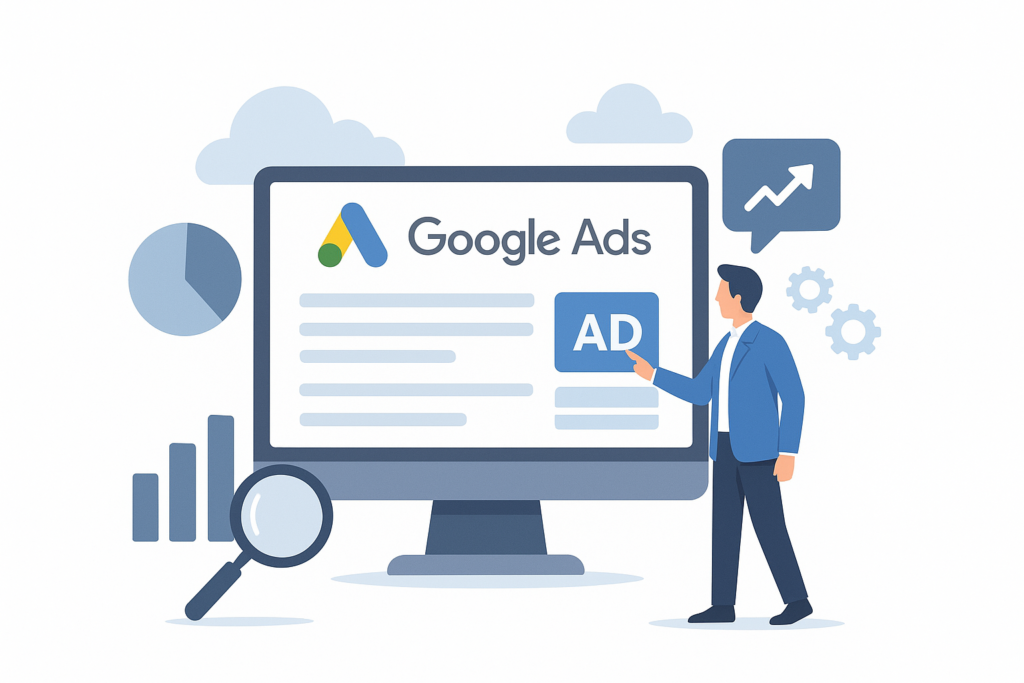
Google Ads is one of the most effective paid advertising platforms because it targets users with clear intent. When someone searches for a product or service on Google, they are often ready to take action.
How Google Ads Works
Google Ads is a powerful online advertising platform that allows businesses to display ads to users actively searching for products or services. Advertisers create campaigns targeting specific keywords, audiences, locations, and devices. When a user enters a relevant search query, Google runs an auction to determine which ads appear and in what order. Ads are then displayed on search results pages, websites within the Google Display Network, YouTube, or other partner platforms. This system ensures that ads reach people who are most likely to be interested, increasing the chances of clicks and conversions.
The platform operates primarily on a pay-per-click (PPC) model, meaning advertisers only pay when someone clicks their ad. Google Ads also provides detailed performance metrics, including impressions, clicks, cost-per-click, and conversion tracking. These insights allow businesses to refine targeting, adjust budgets, and optimise ad copy, ensuring maximum return on investment while reaching the right audience at the right time.
- Bid amount
- Ad relevance
- Quality Score (ad copy, landing page experience, and click-through rate)
You only pay when someone clicks your ad, making it a cost-efficient model when managed correctly.
Types of Google Ads Campaigns
- Search Ads: Search Ads are text-based advertisements that appear on Google’s search engine results pages when users search for specific keywords. They are designed to capture high-intent traffic by targeting users actively looking for products or services. Search Ads help UK businesses increase visibility, drive qualified leads, and generate conversions quickly. With strategic keyword selection and compelling ad copy, these ads deliver measurable results and a strong return on investment.
- Display Ads: Display Ads are visual advertisements, including images, banners, and videos, that appear across websites in the Google Display Network. They help UK businesses build brand awareness, reach wider audiences, and retarget users who have previously visited their site. Display Ads are ideal for engaging potential customers early in the buying journey, reinforcing brand messages, and driving traffic, all while offering precise targeting options and measurable performance insights.
- Shopping Ads: Shopping Ads are product-focused advertisements that appear on Google Search and the Google Shopping tab, showcasing images, prices, and product details. They are designed to attract users who are ready to purchase by providing clear, visual information upfront. For UK businesses, Shopping Ads increase product visibility, drive qualified traffic to online stores, and boost sales. They combine targeted bidding and detailed product feeds for measurable and highly effective e-commerce advertising.
- YouTube Ads: YouTube Ads are video-based advertisements that appear before, during, or alongside YouTube content. They allow UK businesses to engage audiences with compelling visuals and storytelling, increasing brand awareness and driving action. With precise targeting options based on demographics, interests, and viewing behaviour, YouTube Ads reach the right viewers at the right time. These ads are highly effective for building recognition, retargeting potential customers, and boosting conversions through interactive video content.
- Performance Max: Performance Max is an automated Google Ads campaign type that uses machine learning to optimise ad delivery across all Google channels, including Search, Display, YouTube, and Gmail. UK businesses benefit from its ability to maximise conversions and reach by automatically adjusting bids, targeting, and creative assets. Performance Max simplifies campaign management, ensures broader audience reach, and leverages data-driven insights to deliver efficient, high-performing advertising results with minimal manual intervention.
Each campaign type serves a different purpose and can be combined to build a complete marketing funnel.
Benefits of Google Ads for Businesses
Google Ads is particularly effective for businesses that rely on demand-driven traffic.
Key Benefits
- Targets users actively searching for solutions
- Generates fast and predictable leads
- Strong performance for local and national campaigns
- Full control over budget and bidding strategies
Example: A UK-based service provider can appear at the top of Google for searches like “digital marketing agency UK” or “web design services near me,” capturing high-intent prospects instantly.
Understanding Facebook Ads
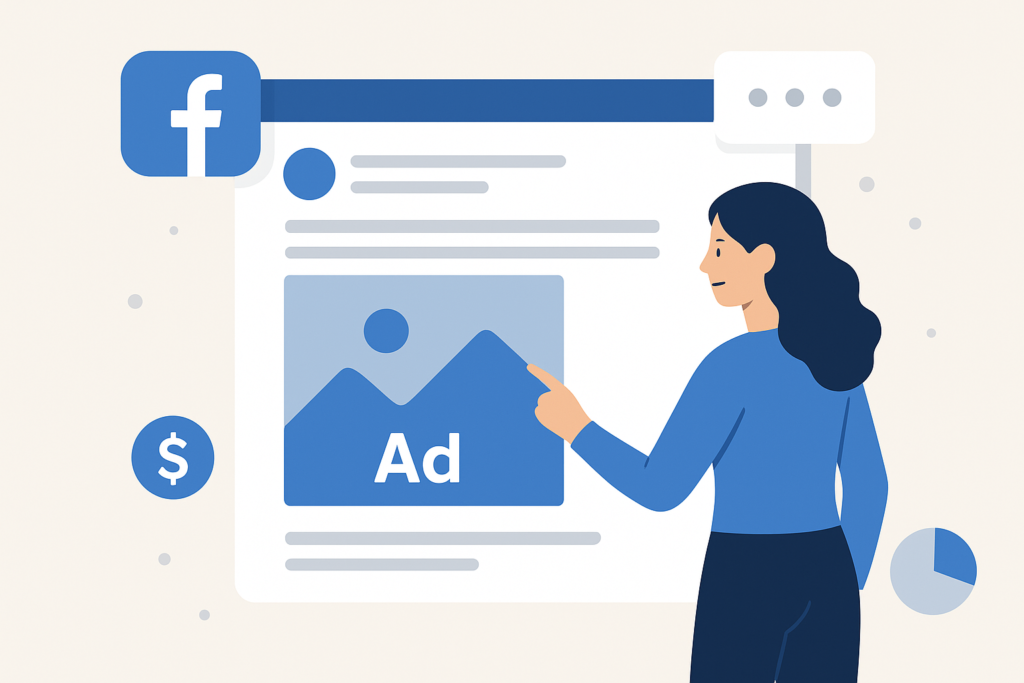
Facebook Ads, which also include Instagram Ads, focus on audience-based targeting rather than keyword searches. This makes them ideal for building brand awareness, nurturing leads, and retargeting potential customers.
How Facebook Ads Work
Facebook Ads is a versatile advertising platform that allows businesses to reach users across Facebook, Instagram, Messenger, and the Audience Network. Advertisers create campaigns by selecting objectives such as brand awareness, traffic, lead generation, or conversions. They can then define target audiences based on demographics, interests, behaviours, location, and even custom or lookalike audiences. This precise targeting ensures ads are shown to the most relevant users, increasing the likelihood of engagement and achieving business goals.
The platform uses an auction system to determine which ads appear to users, optimising delivery for desired outcomes while controlling costs. Advertisers can choose from various ad formats, including image, video, carousel, and collection ads, to engage audiences effectively. Facebook Ads also provides detailed analytics and performance metrics, enabling businesses to track results, refine targeting, and adjust creative elements. This data-driven approach helps UK businesses maximise ROI and drive meaningful customer interactions.
- Age, gender, and location
- Interests and online behaviour
- Engagement with your business
- Custom and lookalike audiences
Ads appear seamlessly within users’ feeds, stories, and videos, creating a more natural advertising experience.
Benefits of Facebook Ads
Facebook Ads excel at demand generation and relationship building.
Key Benefits
- Highly visual and engaging formats
- Advanced retargeting capabilities
- Lower cost per impression compared to search ads
- Ideal for brand storytelling and promotions
Example: An e-commerce business can show dynamic ads to users who viewed products but didn’t complete a purchase, increasing conversions significantly.
Google Ads vs Facebook Ads: A Strategic Comparison
Google Ads and Facebook Ads serve different marketing purposes, and understanding their strengths helps UK businesses make strategic decisions. Google Ads focuses on intent-based advertising, showing ads to users actively searching for products or services. This makes it highly effective for driving immediate traffic, qualified leads, and conversions. Search, Shopping, Display, and Performance Max campaigns allow businesses to target users with precision based on keywords, location, and behaviour, ensuring visibility when potential customers are ready to take action.
Facebook Ads, on the other hand, excels at audience-based targeting, using demographics, interests, and behaviours to engage users on social media platforms like Facebook, Instagram, and Messenger. It is particularly effective for building brand awareness, nurturing prospects, and retargeting past visitors. By combining both platforms strategically, UK businesses can capture high-intent search traffic through Google while building long-term brand engagement and loyalty with Facebook, creating a comprehensive digital advertising strategy.
Google Ads Is Best For:
- Capturing high-intent traffic
- Lead generation and direct sales
- Local service-based businesses
- Users ready to take action
Facebook Ads Is Best For:
- Brand awareness and visibility
- Retargeting and audience nurturing
- Visual storytelling
- Long-term customer relationships
At Appledew UK, we often recommend a combined approach, using Google Ads to capture existing demand and Facebook Ads to create and nurture new demand.
The Appledew UK Paid Advertising Approach
Our paid advertising services are built around strategy, transparency, and performance. We don’t believe in generic campaigns or guesswork.
1. Discovery and Strategy
We begin by understanding your business, industry, and objectives. This includes:
- Audience and keyword research
- Competitor analysis
- Funnel and conversion review
- Clear KPI definition
This foundation ensures every campaign aligns with your business goals.
2. Campaign Setup and Creative Development
We build campaigns designed to convert, not just attract clicks.
- Compelling ad copy
- Scroll-stopping visuals
- Clear value propositions
- Conversion-focused landing pages
Every element is tested and optimised to improve performance.
3. Ongoing Optimisation and Scaling
Paid advertising is not a “set and forget” activity. Continuous optimisation is essential.
- Bid and budget adjustments
- A/B testing ads and creatives
- Audience refinement
- Conversion rate optimisation
We scale what works and eliminate wasted spend.
4. Transparent Reporting and Insights
You receive clear, actionable reports focused on:
- Leads and sales generated
- Cost per acquisition
- Return on ad spend
- Growth opportunities
We believe transparency builds trust and long-term partnerships.
Common Paid Advertising Mistakes
Mistake 1: Poor Landing Pages
Even the best ads will fail if the landing page does not convert. Speed, clarity, and relevance are critical.
Mistake 2: No Conversion Tracking
Without accurate tracking, optimisation becomes guesswork. Data is the backbone of successful paid advertising.
Mistake 3: Targeting Too Broadly
Broad targeting wastes budget. Precision targeting improves efficiency and ROI.
Mistake 4: Ignoring Optimisation
Markets change constantly. Regular optimisation keeps campaigns profitable.
Real-World Example: UK Business Growth with Paid Ads
Situation: A UK-based service business needed faster lead generation.
Approach:
- Google Search Ads targeting high-intent keywords
- Facebook retargeting campaigns
- Conversion-optimised landing pages
Results:
- Increased qualified leads within weeks
- Reduced cost per lead over time
- Predictable and scalable lead pipeline
Key Lesson: Strategic integration of Google Ads and Facebook Ads delivers stronger results.
FAQs: Paid Advertising
Q: How much should I budget for paid advertising?
A: Budgets vary by industry and goals. Many UK businesses start small and scale once performance is proven.
Q: How long before I see results?
A: Paid ads can deliver traffic immediately, with optimal performance achieved after 30–60 days of optimisation.
Q: Is paid advertising suitable for small businesses?
A: Yes. With the right strategy, paid advertising is highly effective for SMEs.
Q: Do I need both Google Ads and Facebook Ads?
A: Not always, but using both often creates a stronger, full-funnel strategy.
Conclusion: Turning Ad Spend into Sustainable Growth
Paid advertising is one of the fastest ways to grow your business online—but only when executed strategically. Google Ads and Facebook Ads each play a critical role in attracting, converting, and retaining customers.
At Appledew UK, we focus on results that matter: qualified leads, increased sales, and measurable ROI. Our expert-led approach ensures every pound you spend works harder for your business.
Ready to grow with paid advertising? Contact Appledew UK today and let’s build campaigns that deliver real results.
Key Takeaways
- Google Ads captures high-intent demand
- Facebook Ads build awareness and nurture leads
- Strategy and optimisation drive ROI
- Combined platforms deliver scalable growth
- Expert management maximises performance