
Introduction
SEO is often seen as confusing, expensive, or something “only big companies do.” But in reality, Search Engine Optimisation is one of the most powerful and affordable growth channels for UK small businesses, especially those competing locally or trying to build an online presence from scratch.
Here’s the truth: your customers are already searching for what you offer. Whether it’s “best electrician near me,” “affordable website design UK,” or “business accountant in London,” Google is the first place they look. If your website isn’t visible, fast, and optimised — your competitors get the clicks, leads, and revenue instead of you.
This guide is created specifically for UK SMEs and startups. It breaks down SEO into clear, practical steps — without jargon, complexity, or unnecessary technical talk. Every section helps you take real action that can boost rankings, increase traffic, and turn your website into a consistent sales-generating asset.
Using Appledew UK approach — transparent reporting, white-hat methods, UK-focused keyword strategy, and data-driven insights — you’ll learn the exact steps that help small businesses compete with larger brands and rank above them in local and national search results.
By the end of this guide, you’ll know how to:
- Choose the right keywords
- Optimise your website pages
- Improve technical performance
- Dominate local search results
- Create SEO-friendly content
- Track performance with simple tools
Let’s make SEO simple, strategic, and actionable.
What Is SEO & Why It Matters for UK SMEs
SEO — Search Engine Optimisation — is the process of improving your website so it appears higher in search engines like Google. For UK small businesses, SEO is especially valuable because:
1. UK search behaviour is highly local.
Understanding SEO is crucial for UK SMEs because UK search behaviour is highly local. Customers often search for products or services near their location, making local SEO strategies essential for visibility and attracting the right audience. By optimising for local keywords, maps, and directories, SMEs can appear in relevant search results, drive foot traffic, and generate leads. Ignoring local search patterns means missing out on valuable opportunities to connect with nearby customers actively seeking your offerings. Over 46% of UK Google searches have local intent. People want fast, nearby solutions.
2. Organic traffic is more trustworthy.
For UK SMEs, organic traffic is more trustworthy because users tend to trust search engine results over paid ads. When your website appears naturally in search results, it signals credibility and authority in your industry. This trust leads to higher engagement, longer visits, and increased likelihood of conversions. Investing in SEO to attract organic traffic not only builds your brand reputation but also provides sustainable, cost-effective growth by consistently bringing in visitors who are genuinely interested in your products or services.
3. SEO is cost-effective and long-lasting.
SEO is a cost-effective and long-lasting strategy for UK SMEs, offering sustained visibility without the ongoing costs of paid advertising. By optimising your website for search engines, you attract organic traffic that continues to grow over time. Unlike short-term campaigns, SEO builds a strong online presence, improving credibility and brand recognition. For small and medium businesses, this means better return on investment, consistent lead generation, and long-term growth, making it an essential part of any digital marketing strategy.
4. Competitors often ignore it.
Many UK SMEs overlook SEO, giving businesses that invest in it a significant competitive advantage. While competitors may ignore optimising their websites, your business can capture valuable search traffic, improve online visibility, and reach potential customers actively searching for your products or services. By focusing on SEO now, you can establish authority in your niche, outperform competitors in search rankings, and secure long-term growth. Ignoring SEO means missing opportunities your rivals could exploit to dominate the local market.
5. Mobile search dominates the UK market.
Mobile search dominates the UK market, making it essential for SMEs to optimise their websites for mobile devices. With more users searching on smartphones and tablets than ever before, a mobile-friendly site ensures faster loading, better user experience, and higher search rankings. Businesses that neglect mobile optimisation risk losing potential customers to competitors. By prioritising mobile SEO, UK SMEs can capture on-the-go audiences, increase engagement, and convert mobile traffic into loyal customers, strengthening their online presence and growth.With 88% of UK users searching on mobile, local SEO and fast pages matter more than ever.
SEO benefits UK businesses by:
- Bringing qualified leads who are ready to buy
- Building brand authority
- Helping you compete against larger companies
- Reducing long-term marketing costs
- Improving customer experience
How Search Engines Actually Work
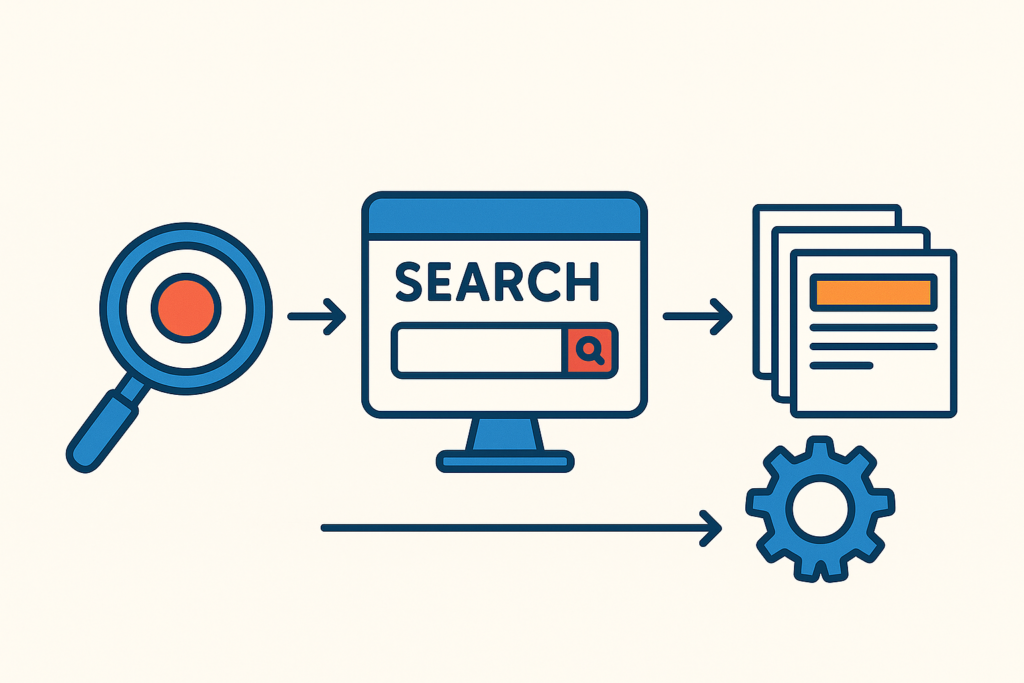
To understand SEO, you need to know how Google ranks pages. It’s based on three simple steps:
1. Crawling
Crawling is the first step in how search engines discover content on the web. Search engines use automated programs called crawlers or spiders to navigate websites, following links and scanning pages for information. This process allows search engines to index your content and understand what each page is about. For website owners, ensuring a clear site structure and accessible pages is crucial, as it helps crawlers efficiently find and analyse content, ultimately improving visibility in search results.
2. Indexing
Indexing is the process by which search engines organise and store the content they’ve discovered during crawling. Once a page is indexed, it becomes part of the search engine’s database, making it eligible to appear in search results. Proper indexing requires well-structured content, relevant keywords, and clear metadata. For website owners, ensuring pages are indexable is critical for visibility, as unindexed pages cannot be found by users. Effective indexing maximises a site’s reach and improves overall search performance.
3. Ranking
Ranking is the process by which search engines determine the order of pages in search results for a given query. Algorithms evaluate numerous factors, including relevance, quality of content, user experience, backlinks, and site authority, to deliver the most useful results. Higher-ranking pages attract more visibility, traffic, and engagement. For website owners, understanding ranking signals and optimising content accordingly is essential to outperform competitors, reach the right audience, and achieve long-term success in search engine performance.
Google decides which pages answer the user’s query best based on:
- Relevance
- Page quality
- Website authority
- User experience
- Location (for local searches)
Understanding these basics helps you know why certain SEO actions matter.
Step 1: Do Smart Keyword Research
Keyword research helps you understand how UK customers search for your services. For small businesses, the goal is to find:
- Low competition keywords
- Local keywords
- Service-focused keywords
- Commercial intent keywords
1. Keyword Research Tools (Beginner to Intermediate)
Here are tools perfect for UK SMEs:
Free Tools
- Google Keyword Planner
- Google Trends (UK filter)
- AnswerThePublic (with UK dataset)
- Ubersuggest (limited free credits)
- Google Search Console
- Bing Keyword Tool
Paid Tools (Best for Long-Term SEO)
- SEMrush
- Ahrefs
- Moz Pro
- SE Ranking (affordable for SMEs)
2. Types of Keywords You MUST Target
Local keywords
Examples:
“plumber in Birmingham”
“best dentist Bristol”
“London accountant for startups”
Long-tail keywords
Examples:
“affordable SEO services for UK small business”
“how to choose a roofing company near me”
Problem-based keywords
Examples:
“website loading slow fix UK”
“why my Google Business Profile not ranking”
Transactional keywords
Examples:
“hire web designer UK”
“SEO services for small businesses UK”
3. Simple 4-Step Keyword Research Workflow
Step 1: List your services
Example:
Electrician → emergency repairs, installation, rewiring.
Step 2: Add location modifiers
“London electrician,” “Croydon electrical repair”
Step 3: Check monthly search volume & competition
Use Keyword Planner or Ahrefs.
Step 4: Pick keywords you can realistically rank for
Focus on search intent + low competition.
4. Build a Keyword Map
Assign each keyword to a page:
| Page | Keyword Focus |
|---|---|
| Home Page | Main service + location |
| Service Page 1 | Specific service keyword |
| Service Page 2 | Another service keyword |
| Blog Posts | Long-tail educational keywords |
This ensures your site avoids keyword cannibalisation.
Step 2: On-Page SEO Essentials
On-page SEO means optimising elements directly on your website. For UK SMEs, these are the highest-impact tasks.
1. Optimising Titles & Meta Descriptions
Your title tag is the number #1 on-page ranking factor.
Title formula:
Service + Location + Value
Example:
“Emergency Electrician in Leeds — Fast 24/7 Repairs”
Meta description formula:
What you offer + who it’s for + key benefit + CTA
2. Headings (H1–H3)
A good page structure helps both users and Google.
Example format:
- H1: Main topic
- H2: Key sections
- H3: Sub-topics
- H4: Additional details
3. On-Page Checklist
Every page must include:
- Target keyword in first 100 words
- Descriptive URL slug
- Internal links to related pages
- External links to trusted sources
- Optimised images with alt text
- Short paragraphs for mobile users
- Clear call-to-action (CTA)
4. Content Length Matters
UK business pages that rank well typically have:
- Home Page → 500–1,200 words
- Service Page → 800–1,500 words
- Blog Posts → 1,000–2,000 words
Step 3: Technical SEO Made Simple

Technical SEO ensures your website is healthy, fast, and easy for Google to crawl.
1. Core Technical Priorities
Core technical SEO priorities ensure your website is fast, secure, and easy for search engines to crawl and index. Key areas include site speed, mobile optimisation, structured data, XML sitemaps, and secure HTTPS protocols. For UK SMEs, addressing these technical elements improves user experience, enhances search visibility, and lays a strong foundation for long-term SEO success.
✔ Site Speed
Use:
- Google PageSpeed Insights
- GTMetrix
Improve: - Image compression
- Faster hosting
- Remove heavy scripts
✔ Mobile Optimisation
Over 80% of local searches happen on mobile in the UK.
✔ HTTPS Security
Essential for trust signals.
✔ Clean URL Structure
Example:
/seo-services-uk/
/london-plumbing-repairs/
2. XML Sitemaps
XML sitemaps are essential for helping search engines discover and index your website’s pages efficiently. They provide a structured roadmap of your site’s content, ensuring important pages are not overlooked. For UK SMEs, maintaining an accurate and up-to-date XML sitemap improves crawlability, enhances search visibility, and supports better SEO performance across both new and existing content.
3. Robots.txt
The robots.txt file guides search engine crawlers on which pages to access or ignore on your website. Properly configured, it prevents indexing of duplicate or sensitive content while ensuring important pages are discoverable. For UK SMEs, managing robots.txt effectively helps optimise crawl efficiency, protect private information, and improve overall search engine performance.
4. Fix Duplicate Content
Fixing duplicate content is essential to maintain your website’s SEO health. Duplicate pages can confuse search engines, dilute ranking signals, and reduce visibility. UK SMEs should identify and resolve duplicates through canonical tags, redirects, or content consolidation. Addressing these issues ensures search engines recognise the primary content, improving rankings, enhancing user experience, and maximising the impact of your SEO efforts.
5. Use Schema Markup
Using schema markup helps search engines understand your website’s content more effectively by adding structured data. This can enhance search listings with rich snippets, improving visibility and click-through rates. For UK SMEs, implementing schema markup on products, reviews, events, and articles boosts SEO performance, provides clearer context to search engines, and makes your content more engaging for potential customers.
Especially:
- Local business schema
- FAQ schema
- Service schema
Step 4: Local SEO for UK Businesses
Local SEO gives the highest ROI for small businesses. It increases visibility for searches like:
“near me”
“best + service + city”
“local + service provider”
1. Google Business Profile (GBP) Optimisation
GBP influences local pack rankings.
How to optimise:
- Add complete business information
- Choose correct categories
- Add high-quality UK-specific photos
- Post weekly updates
- Collect reviews consistently
- Reply to every review (positive or negative)
2. NAP Consistency
Your Name, Address, Phone Number must match everywhere:
- Website
- Google Business Profile
- Directories
- Social media
3. UK Citations to Build
Submit your business to:
- Yell
- Thomson Local
- FreeIndex
- Yelp UK
- Scoot
- Checkatrade (for trades)
- TrustATrader
4. Local Content Strategy
Write articles targeting UK cities, postcodes, and problems.
Examples:
- “How Much Does Roofing Cost in Manchester in 2025?”
- “Best Ways to Save on Heating Bills in the UK”
5. Location Pages (If You Serve Multiple Areas)
Each needs:
- Unique content
- Local photos
- Local FAQs
- Specific CTAs
Step 5: Content Strategy That Ranks & Converts
Search engines reward websites that produce helpful, relevant content.
1. Types of Content to Publish
Choosing the right types of content is key to engaging your audience and boosting SEO. UK SMEs should publish a mix of blog posts, guides, videos, infographics, and case studies to address different customer needs. Diversifying content not only improves search visibility but also builds authority, encourages sharing, and drives conversions by providing valuable information across multiple formats.
- How-to guides
- FAQs
- Case studies
- UK problem-solving content
- Comparison posts
2. E-E-A-T for UK Audience
E-E-A-T (Experience, Expertise, Authoritativeness, and Trustworthiness) is crucial for creating content that resonates with the UK audience. By demonstrating credible expertise, reliable information, and genuine experience, businesses can build trust and authority. Implementing E-E-A-T principles in content strategy helps UK SMEs improve search rankings, engage readers effectively, and convert visitors into loyal customers.
Google rewards:
- Experience
- Expertise
- Authoritativeness
- Trust
Add:
- Credentials
- Testimonials
- Reviews
- Evidence of UK experience
Step 6: Measuring SEO Success
Use simple tools:
Google Analytics
Google Analytics is a powerful tool for measuring SEO success, providing insights into website traffic, user behaviour, and conversion patterns. By tracking metrics such as organic visits, bounce rates, and page performance, UK SMEs can evaluate the effectiveness of their SEO strategies. These data-driven insights help refine optimisations, improve user experience, and maximise return on investment.
Track:
- Organic traffic
- Bounce rate
- Engagement
Google Search Console
Google Search Console helps businesses monitor and improve their website’s performance in search results. It provides insights into search queries, impressions, clicks, and indexing status, allowing UK SMEs to identify issues and optimise content. By leveraging this tool, businesses can enhance visibility, fix technical problems, and make informed SEO decisions that drive organic traffic and improve overall search performance.
Track:
- Keyword growth
- Click-through rate
- Indexing issues
GBP Insights
GBP Insights (Google Business Profile Insights) provides valuable data on how customers find and interact with your business online. It shows metrics such as search views, customer actions, and engagement trends. For UK SMEs, these insights help optimise local SEO, improve online visibility, and make informed decisions to attract more local customers and drive business growth.
Track:
- Calls
- Directions
- Website visits
Common Mistakes UK SMEs Make
- Not optimising Google Business Profile
- Using duplicate content
- Targeting overly competitive keywords
- Missing location pages
- Slow website performance
- No ongoing content strategy
- No tracking setup
FAQs
Q: How long does SEO take in the UK market?
A: Usually 3–6 months for competitive terms, 1–3 months for local keywords.
Q: Do I need backlinks?
A: Yes — but prioritise quality UK-based links.
Q: How often should I update content?
A: Monthly updates boost rankings.
Q: Is technical SEO mandatory?
A: Yes. A slow or broken website cannot rank long-term.
Conclusion & CTA
SEO doesn’t need to be complicated. Any UK small business can start ranking, driving traffic, and generating leads by following the steps in this guide:
- Research keywords
- Optimise your pages
- Fix technical issues
- Dominate local SEO
- Publish useful content
- Track performance
If you want expert support tailored to your industry, Appledew UK offers:
- Transparent reporting
- Affordable SEO plans
- UK-focused keyword research
- Trusted white-hat methods
- Practical growth-driven strategies
Ready to grow your rankings and attract more customers?
👉 Contact Appledew UK today for SEO services that actually deliver results.
Key Takeaways
- Local SEO gives UK small businesses the fastest results
- On-page and technical SEO form the foundation
- Keyword research must be UK-specific
- Google Business Profile is essential
- Content + consistency = long-term rankings