
Introduction
In the rapidly evolving digital landscape, businesses of all sizes are competing to gain visibility, credibility, and customer trust. The foundation of this transformation lies in Website Design and Development, which is far more than just an online identity; it is the backbone of brand growth, user engagement, and customer loyalty. At Appledew UK, we firmly believe that a website should not only look appealing but also perform flawlessly, ensuring that businesses remain competitive in their respective industries. A powerful website is more than code and graphics; it is a business tool designed to increase leads, sales, and recognition.
With the right combination of creativity, usability, and functionality, Website Design and Development can convert visitors into loyal customers. In an era where attention spans are shorter than ever, the ability of a website to make a strong first impression while maintaining technical efficiency has become a business necessity. A well-structured website can act as the central hub for digital marketing efforts, connecting social media campaigns, SEO strategies, and branding initiatives into one seamless experience.
At Appledew UK, our approach to Website Design and Development integrates modern technologies with user-focused strategies. Whether it’s building responsive designs, enhancing page speed, optimizing for search engines, or adding e-commerce functionality, our mission is to provide businesses with websites that stand out and deliver measurable results.
The Importance of Website Design and Development in the Digital Age
The significance of Website Design and Development in today’s digital-first environment cannot be overstated. Businesses no longer survive solely on traditional marketing; instead, they thrive through online visibility, seamless user experience, and strong engagement. Every customer’s journey often begins with a quick Google search, and the website that appears at the top becomes the first point of contact. If that website fails to load quickly, looks outdated, or lacks professional design, the customer is more likely to move on to a competitor. This highlights why investing in professional Website Design and Development is crucial for long-term success.
A well-designed website does more than just showcase information. It builds credibility, creates brand recognition, and reflects the professionalism of the business. Development ensures that the site is functional, easy to navigate, and secure. Together, design and development form the foundation of a strong online presence that not only attracts visitors but also keeps them engaged. Businesses that overlook these elements risk falling behind in a competitive market where digital excellence is now a standard expectation.
Moreover, Website Design and Development directly influences other areas of digital marketing. A well-structured site enhances SEO performance, supports content marketing efforts, and improves conversion rates. Whether a customer is browsing from a desktop or mobile device, their interaction with the website determines how they perceive the brand. By focusing on design aesthetics and technical development simultaneously, companies create digital experiences that build trust and foster loyalty. In today’s market, a website is no longer optional—it is a vital necessity.
How First Impressions Are Shaped by Web Design
The saying “first impressions last” holds especially true in the digital realm. A visitor’s perception of a business is often formed within seconds of landing on its website. If the design is cluttered, outdated, or unprofessional, visitors are likely to leave immediately, regardless of the content. This makes Website Design and Development critical in shaping how potential customers perceive a brand. Clean layouts, engaging visuals, and easy navigation can make all the difference between a visitor exploring further or abandoning the site entirely.
Design elements such as typography, color schemes, and imagery play a significant role in influencing emotions and establishing brand identity. When design is consistent with branding, it creates familiarity and trust, encouraging users to interact with the site. Conversely, poor design can communicate neglect or lack of professionalism, which can deter customers from engaging with the brand. This is why businesses need to prioritize modern, aesthetically pleasing, and user-friendly web design as part of their growth strategy.
However, design alone is not enough. Development ensures that these design choices are functional, responsive, and adaptable across devices. A website might look beautiful on a desktop but become unreadable on a mobile device if development is not executed properly. By combining visual appeal with technical execution, Website Design and Development ensures that first impressions are not only positive but also lasting. Businesses that invest in creating strong first impressions through their websites gain a competitive advantage in building long-term relationships with customers.
The Role of User Experience in Website Design and Development
User experience (UX) has emerged as one of the most important aspects of Website Design and Development. It refers to how easily users can interact with and navigate a website. A website that is confusing, slow, or filled with unnecessary obstacles can frustrate visitors and drive them away. On the other hand, a well-planned UX ensures that visitors can find information quickly, engage with content, and complete desired actions—such as making a purchase or filling out a contact form—with ease.
 The design stage of UX focuses on creating layouts that prioritize user needs. Elements like intuitive navigation menus, clear call-to-action buttons, and strategically placed content all contribute to a seamless browsing experience. Development plays a key role in ensuring that these elements work smoothly behind the scenes, offering fast load times and responsiveness across devices. Together, design and development ensure that users not only stay longer on the website but also leave with a positive impression of the brand.
Businesses that prioritize UX in their Website Design and Development strategies often enjoy higher conversion rates and improved customer satisfaction. A user who feels valued and understood is more likely to return and recommend the brand to others. By eliminating friction points and focusing on user-centered design, businesses can create websites that not only attract traffic but also nurture long-term customer relationships.
Responsive and Mobile-Friendly Websites: A Must in Modern Business
The rise of smartphones and tablets has completely transformed how users interact with websites. More than half of global internet traffic now comes from mobile devices, which means businesses cannot afford to ignore the importance of responsive design. Website Design and Development plays a critical role in ensuring that websites adapt seamlessly to different screen sizes and devices. A responsive design automatically adjusts layout, images, and text so that users have a consistent experience whether they are browsing on a desktop, laptop, tablet, or smartphone. Without this adaptability, a business risks alienating a large portion of its audience.
Responsiveness is not just about design; it is also a technical challenge solved during the development stage. Developers use flexible grids, media queries, and scalable elements to ensure that websites remain visually appealing and functional across all devices. This enhances usability, reduces bounce rates, and improves overall customer satisfaction. From an SEO perspective, Google prioritizes mobile-friendly websites in its search results, which means businesses that invest in responsive Website Design and Development have a better chance of ranking higher.
In today’s competitive digital landscape, having a website that isn’t mobile-friendly can significantly damage brand reputation. Users expect smooth navigation, fast loading speeds, and easy accessibility regardless of the device they are using. Businesses that fail to deliver this risk losing credibility and customers to competitors who have invested in mobile optimization. By combining creative design with robust development practices, companies can ensure that their websites remain relevant, accessible, and engaging in a mobile-driven world.
Website Speed and Performance in Design and Development
Speed is one of the most important aspects of Website Design and Development. Studies show that users expect a website to load within just a few seconds, and if it doesn’t, they are likely to leave and look for alternatives. A slow-loading website not only frustrates users but also negatively impacts search engine rankings. Google considers website speed a ranking factor, which means performance directly affects visibility, traffic, and conversions.
The design phase plays an important role in influencing speed. Heavy graphics, unoptimized images, and complex layouts can slow down performance significantly. Development addresses these issues through optimization techniques such as minifying code, enabling browser caching, and implementing content delivery networks (CDNs). Together, design and development create a balance where the website is visually attractive but not overloaded with unnecessary elements that hurt performance.
Fast websites are not just about technical performance—they also shape user experience. A quick, responsive site communicates professionalism and reliability, increasing the chances of users staying longer and taking desired actions. In contrast, a slow website sends a negative message about the brand’s efficiency and can lead to a high bounce rate. By prioritizing speed during the Website Design and Development process, businesses create platforms that are not only engaging but also effective in meeting customer needs and expectations.
SEO and Its Connection with Website Design and Development
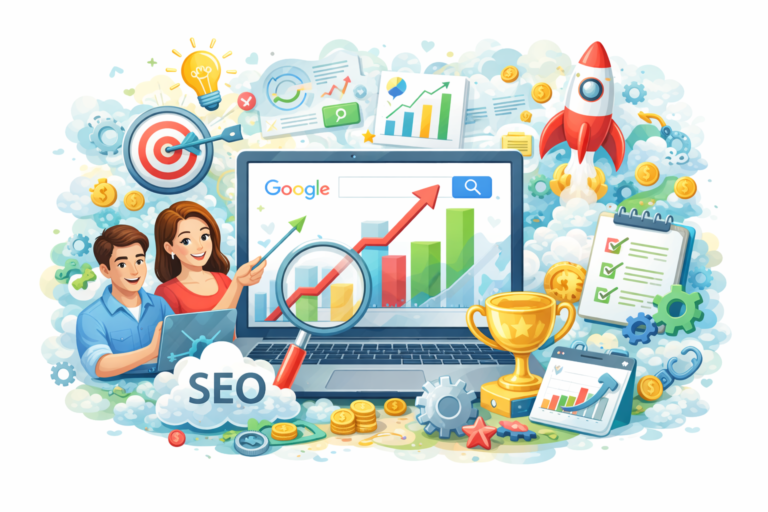
Search Engine Optimization (SEO) and Website Design and Development are deeply interconnected. A visually stunning website with poor technical structure will struggle to rank well in search engines, while a technically perfect website with no design appeal may fail to retain visitors. SEO bridges the gap between design, development, and visibility by ensuring that websites are discoverable by search engines and user-friendly for visitors.
Design influences SEO through elements like content placement, keyword optimization, and user-friendly navigation. Development ensures that the website is coded cleanly, loads quickly, and is structured in a way that search engines can crawl and index efficiently. From using schema markup to ensuring mobile responsiveness, every technical detail impacts how well a website ranks on Google and other search engines.
Moreover, SEO thrives when a website provides value to users. This means intuitive layouts, engaging visuals, and fast load times are not just design and development concerns—they are also SEO priorities. When businesses treat SEO as an integral part of Website Design and Development, they gain a competitive advantage by driving more organic traffic, increasing conversions, and achieving long-term growth. A website that is optimized for both users and search engines is a website that succeeds in the modern digital landscape.
The Balance of Creativity and Functionality in Web Design
One of the greatest challenges in Website Design and Development is finding the right balance between creativity and functionality. A website should be visually appealing to attract and engage users, but it should also be functional enough to allow them to navigate easily and achieve their goals. Overly creative designs may look impressive but can sometimes overwhelm users, while purely functional designs may lack the appeal needed to capture attention. Striking the perfect balance ensures that the website is both beautiful and practical.
Creativity is expressed through elements such as color schemes, typography, animations, and graphics. These aspects create an emotional connection with the audience and communicate brand personality. Functionality, on the other hand, focuses on usability, navigation, performance, and technical stability. Without functionality, creativity has no purpose; without creativity, functionality lacks appeal. The true power of Website Design and Development lies in combining both in a way that delivers a seamless and enjoyable user experience.
Businesses that invest in both creativity and functionality create websites that stand out from competitors while also being easy to use. Such websites encourage longer user sessions, higher engagement rates, and improved conversions. When done right, the combination of design and development ensures that websites are not just digital assets but also powerful business tools. This harmony is what transforms a standard website into an exceptional one, capable of driving growth and building lasting customer relationships.
Custom Website Development vs. Templates: Which One to Choose?
When businesses decide to create a website, one of the most important decisions is whether to go with a custom build or use pre-designed templates. Both approaches have advantages, but the choice ultimately depends on goals, budget, and long-term vision. Website Design and Development is not a one-size-fits-all process, and businesses must carefully evaluate their options before making a decision.
Templates are cost-effective, quick to set up, and often come with built-in features that allow startups or small businesses to get online without heavy investment. They provide an easy entry point, but the downside is that templates often lack uniqueness and flexibility. Many other businesses may use the same design, which dilutes brand identity. Additionally, making advanced customizations to templates can be difficult, and they may not always be optimized for SEO or long-term scalability.
On the other hand, custom Website Design and Development provides unmatched flexibility and originality. A custom website is built from scratch, designed to align perfectly with the brand’s identity, objectives, and target audience. While it may require more time and investment, it ensures scalability, better performance, and complete control over features and functionality. Custom websites are also more secure and adaptable to future technological changes, making them a more sustainable solution for businesses aiming for long-term growth. Choosing between templates and custom development is essentially choosing between short-term convenience and long-term success, with custom solutions offering the greater advantage for serious businesses.
The Role of Branding in Website Design and Development
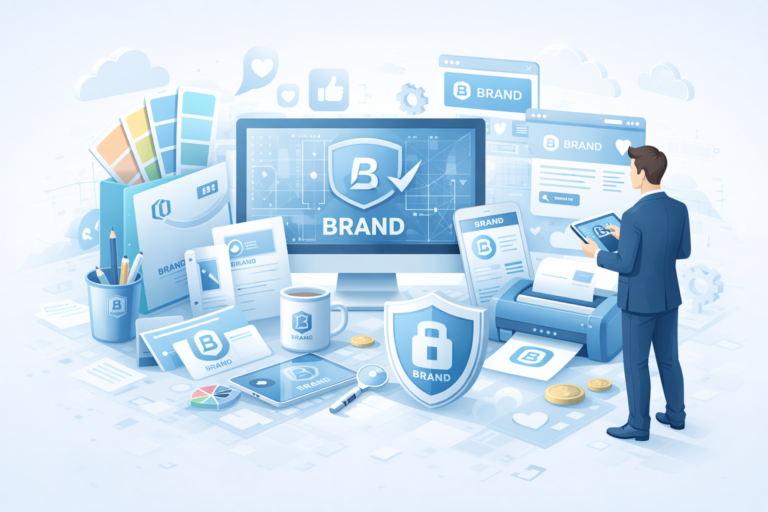
Branding goes far beyond a logo or tagline—it encompasses the entire perception of a business. In Website Design and Development, branding plays a central role in shaping user expectations and building trust. A well-branded website communicates consistency, professionalism, and authenticity, which are critical for customer loyalty. Without strong branding, even the most technically advanced website can fail to create a lasting impression.
 Design elements such as color schemes, fonts, and imagery must align with the brand’s identity. For example, a luxury brand may opt for sleek, minimalist design with muted colors, while a creative agency may choose vibrant visuals and bold typography. Development ensures that branding is consistent across all devices and platforms, from website navigation to loading speed. This consistency strengthens recognition and builds confidence in the brand’s reliability.
The connection between branding and Website Design and Development also influences how customers engage with content. A website that aligns with brand messaging encourages users to interact, share, and return. By weaving branding seamlessly into every aspect of web design and development, businesses create an online presence that is not only visually appealing but also emotionally resonant. Branding transforms a website from being a digital platform into a powerful storytelling medium that enhances customer trust and loyalty.
E-Commerce Website Design and Development for Online Growth
E-commerce has revolutionized how businesses operate, making online sales a necessity rather than an option. The success of an e-commerce business largely depends on the quality of its Website Design and Development. An e-commerce website must do more than showcase products—it must create a seamless shopping experience that encourages users to browse, add to cart, and complete purchases with ease.
Design plays an important role in creating visually appealing product pages, intuitive navigation, and easy-to-use checkout processes. Features such as product filtering, search bars, and customer reviews enhance the shopping experience, making it more engaging and efficient. Development ensures that all these design elements work flawlessly, with secure payment gateways, inventory management systems, and responsive designs that function smoothly on both desktop and mobile devices.
The rise of e-commerce also highlights the importance of trust. Customers need to feel secure when sharing personal and financial details online. Development ensures that websites are built with SSL certificates, encrypted payment systems, and strong cybersecurity measures. When combined with attractive design and user-friendly functionality, Website Design and Development provides e-commerce businesses with the tools to thrive in an increasingly competitive market. A well-designed e-commerce platform doesn’t just drive sales—it builds long-term customer relationships and brand loyalty.
Security in Website Design and Development
Security has become one of the most pressing concerns in the digital age. Cyberattacks, data breaches, and malware infections can cause significant damage to both businesses and customers. This is why Website Design and Development must incorporate security measures from the very beginning. A secure website not only protects business data but also builds trust among users, who need assurance that their personal information is safe.
Development plays the most crucial role in security by implementing encryption, firewalls, secure coding practices, and regular software updates. Design also contributes by ensuring that users can easily identify trust signals, such as SSL certificates and secure checkout icons. Without these visible assurances, users may hesitate to engage with the website, fearing risks to their privacy.
Security is not a one-time process but an ongoing commitment. Regular monitoring, updates, and testing are essential to maintain a secure environment. By integrating security into every stage of Website Design and Development, businesses can safeguard their brand reputation and ensure that customers continue to trust them. In a digital world where cyber threats are constantly evolving, a secure website is not just an option—it is a necessity for survival.
The Use of CMS Platforms in Web Development
Content Management Systems (CMS) have become a cornerstone of modern Website Design and Development. Platforms like WordPress, Joomla, and Drupal empower businesses to manage and update their websites without needing extensive coding knowledge. CMS platforms offer flexibility, scalability, and user-friendly interfaces, making them popular choices for businesses of all sizes.
Design within a CMS allows businesses to choose from thousands of customizable themes, which can then be tailored to reflect brand identity. Development extends these capabilities by creating custom plugins, adding advanced functionality, and integrating third-party tools. This combination allows businesses to enjoy both convenience and customization, balancing efficiency with uniqueness.
The true value of CMS platforms lies in their ability to empower businesses with control. Instead of relying on developers for every update, companies can easily publish blogs, update product pages, or adjust content as needed. This flexibility enhances digital marketing efforts and keeps websites fresh and relevant. In today’s digital ecosystem, where agility is key, CMS-based Website Design and Development provides businesses with the freedom to innovate and adapt quickly.
Integration of Social Media in Website Design and Development
Social media has become one of the most powerful marketing tools in the digital era, and its integration with websites is now essential. Website Design and Development ensures that businesses can connect their websites with social media platforms to increase engagement, visibility, and brand awareness. From embedded feeds to share buttons, social media integration transforms websites into interactive hubs that connect directly with audiences.
Design focuses on placing social icons, feeds, and sharing options strategically, ensuring that they are visible without being disruptive. Development ensures these integrations function smoothly, allowing users to share content instantly or log in using their social media profiles. Such features not only improve user experience but also expand a brand’s reach across platforms.
The synergy between social media and Website Design and Development enhances credibility and encourages active participation from users. Customers are more likely to engage with brands that maintain an active presence across multiple channels. By bridging the gap between websites and social platforms, businesses strengthen their digital ecosystems, creating seamless experiences that drive growth, loyalty, and long-term engagement.
The Impact of Visual Content in Web Design
Visual content has become one of the most influential elements in Website Design and Development. From images and infographics to videos and animations, visuals play a powerful role in capturing attention, conveying information quickly, and creating emotional connections with users. In today’s fast-paced digital landscape, audiences prefer visual content over lengthy text, making it a key factor in user engagement and retention.
The design phase incorporates visual content strategically, ensuring that images are high-quality, relevant, and aligned with brand messaging. Videos can be used to explain products, showcase services, or tell a brand’s story, while infographics help simplify complex information. Development ensures that these visuals load quickly, are optimized for all devices, and do not negatively impact website performance. Without proper optimization, even the most stunning visuals can slow down load times and harm user experience.
A balance must be maintained between aesthetics and functionality. Overloading a site with too many visuals can cause clutter, while underutilizing them can make a website appear dull and uninspiring. By integrating visual content carefully within Website Design and Development, businesses can enhance user interaction, improve SEO through media optimization, and increase the likelihood of conversions. Visual storytelling transforms a website from being just informational to becoming truly engaging, leaving a lasting impression on visitors.
Why Businesses Should Invest in Professional Web Development Services
Many businesses, particularly small ones, are tempted to cut costs by building their websites independently using free tools or basic templates. While this approach may work temporarily, it often fails to provide the long-term benefits that come from professional expertise. Investing in professional Website Design and Development services ensures that businesses receive websites tailored to their goals, optimized for performance, and built to grow alongside them.
Professional developers and designers bring a wealth of knowledge and experience to the table. They understand the latest trends, technologies, and best practices that can make a website more effective. From SEO optimization and responsive design to custom features and security enhancements, professionals ensure that every aspect of the website is designed to maximize impact. Unlike DIY approaches, professional development creates scalability, allowing businesses to expand their websites easily as they grow.
The long-term benefits of professional Website Design and Development far outweigh the initial investment. A professionally developed website attracts more traffic, converts more leads, and establishes stronger brand credibility. It also saves businesses time and effort, allowing them to focus on growth rather than constantly troubleshooting website issues. For businesses serious about competing in today’s digital marketplace, professional services are not a luxury—they are a necessity.
The Future of Website Design and Development with AI and Automation
Technology continues to evolve rapidly, and Website Design and Development is no exception. Artificial intelligence (AI) and automation are reshaping how websites are designed, developed, and managed. AI-powered tools are capable of creating personalized user experiences, analyzing user behavior, and even generating design layouts automatically. Automation, on the other hand, streamlines processes such as testing, updates, and security monitoring, reducing manual effort and improving efficiency.
AI is already being used in chatbots, voice search optimization, and personalized recommendations on websites. These features enhance user engagement and make websites more interactive and customer-focused. Automation ensures that websites remain up to date, functional, and secure without constant human intervention. Together, these technologies are revolutionizing Website Design and Development, making it more efficient, intelligent, and adaptive.
Businesses that embrace AI and automation gain a significant competitive advantage. They can deliver tailored experiences to users, reduce operational costs, and respond quickly to changes in user behavior. As technology continues to advance, the integration of AI and automation in web development will only grow stronger. Forward-thinking companies that adopt these innovations will be better positioned to succeed in the digital future.
Common Mistakes in Website Design and Development and How to Avoid Them
Even with the best intentions, many businesses make mistakes during Website Design and Development that can harm performance, user experience, and overall success. One of the most common errors is neglecting mobile optimization. With the majority of users accessing websites from mobile devices, failing to create a responsive design can result in poor usability and lost customers.
 Another frequent mistake is prioritizing aesthetics over functionality. While a visually appealing website is important, it should never come at the expense of navigation, speed, or accessibility. Overcomplicated designs, excessive animations, and cluttered layouts can overwhelm users and push them away. Similarly, ignoring SEO during development can leave a website invisible to search engines, regardless of its design quality.
Security is another area where mistakes are often made. Many businesses overlook updates, fail to implement SSL certificates, or neglect regular monitoring, leaving their websites vulnerable to attacks. To avoid these pitfalls, businesses must approach Website Design and Development strategically—balancing design with usability, prioritizing mobile responsiveness, optimizing for SEO, and integrating strong security practices. Avoiding these mistakes not only ensures better performance but also builds trust and credibility with users.
Conclusion: Driving Digital Growth Through Website Design and Development
In today’s highly competitive digital environment, Website Design and Development stands as the cornerstone of business growth, brand visibility, and customer trust. From responsive design and SEO integration to security and e-commerce functionality, every aspect of a website contributes to its success. Businesses that invest in thoughtful, professional, and innovative design and development strategies position themselves for long-term success.
At Appledew UK, we recognize that a website is more than an online presence—it is a business asset that drives engagement, conversions, and credibility. By combining creative design with technical development, we help businesses create digital experiences that resonate with users and deliver measurable results. Our approach ensures that websites are not only visually stunning but also functional, secure, and adaptable to future technologies.
As the digital world continues to evolve, businesses must view their websites as dynamic tools for growth rather than static platforms. With AI, automation, and continuous innovation shaping the future, Website Design and Development will remain central to digital transformation. Partnering with experts like Appledew UK ensures that businesses are equipped with websites that not only meet current demands but also prepare them for future opportunities. In the end, success in the digital age is built on a strong, well-designed, and expertly developed website.