Learn how Facebook Ads can help businesses generate qualified leads, increase sales, improve return on ad spend, and scale predictable growth using proven advertising strategies, audience targeting methods, and campaign optimization techniques.
Introduction
Digital advertising has evolved dramatically over the last decade, but few platforms continue to offer the level of targeting sophistication, scalability, and measurable performance provided by Facebook Ads. Businesses of all sizes leverage the platform to reach highly relevant audiences, nurture customer relationships, and generate revenue at a predictable cost.
For brands seeking long-term growth, Facebook advertising is no longer simply an optional marketing channel. It has become a strategic investment capable of supporting lead generation initiatives, eCommerce expansion, appointment bookings, webinar registrations, and customer acquisition campaigns. Organizations that understand audience behavior, campaign architecture, and conversion optimization often achieve a significant competitive advantage.
At Appledew UK, we understand that sustainable advertising success depends on much more than boosting posts or selecting interests. Effective campaigns require structured testing methodologies, compelling creative assets, continuous optimization, and adherence to advertising best practices. This comprehensive guide explores everything businesses need to know about creating profitable Facebook advertising campaigns while following modern digital marketing principles.
Understanding Facebook Ads and Why They Matter
Facebook Ads remain among the most powerful paid acquisition tools available to marketers because they combine immense audience reach with sophisticated targeting capabilities. Millions of businesses actively compete for consumer attention, making strategic campaign planning increasingly important.
The advertising ecosystem consists of placements across Facebook, Instagram, Messenger, Audience Network, and other integrated experiences. This allows brands to communicate with users throughout different stages of their purchasing journey. Someone discovering a business for the first time may encounter awareness campaigns, while returning visitors might engage with remarketing advertisements designed to encourage conversions.
One major advantage lies in behavioral targeting. Advertisers can segment audiences according to demographics, interests, online activities, purchasing tendencies, engagement history, and custom data sources. These capabilities help reduce wasted advertising spend while improving campaign efficiency.
Businesses also appreciate the measurable nature of Facebook Ads. Unlike traditional media channels, advertisers can monitor impressions, click-through rates, conversion events, customer acquisition costs, and lifetime value indicators in near real time. This level of transparency enables data-driven decision-making and allows companies to refine campaigns continuously.
Successful organizations rarely rely on assumptions. Instead, they evaluate campaign performance regularly, analyze customer interactions, and implement changes based on statistical evidence. This iterative approach contributes significantly to sustained advertising profitability.
How the Facebook Advertising Ecosystem Works
Understanding how Facebook’s advertising infrastructure functions is essential before investing substantial budgets. The platform operates through an auction-based system where advertisers compete for placement opportunities within users’ feeds and experiences.
The auction process does not simply reward the highest bidder. Instead, Facebook evaluates three primary factors:
- Bid amount
- Estimated action rates
- Ad quality
This methodology attempts to balance advertiser goals with user satisfaction. Campaigns delivering engaging experiences often outperform competitors spending significantly more money.
Campaign architecture follows a hierarchical model consisting of three distinct layers:
Campaign Level
At this stage, advertisers select their marketing objective. Objectives may include:
- Brand Awareness
- Reach
- Traffic
- Engagement
- Video Views
- Lead Generation
- Conversions
- Catalog Sales
- Store Traffic
Objectives influence optimization algorithms and determine how Facebook distributes impressions.
Ad Set Level
Advertisers define:
- Audience targeting
- Budget allocation
- Placements
- Schedule
- Optimization events
Strategic segmentation at this stage frequently determines overall campaign success.
Ad Level
Creative assets are developed within individual advertisements.
Examples include:
- Images
- Videos
- Carousels
- Slideshows
- Collection Ads
Ad copywriting also plays a significant role in influencing user engagement and conversion behavior.
Understanding these structural components enables advertisers to build scalable frameworks that support efficient testing and optimization efforts.
Setting Clear Advertising Goals Before Launching Campaigns
Many businesses struggle with Facebook advertising because they launch campaigns without establishing measurable objectives. Advertising platforms amplify existing strategies rather than creating strategies independently.
Campaign goals should align closely with broader business priorities.
Examples include:
Lead Generation
Professional service providers often seek inquiries, consultation bookings, or webinar registrations.
Online Sales
Retail brands prioritize revenue generation through direct purchases.
Brand Awareness
New companies frequently aim to increase market visibility.
Customer Retention
Existing customers may receive promotional offers and loyalty incentives.
Well-defined goals allow marketers to determine suitable key performance indicators.
Examples include:
- Cost Per Lead
- Return On Ad Spend
- Purchase Value
- Conversion Rate
- Cost Per Acquisition
- Average Order Value
Without clear metrics, advertisers often make optimization decisions based on incomplete information.
Businesses should establish realistic benchmarks using historical performance data whenever possible. This creates accountability while improving forecasting accuracy.
A documented advertising strategy also facilitates better communication among internal teams, agencies, and stakeholders.
Audience Targeting Strategies That Improve Advertising Results
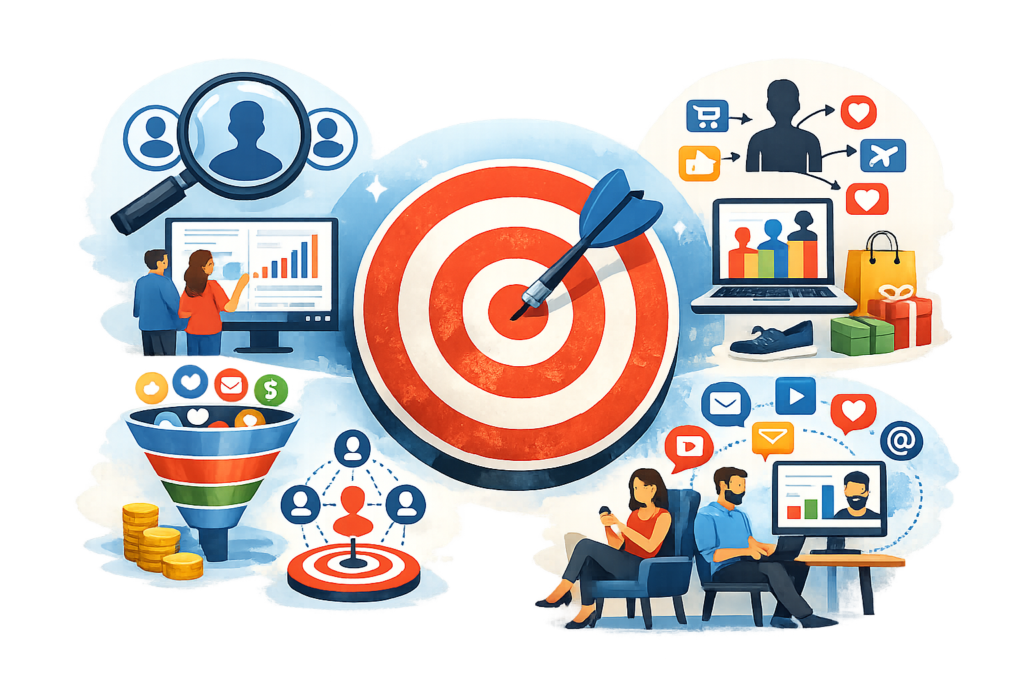
Audience targeting remains one of Facebook’s strongest competitive advantages. Effective segmentation enables businesses to reach consumers most likely to engage and convert.
Several targeting methods deserve consideration.
Core Audiences
Core targeting options include:
- Age
- Gender
- Geography
- Interests
- Languages
- Behaviors
Businesses serving local markets can narrow audiences substantially.
Custom Audiences
Custom audiences utilize existing customer relationships.
Examples include:
- Website visitors
- Email subscribers
- Past purchasers
- Video viewers
- App users
These individuals often demonstrate stronger purchase intent.
Lookalike Audiences
Lookalike modeling allows Facebook to identify users who resemble existing customers.
Advertisers may create audiences based on:
- High-value buyers
- Newsletter subscribers
- Frequent customers
- Qualified leads
This strategy frequently helps businesses scale campaigns without sacrificing efficiency.
Audience overlap should also be monitored carefully. Excessive overlap may increase advertising costs and cause internal competition between campaigns.
Testing audience segments independently helps marketers understand which customer groups contribute most significantly to revenue generation.
Building High-Converting Facebook Ad Creatives
Creative quality has become increasingly important as competition intensifies across social platforms.
Users encounter thousands of marketing messages daily. Advertisements must capture attention quickly while communicating value clearly.
Strong visual assets generally share several characteristics.
They Interrupt Scrolling
Bright imagery, emotional expressions, and movement attract attention.
They Communicate Benefits Immediately
Consumers prioritize outcomes.
Examples include:
- Saving time
- Increasing revenue
- Reducing costs
- Improving convenience
They Maintain Brand Consistency
Visual cohesion enhances recognition.
Best-performing creatives often include:
- Authentic photography
- Customer testimonials
- Product demonstrations
- Educational videos
- Behind-the-scenes content
Video content continues gaining importance because it encourages longer engagement periods.
Copywriting should complement visual assets.
Effective advertisements frequently follow this structure:
Problem
Identify audience pain points.
Agitation
Highlight consequences.
Solution
Present the offer.
Call To Action
Encourage immediate action.
Examples include:
- Learn More
- Schedule Consultation
- Download Guide
- Start Free Trial
- Shop Now
Advertisers should develop multiple creative variations simultaneously. Testing headlines, visuals, descriptions, and offers enables teams to discover winning combinations more efficiently.
Writing Facebook Ad Copy That Persuades Prospects to Act
Copywriting directly influences campaign profitability.
Even exceptional targeting cannot compensate for weak messaging.
High-performing advertisements typically begin with compelling hooks.
Examples include:
“Still struggling to generate qualified leads consistently?”
“Most businesses waste advertising budgets because they ignore this simple strategy.”
Once attention is secured, advertisers should demonstrate empathy toward audience challenges.
Consumers respond positively when brands acknowledge frustrations and present credible solutions.
Persuasive copy often incorporates:
- Social proof
- Case studies
- Performance metrics
- Customer reviews
- Limited-time incentives
Clarity remains essential.
Complex language frequently reduces conversion rates.
Effective advertisements prioritize concise communication and straightforward benefits.
Calls-to-action should be direct and action-oriented.
Examples include:
- Get Started Today
- Book Your Demo
- Claim Your Offer
- Request Pricing
Continuous copy testing allows advertisers to identify messaging themes that resonate with different audience segments.
Choosing the Right Campaign Objective for Better Performance
Selecting inappropriate campaign objectives is a surprisingly common mistake.
Facebook optimizes delivery according to the selected objective.
Choosing Traffic while expecting purchases may create inefficient results.
Businesses should align objectives with intended outcomes.
Recommended combinations include:
| Goal | Recommended Objective |
|---|---|
| Awareness | Brand Awareness |
| Website Visits | Traffic |
| Registrations | Leads |
| Purchases | Sales |
| Engagement | Engagement |
| Catalog Promotion | Catalog Sales |
Optimization events should reflect meaningful business actions.
Examples include:
- Completed purchases
- Qualified leads
- Appointment bookings
- Subscription upgrades
Allowing Facebook’s machine learning systems sufficient data improves campaign stability over time.
Campaigns interrupted frequently may reset learning phases, negatively affecting performance.
Optimizing Facebook Ad Budgets for Sustainable Growth
One of the most significant advantages of Facebook Ads is the ability to work with virtually any advertising budget while maintaining control over spending. However, simply allocating more money to campaigns does not automatically lead to better results. Businesses that achieve long-term success understand that budget optimization requires careful planning, patience, and ongoing analysis. A strategic budgeting approach allows advertisers to maximize returns while minimizing unnecessary expenses.
During the early stages of campaign development, advertisers should focus on gathering performance data rather than aggressively scaling spending. Small testing budgets help identify which audiences, creatives, and messaging combinations generate the highest engagement and conversions. Once campaigns begin producing stable results, budgets can be increased gradually to preserve performance consistency. Sudden budget increases often disrupt Facebook’s learning phase, causing fluctuations in cost efficiency and campaign delivery.
Businesses should also evaluate profitability beyond immediate advertising metrics. While cost per click and cost per lead provide useful insights, the true measure of campaign effectiveness lies in customer lifetime value, retention rates, and repeat purchase behavior. Companies that monitor these broader indicators are better positioned to make informed investment decisions and build advertising systems that support predictable, sustainable growth.
Tracking Conversions and Measuring Campaign Success
Accurate measurement is essential for making intelligent advertising decisions. Without reliable conversion tracking, businesses risk investing in campaigns without understanding which activities actually contribute to revenue generation. Facebook provides sophisticated tracking capabilities that allow advertisers to monitor user behavior throughout the customer journey.
Implementing the Facebook Pixel and properly configuring conversion events helps businesses collect valuable behavioral data. Advertisers can track actions such as purchases, lead submissions, appointment bookings, newsletter registrations, and product page visits. This information enables Facebook’s algorithms to optimize delivery toward users who are more likely to complete meaningful actions. Businesses should also consider utilizing the Conversions API to strengthen data accuracy and improve event matching capabilities.
When evaluating campaign performance, marketers should avoid relying solely on vanity metrics such as impressions and likes. More meaningful indicators include conversion rates, customer acquisition costs, return on ad spend, average order values, and overall profitability. Consistent performance reviews allow advertisers to identify trends, uncover opportunities for improvement, and allocate budgets toward initiatives that generate measurable business outcomes.
For implementation guidance, advertisers can review official resources available through Google’s Google Analytics documentation and Meta’s advertising support materials.
Leveraging Retargeting to Increase Conversions
Retargeting remains one of the most effective Facebook advertising strategies because it focuses on individuals who have already demonstrated interest in a business. These users may have visited a website, viewed products, engaged with social media content, or initiated but failed to complete a purchase. Since these prospects are already familiar with a brand, they often convert at significantly higher rates than completely new audiences.
Effective retargeting campaigns acknowledge the user’s previous interactions and provide relevant messaging designed to encourage progression through the buying process. Someone who abandoned a shopping cart may respond positively to reminders, social proof, or limited-time incentives, while users who consumed educational content may benefit from offers that encourage consultations, demonstrations, or lead magnet downloads. Tailoring messaging according to behavioral signals improves relevance and strengthens campaign performance.
Advertisers should avoid overwhelming users with excessive frequency. Repeated exposure to identical advertisements can lead to audience fatigue, reduced engagement, and declining returns. Refreshing creative assets regularly, experimenting with new messaging angles, and segmenting audiences according to engagement levels helps maintain campaign effectiveness while preserving positive brand perception.
Scaling Facebook Campaigns Without Sacrificing Profitability
Scaling advertising campaigns successfully requires discipline and a systematic approach. Many businesses experience setbacks because they attempt to increase budgets too quickly or expand targeting before campaigns demonstrate stable performance. Sustainable growth is achieved through measured adjustments that preserve the efficiency already established during testing phases.
Advertisers often begin by increasing budgets gradually over several days while closely monitoring key performance indicators. Another common approach involves duplicating high-performing campaigns and testing additional audience segments, creative formats, or geographic markets. These methods allow businesses to explore growth opportunities without disrupting campaigns that consistently generate positive results.
Creative diversification also plays a vital role in long-term scalability. Even the most successful advertisements eventually experience declining engagement as audiences become accustomed to seeing them repeatedly. Developing fresh visuals, updating messaging, and incorporating customer success stories helps maintain audience interest. Businesses that consistently invest in creative testing and campaign refinement are generally better equipped to sustain profitability as advertising budgets expand.
Common Facebook Ads Mistakes Businesses Frequently Make
Many advertisers encounter challenges not because Facebook Ads are ineffective, but because campaigns are launched without adequate preparation or strategic oversight. One of the most common mistakes involves targeting audiences that are either excessively broad or highly restrictive. Broad audiences may waste advertising spend on irrelevant users, while overly narrow targeting can limit reach and increase costs due to audience saturation.
Another frequent issue is the failure to align campaign objectives with desired business outcomes. Businesses expecting online purchases while optimizing for website traffic often struggle to generate meaningful results. Similarly, advertisers who frequently edit campaigns during Facebook’s learning phase may unintentionally destabilize performance, making it difficult for algorithms to identify high-converting users efficiently.
Creative fatigue represents another overlooked problem. Some organizations continue running identical advertisements for extended periods without refreshing visuals or updating messaging. Over time, engagement rates decline, click-through rates decrease, and acquisition costs rise. Businesses that routinely evaluate performance data and introduce new creative concepts tend to maintain stronger campaign momentum and achieve more consistent returns.
Best Practices Summary for Long-Term Facebook Advertising Success
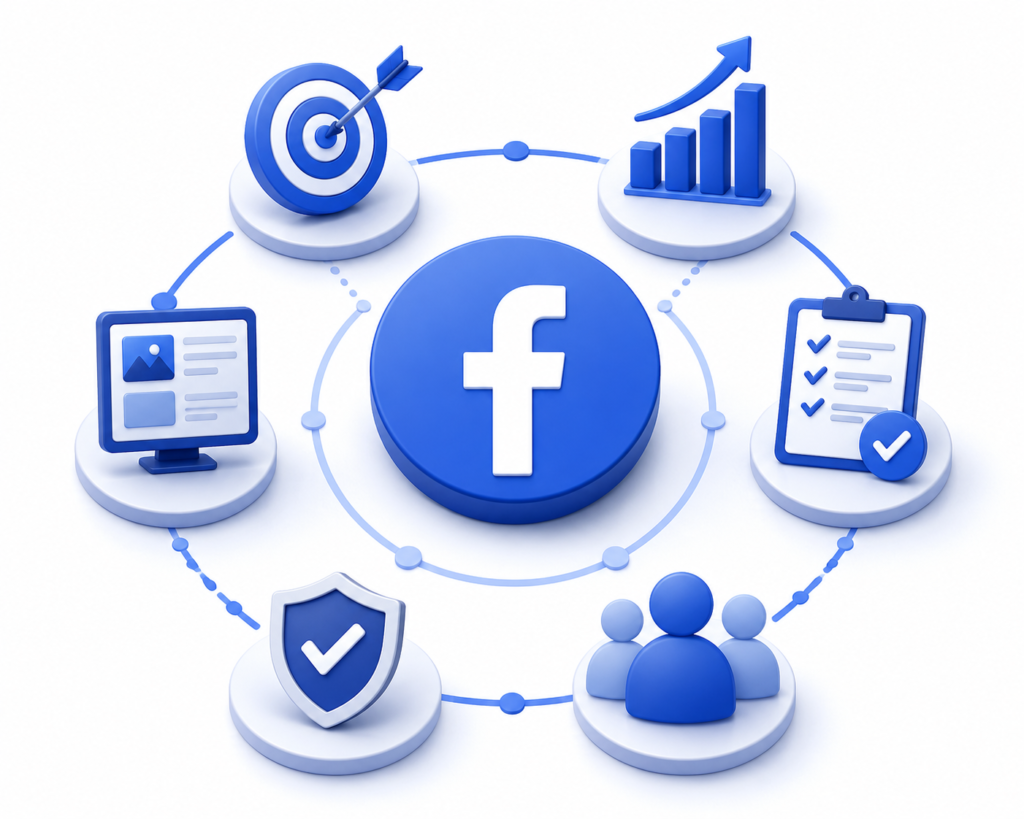
Long-term advertising success is rarely the result of isolated tactics or short-lived promotional efforts. Instead, it stems from the development of repeatable systems that prioritize audience understanding, strategic testing, and data-informed decision-making. Businesses should approach Facebook Ads as an ongoing optimization process rather than a one-time campaign launch.
Maintaining accurate tracking systems, continuously testing creative assets, monitoring profitability metrics, and refining audience segments are all practices that contribute to sustained performance improvements. Organizations should remain adaptable and willing to modify strategies based on changing consumer behaviors, platform updates, and evolving business goals. The most successful advertisers treat every campaign as an opportunity to gather insights that strengthen future initiatives.
Building trust with audiences is equally important. Advertisements should communicate value clearly, present realistic expectations, and align with broader brand experiences. Companies that focus on delivering helpful information, solving customer problems, and nurturing relationships often achieve stronger customer loyalty and more predictable advertising outcomes over time.
Frequently Asked Questions
Q1. How much should a business spend on Facebook Ads initially?
Answer: The ideal starting budget varies depending on industry competitiveness, target audience size, and campaign objectives. Many businesses begin with modest daily budgets to collect performance data and identify winning strategies before increasing investments. Testing campaigns with manageable spending levels reduces risk while providing valuable insights that support future scaling decisions.
Q2. How long does it take Facebook Ads to produce results?
Answer: Results depend on factors such as campaign goals, creative quality, audience targeting, and budget levels. In many cases, advertisers begin seeing useful performance trends within several days, although campaigns often require additional time to exit the learning phase and achieve stable optimization.
Q3. Are Facebook Ads effective for small businesses?
Answer: Yes. Facebook Ads offer extensive targeting capabilities and flexible budgeting options that make them suitable for businesses with limited marketing resources. Small companies can compete effectively by focusing on niche audiences, compelling messaging, and continuous optimization efforts.
Q4. What type of creative performs best on Facebook?
Answer: Performance varies across industries and audience segments, but authentic visuals, educational videos, customer testimonials, and product demonstrations frequently generate strong engagement. Regular testing remains essential because audience preferences can change over time.
Q5. Should businesses use automatic placements?
Answer: Automatic placements often provide advertisers with broader reach and allow Facebook’s algorithms to identify cost-effective opportunities. However, businesses should review placement reports periodically to ensure campaigns align with their overall marketing objectives.
Q6. Why do Facebook Ads become more expensive over time?
Answer: Rising competition, audience fatigue, seasonal demand fluctuations, and declining creative performance can all contribute to increased advertising costs. Introducing fresh creatives and refining audience strategies often helps maintain efficiency.
Q7. Is retargeting necessary for successful campaigns?
Answer: Retargeting is highly recommended because it focuses on users who have already interacted with a brand. These individuals generally have stronger purchase intent, making retargeting campaigns an effective method for improving conversion rates and maximizing advertising investments.
Q8. Can Facebook Ads work alongside other marketing channels?
Answer: Absolutely. Facebook Ads often perform best when integrated with broader marketing initiatives, including email campaigns, search engine optimization efforts, content marketing strategies, and customer relationship management programs.
Conclusion
Facebook Ads continue to offer businesses an exceptional opportunity to connect with targeted audiences, generate qualified leads, and drive sustainable growth. Success depends on much more than simply launching advertisements. It requires strategic planning, precise audience segmentation, compelling creative development, reliable tracking systems, and a commitment to continuous improvement.
Businesses willing to invest in testing, optimization, and customer-centric messaging frequently discover that Facebook advertising can become one of their most predictable and scalable acquisition channels. By implementing the strategies discussed throughout this guide, organizations can build campaigns that not only increase short-term conversions but also contribute to long-term business success.
At Appledew UK, we believe that effective advertising combines technical expertise with a deep understanding of customer behavior. Companies that adopt this mindset are far more likely to create profitable campaigns that withstand changing market conditions and evolving digital trends.
Want to Implement This Easily?
Prompt Text:
You are an expert consultant. Based on the blog post titled “Facebook Ads”, provide a step-by-step, practical implementation guide. Include tools, best practices, common mistakes to avoid, and advanced tips. Assume the reader wants to implement everything discussed in this article effectively.
Call to Action: Want our help implementing this? Just reach out to us via our website contact form: https://appledew.co.uk/contact-us/