

Branding & Graphic Design define how a business is perceived, trusted, and remembered. Learn how strategic visual identity, brand systems, and design consistency drive authority, engagement, and sustainable growth.
Introduction
Branding & Graphic Design are foundational to how modern businesses establish credibility, communicate value, and build lasting relationships with their audiences. Long before a visitor reads a headline or compares pricing, they subconsciously evaluate trust through visual signals such as layout quality, typography, color harmony, and consistency. These signals form immediate judgments that are difficult to reverse.
Branding gives a business its identity, purpose, and positioning, while graphic design transforms those abstract ideas into a tangible visual experience. When done strategically, branding aligns internal vision with external perception, ensuring that every interaction feels intentional and cohesive. Poorly executed branding, on the other hand, creates confusion, weakens trust, and diminishes perceived value.
At Appledew UK, branding & graphic design are treated as long-term strategic investments rather than short-term creative tasks. This guide explores how visual identity, design systems, and branding strategy work together to build authority, trust, and recognisable presence in competitive digital environments.
Branding & Graphic Design as a Strategic Business Asset
Branding & Graphic Design function as core business assets, not decorative elements. They influence how users perceive professionalism, reliability, and legitimacy—often within seconds of their first interaction. A cohesive visual identity reassures users that a business is structured, established, and intentional.
Every design element communicates meaning. Colors evoke emotion, typography sets tone, and layouts signal organisation. When these elements are aligned under a unified brand strategy, they reinforce trust and recognition across platforms. Consistency plays a key role here, as repeated exposure to the same visual language builds familiarity, which in turn increases confidence and engagement. This principle aligns closely with guidance from Google Search Central, which emphasises clarity and consistency as markers of high-quality digital experiences.
From an operational perspective, treating branding as an asset improves efficiency. Teams no longer debate visual decisions repeatedly because design rules are already defined. Over time, strong branding compounds in value, lowering marketing friction, improving conversion rates, and strengthening long-term customer loyalty.
Understanding the Difference Between Branding and Graphic Design
While closely related, branding and graphic design serve different strategic purposes. Branding defines meaning, while graphic design expresses that meaning visually. Confusing the two often leads to visually attractive work that lacks strategic depth or commercial impact.
Branding establishes identity, values, positioning, and voice. It answers fundamental questions such as who the business serves, what it stands for, and how it differs from competitors. Graphic design then translates those answers into visual components like logos, typography, color systems, and layouts. Without branding, graphic design becomes subjective and trend-driven. Without graphic design, branding remains abstract and invisible.
Successful businesses ensure that graphic design decisions are guided by brand strategy rather than personal taste. This structured relationship creates clarity for users and consistency across all touchpoints. Thought leadership platforms like Moz frequently highlight how strong brand definition supports long-term authority and recognition in crowded markets.
Brand Strategy Foundations Before Any Design Work
Effective branding & graphic design always begin with strategy before visuals. Jumping directly into design without understanding audience needs, market positioning, and brand purpose leads to inconsistent results and frequent redesigns.
Brand strategy involves defining core elements such as mission, vision, value proposition, personality, and tone. These elements guide every visual decision and ensure alignment between internal goals and external perception. A clear strategy also prevents dilution as the brand grows, ensuring new assets remain cohesive rather than fragmented.
Strategic foundations also support scalability. As businesses expand into new platforms, markets, or services, a documented brand strategy ensures continuity. This approach mirrors best practices discussed by Ahrefs, where strong brand positioning contributes to trust signals, engagement, and long-term visibility.
Building a Cohesive Visual Identity System
A visual identity system is a structured framework that governs how a brand appears across all mediums. It includes logos, color palettes, typography, spacing rules, imagery style, and layout principles. Together, these elements create a unified and recognisable visual language.
Consistency is the defining benefit of a visual identity system. When users encounter predictable patterns, they feel more comfortable navigating content and interacting with the brand. Predictability reduces cognitive load and enhances usability, especially in digital environments. This concept aligns with user experience principles frequently discussed by Search Engine Journal.
Well-defined identity systems also protect brand integrity. They allow teams, designers, and partners to apply branding correctly without constant oversight. This not only saves time but ensures long-term consistency as the brand scales.
Logo Design Principles That Support Longevity
A logo is often the most recognisable element of a brand, but its effectiveness depends on more than appearance. Strong logo design balances simplicity, relevance, scalability, and memorability. Overly complex logos struggle across digital platforms and small screen sizes.
Timeless logos are concept-driven rather than trend-focused. Trends change rapidly, but logos rooted in brand meaning remain effective for years. This longevity protects brand equity and reduces the need for frequent redesigns that can confuse audiences.
A professional logo system includes multiple variations: primary, secondary, monochrome, and icon versions. This flexibility ensures consistent application across websites, mobile apps, social platforms, and printed materials without compromising recognition.
Typography as a Brand Voice and Trust Signal
Typography plays a crucial role in shaping how a brand feels and communicates. Fonts convey personality, authority, and mood before content is even read. Serif fonts often communicate tradition and reliability, while sans-serif fonts suggest clarity and modernity.
Beyond font selection, typographic hierarchy determines readability and user experience. Clear heading structures, appropriate line spacing, and contrast help users scan and absorb information efficiently. Accessibility considerations are especially important, as inclusive typography improves usability for all audiences.
Consistent typography strengthens brand recognition. When users subconsciously recognise a brand through text styling alone, it signals maturity and professionalism. This consistency reinforces trust and supports long-term brand recall.
Color Psychology and Emotional Brand Positioning
Color is one of the most powerful tools in branding & graphic design. It triggers emotional responses instantly and influences how users perceive a brand’s personality and intent. Strategic color selection reinforces positioning and emotional connection.
Different colors evoke different psychological responses. Blues often convey trust and stability, while warmer tones communicate energy and confidence. However, emotional impact must be balanced with usability. Sufficient contrast and readability are essential to ensure accessibility across devices and audiences.
A structured color system typically includes primary, secondary, and accent colors with defined usage rules. This structure prevents visual clutter and ensures consistency across digital and print applications, strengthening overall brand cohesion.
Branding for Digital Platforms and User Experience
In digital environments, branding & graphic design must work hand-in-hand with usability and performance. A visually appealing brand that frustrates users through poor navigation or slow loading erodes trust instantly. Digital branding succeeds when form and function are equally prioritised.
User experience principles such as clarity, hierarchy, and predictability shape how users interact with branded interfaces. Design elements must guide attention naturally, making content easy to consume and actions easy to complete. These expectations align closely with experience standards outlined by Google Developers, where usability is treated as a core quality signal.
Brand consistency across digital touchpoints—websites, dashboards, mobile views, and platforms—reinforces recognition. When users encounter familiar visual patterns, they feel confident navigating new sections. This confidence improves engagement, dwell time, and overall brand perception.
Responsive Design and Cross-Device Brand Consistency
Modern branding must adapt seamlessly across devices without losing identity. Responsive design ensures that layouts, typography, and visual hierarchy remain consistent regardless of screen size or orientation. Without responsiveness, even strong branding breaks down in real-world use.
Consistency across devices reinforces brand reliability. A brand that looks polished on desktop but fragmented on mobile creates doubt. Responsive branding systems account for spacing, font scaling, and asset behaviour to maintain coherence everywhere.
Performance is equally critical. Heavy visuals that slow loading damage trust and engagement. Best practices emphasised by Cloudflare highlight how performance optimisation supports user satisfaction and perceived quality, making responsive branding both aesthetic and technical.
Print Design and Offline Brand Touchpoints
Despite digital dominance, offline branding remains influential. Printed materials create tactile experiences that reinforce credibility and professionalism. Business cards, brochures, packaging, and signage often serve as physical proof of brand legitimacy.
Consistency between print and digital assets is essential. Discrepancies weaken recognition and confuse audiences. A unified identity system ensures that colors, typography, and layouts remain aligned across all formats.
Print quality also communicates value. Paper selection, finishes, and layout precision subtly influence perception. High-quality execution signals care and investment, strengthening trust before any conversation begins.
Visual Storytelling Through Graphic Design
Visual storytelling elevates branding from static presentation to emotional engagement. Through imagery, layout, and composition, brands can communicate values, culture, and purpose without relying solely on words.
Effective storytelling reflects audience identity and aspirations. When users recognise themselves in brand visuals, connection deepens. This principle aligns with content experience discussions frequently explored by Search Engine Journal, where emotional relevance supports engagement.
Consistency ensures that every visual asset contributes to the same narrative. Fragmented storytelling dilutes impact, while cohesive visuals strengthen memorability and brand meaning.
Rebranding: When Strategy Demands Change
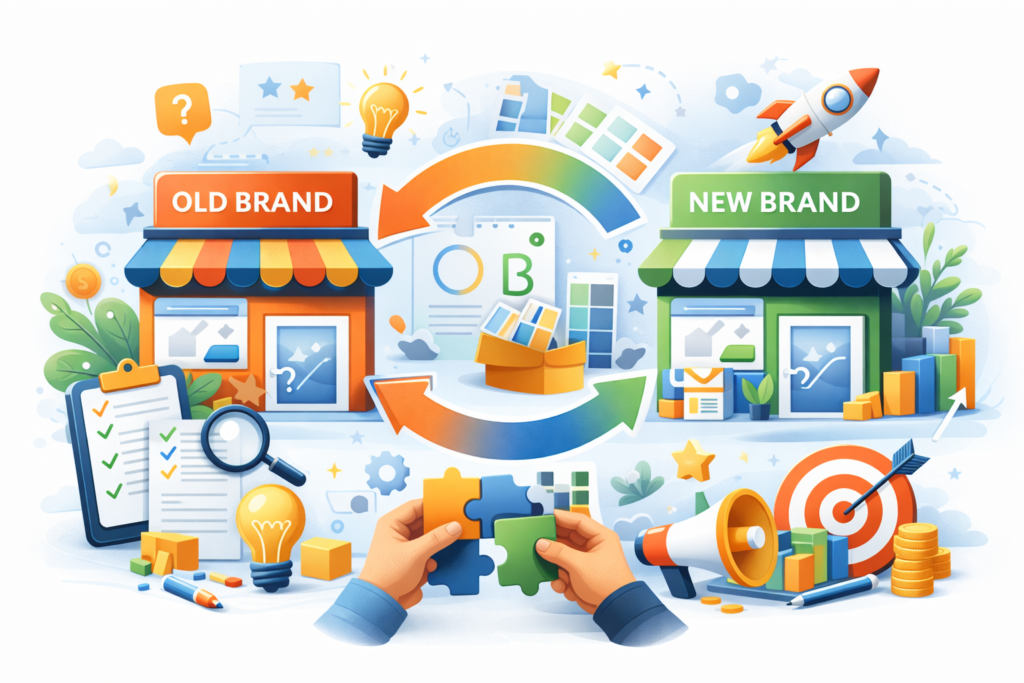
Rebranding becomes necessary when a brand no longer reflects business reality or audience expectations. Market shifts, growth, mergers, or outdated visuals often trigger reassessment. However, rebranding without strategy risks confusion and loss of trust.
Successful rebranding balances evolution with continuity. Retaining recognisable elements helps existing audiences transition smoothly. Abrupt visual changes without explanation can alienate loyal users.
Strategic rebranding follows structured planning, phased rollouts, and clear messaging. Best practices discussed by Moz emphasise protecting authority and recognition during periods of brand transformation.
Common Branding & Graphic Design Mistakes
One of the most common mistakes is inconsistency. Using different fonts, colors, or logo variations across platforms fragments brand identity and weakens recognition. Consistency builds familiarity, and familiarity builds trust.
Another frequent error is designing based on trends rather than strategy. Trend-driven visuals age quickly and often fail to represent brand values. Accessibility is also commonly overlooked, creating barriers for users and damaging credibility.
Finally, many businesses skip documentation. Without clear brand guidelines, even strong designs are applied incorrectly over time, reducing long-term effectiveness.
Measuring Branding & Design Effectiveness
Branding should be evaluated using both qualitative and quantitative measures. Metrics such as engagement rates, conversion improvements, brand recall, and customer loyalty provide insight into visual effectiveness.
Qualitative feedback adds depth. User testing and surveys reveal emotional responses and perception gaps that numbers alone cannot capture. Research insights shared by Ahrefs show how strong branding correlates with authority and long-term performance.
Measurement enables optimisation. Branding evolves alongside user expectations, and ongoing evaluation ensures relevance and effectiveness.
Branding & Graphic Design for Long-Term Growth

Strong branding supports sustainable growth by reducing friction, improving recognition, and reinforcing trust. Over time, consistent branding lowers acquisition costs and strengthens customer loyalty.
Scalable branding systems allow businesses to expand without losing coherence. New services, platforms, or markets can be integrated smoothly when visual rules are clearly defined.
Long-term success comes from treating branding as an evolving system rather than a one-time project.
Best Practices Summary
Effective branding & graphic design begin with strategy and are sustained through consistency. Define brand foundations before visual execution and build comprehensive identity systems.
Prioritise accessibility, usability, and performance. Document guidelines clearly to protect integrity and scalability. Align digital and offline experiences for cohesive brand expression.
Above all, invest in branding as a long-term asset that compounds in value over time.
Frequently Asked Questions
Q1.What is the difference between branding and graphic design?
Branding defines perception and positioning, while graphic design visually communicates that strategy.
Q2.How long does branding take?
Depending on scope, branding can take several weeks to several months.
Q3.Is branding important for small businesses?
Yes. Strong branding builds credibility and competitive advantage regardless of size.
Q4.How often should a brand be refreshed?
Only when business strategy or audience expectations change significantly.
Q5.Does branding affect SEO?
Indirectly, yes—through engagement, trust signals, and user experience.
Q6.What assets are included in branding?
Logos, typography, color systems, imagery, layouts, and brand guidelines.
Q7.Why is consistency critical?
Consistency builds recognition, trust, and professionalism over time.
Q8.Can branding improve conversion rates?
Yes. Clear, trustworthy branding reduces friction and increases confidence.
Conclusion
Branding & Graphic Design shape how businesses are perceived, trusted, and remembered. When executed strategically, they move beyond aesthetics to become drivers of authority, engagement, and growth.
With a structured, research-driven approach like the one applied by Appledew UK, branding becomes a scalable asset that supports long-term success. Thoughtful design does not just look good—it performs, communicates, and builds trust at every touchpoint.
Want to Implement This Easily?
You are an expert consultant.
Based on the blog post titled “Branding & Graphic Design”, here’s a step-by-step practical implementation guide.
This guide covers tools, best practices, common mistakes to avoid, and advanced tips so you can implement everything effectively.
Step 1: Define Your Brand Strategy
Purpose: Establish a strong foundation for all design decisions.
Actions:
- Conduct a brand audit to understand your current positioning, audience perception, and visual assets.
- Define your brand’s mission, vision, values, and unique differentiators.
- Identify your target audience and create buyer personas for clarity in messaging.
- Document your brand voice, tone, and personality.
Tools: Brand strategy templates, Notion, Miro for mapping, Google Forms for surveys.
Common Mistakes:
- Skipping audience research.
- Trying to emulate competitors rather than defining your own identity.
- Failing to document brand principles.
Advanced Tips:
- Use competitor analysis to highlight gaps and opportunities.
- Keep brand strategy flexible for future evolution.
Step 2: Design Your Visual Identity System
Purpose: Create a cohesive visual language that reflects your strategy.
Actions:
- Develop a logo system with primary, secondary, and icon versions.
- Choose a color palette with primary, secondary, and accent colors that reflect brand emotion.
- Define typography hierarchy for headings, body text, and captions.
- Create rules for imagery, icons, and illustration styles.
- Build a brand style guide documenting all visual rules.
Tools: Adobe Illustrator, Figma, Canva, Coolors for palettes.
Common Mistakes:
- Using inconsistent fonts or colors across platforms.
- Designing trends over strategic relevance.
- Ignoring accessibility (contrast and readability).
Advanced Tips:
- Include examples of “do’s and don’ts” in the style guide.
- Design for scalability: ensure assets adapt for print, web, and mobile.
Step 3: Build Consistent Brand Assets
Purpose: Apply your visual identity across all channels.
Actions:
- Design templates for social media posts, email headers, and website layouts.
- Create offline assets such as business cards, brochures, and signage aligned with your digital identity.
- Ensure all graphics follow the brand style guide.
- Maintain high-resolution and optimized file versions for performance.
Tools: Canva, Adobe Creative Suite, Figma, Sketch.
Common Mistakes:
- Using inconsistent assets in campaigns.
- Not updating older materials to reflect refreshed branding.
Advanced Tips:
- Store assets in a central, shared library for team access.
- Include ready-to-use templates for fast content creation.
Step 4: Apply Branding Across Digital Platforms
Purpose: Ensure a cohesive brand experience online.
Actions:
- Integrate visual identity into website design, email marketing, apps, and landing pages.
- Test typography, spacing, color contrast, and imagery for consistency.
- Implement responsive design for all devices.
- Align UX with brand personality (friendly, professional, modern, etc.).
Tools: Webflow, WordPress, Figma, Zeplin, Hotjar (for UX testing).
Common Mistakes:
- Ignoring mobile responsiveness.
- Using heavy assets that slow site performance.
Advanced Tips:
- Monitor analytics for engagement and bounce rates to adjust visuals.
- Use A/B testing to see which visual variations perform best.
Step 5: Integrate Brand Storytelling
Purpose: Connect emotionally with your audience.
Actions:
- Use imagery and graphics to tell your brand’s story.
- Ensure messaging aligns with visuals for emotional consistency.
- Highlight user experiences, testimonials, and case studies visually.
Tools: Canva, Adobe Spark, Storytelling frameworks (Hero’s Journey, Pixar method).
Common Mistakes:
- Relying solely on text without visual storytelling.
- Overloading visuals without a clear narrative.
Advanced Tips:
- Incorporate video, animations, or micro-interactions for deeper engagement.
- Keep a visual content calendar for consistent storytelling.
Step 6: Implement Brand Guidelines for Teams
Purpose: Ensure long-term consistency across departments and partners.
Actions:
- Distribute a clear, accessible brand style guide.
- Train internal teams and external collaborators on proper use.
- Review all materials regularly for compliance with brand rules.
Tools: Notion, Google Drive, Brandfolder, Frontify.
Common Mistakes:
- Lack of enforcement leading to inconsistent visuals.
- Outdated guidelines that don’t reflect current branding.
Advanced Tips:
- Set up a brand review checklist for marketing campaigns.
- Use digital templates to reduce misapplication.
Step 7: Monitor, Measure, and Evolve
Purpose: Keep your branding relevant and high-performing.
Actions:
- Track metrics like brand recall, engagement, and conversion rates.
- Collect feedback from customers, partners, and employees.
- Review and update your style guide annually or during market changes.
Tools: Google Analytics, Hotjar, Brand surveys, Social listening tools.
Common Mistakes:
- Treating branding as a one-time task.
- Ignoring feedback and changing market trends.
Advanced Tips:
- Conduct competitive audits to stay ahead of industry trends.
- Implement iterative updates to evolve branding without losing recognition.
Step 8: Avoid Common Pitfalls
Purpose: Maintain strong brand integrity and ROI.
Pitfalls to Avoid:
- Inconsistent use of color, typography, and logo.
- Following short-term trends over long-term strategy.
- Ignoring accessibility and UX standards.
- Failing to document visual rules.
- Overcomplicating visuals and reducing clarity.
Pro Tips:
- Keep branding simple, scalable, and audience-focused.
- Always refer back to the brand strategy when making design decisions.
✅ Call to Action
Want our help implementing this?
Just reach out to us via our website contact form:
https://appledew.co.uk/contact-us/