

In today’s rapidly evolving digital marketplace, businesses must stay ahead by adopting the best e-commerce solutions for businesses in 2025. The world of online retail is no longer just about selling products—it’s about crafting seamless digital experiences that captivate customers, build trust, and drive sustainable growth. As competition intensifies, the right e-commerce solution can empower your brand with advanced technology, automation, and customer-centric strategies that elevate your online presence. Whether you are a small startup or an established enterprise, understanding the landscape of modern e-commerce platforms, tools, and integrations will be the foundation of your business success in 2025 and beyond.
Introduction
In the modern business landscape, e-commerce has evolved from being a simple online store into a complete digital ecosystem that fuels growth, engagement, and customer loyalty. Companies are no longer just looking for platforms that allow them to sell products; they are searching for integrated e-commerce solutions that offer automation, analytics, scalability, and personalized customer experiences. At Appledew UK, we understand that success in today’s competitive online world depends on a combination of technology, strategy, and innovation. That’s why businesses are now shifting their focus towards comprehensive digital frameworks that make their e-commerce presence more powerful, flexible, and profitable.
The best e-commerce solutions for businesses in 2025 are designed not just to manage sales but to provide end-to-end operational control—from marketing automation to inventory tracking, from customer relationship management to seamless multi-channel integration. These solutions enable businesses to stay connected with customers at every stage of their journey, optimizing conversion rates and customer satisfaction. As digital transformation continues to redefine the way businesses operate, investing in the right e-commerce tools is no longer optional—it’s essential for survival and long-term growth.
The Evolution of E-Commerce in the Digital Era
E-commerce has undergone a dramatic transformation over the past two decades. What began as a simple process of selling products online has evolved into a dynamic, data-driven system that influences every aspect of modern business. In the early days, e-commerce was about convenience—offering customers the ability to shop without visiting physical stores. However, as technology advanced, the focus shifted towards personalization, automation, and seamless user experiences. Today’s e-commerce is powered by artificial intelligence, machine learning, and predictive analytics, helping businesses understand customer behavior and tailor their strategies accordingly.
The best e-commerce solutions for businesses in 2025 are built on advanced infrastructure, offering tools that integrate data from multiple sources such as social media, search engines, and customer relationship management systems. This integration allows businesses to make informed decisions and adapt their marketing efforts in real time. Furthermore, modern e-commerce platforms prioritize mobile responsiveness, as more than 70% of online purchases are now made through smartphones. Features like mobile optimization, one-click checkout, and personalized recommendations have become essential for success.
Another crucial factor in e-commerce evolution is security. With increasing online threats, customers expect websites to provide encrypted transactions and secure data handling. Businesses that invest in robust cybersecurity within their e-commerce framework not only protect customer information but also build trust and credibility. The digital transformation journey will continue to shape e-commerce beyond 2025, blending innovation with user-focused design, making it an indispensable part of global commerce.
Why Businesses Need E-Commerce Solutions in 2025
As we move deeper into 2025, the role of e-commerce solutions has become more critical than ever. The global shift toward digital-first business models means that companies must have a strong online presence to remain competitive. Consumers expect convenience, speed, and personalization—and meeting those expectations requires sophisticated e-commerce infrastructure. Businesses that fail to adapt risk falling behind, losing both customers and revenue.
 The best e-commerce solutions for businesses in 2025 go far beyond online storefronts. They offer automation in inventory management, order processing, and marketing campaigns. They integrate seamlessly with payment gateways, shipping partners, and third-party marketplaces, creating a unified ecosystem that improves efficiency and customer satisfaction. This integration allows businesses to manage their operations from a single dashboard, reducing human error and operational costs.
Additionally, data analytics plays a crucial role in decision-making. With powerful insights derived from e-commerce analytics, businesses can identify buying trends, optimize pricing strategies, and improve product recommendations. E-commerce solutions also enable personalization—showing the right products to the right customers at the right time. This level of customization boosts conversion rates and increases customer retention. As competition intensifies in every industry, having a reliable, scalable e-commerce platform is not a luxury—it’s a strategic necessity for success in the modern digital economy.
Key Components of a Successful E-Commerce Solution
A powerful e-commerce solution is more than just a website—it’s a combination of tools, systems, and technologies that work together to deliver a smooth and engaging shopping experience. The foundation of a successful platform begins with an intuitive user interface that is both visually appealing and easy to navigate. Customers must be able to find products effortlessly, explore categories, and complete purchases without friction.
Next, comes scalability. As your business grows, your e-commerce platform should evolve too. The best e-commerce solutions for businesses in 2025 are designed to handle high traffic, large product catalogs, and multiple payment options without compromising speed or performance. Cloud-based architecture ensures uptime, faster loading speeds, and better resource management.
Integration is another vital aspect. A robust e-commerce platform should connect seamlessly with CRM software, ERP systems, social media platforms, and marketing tools. This integration ensures real-time synchronization across departments, allowing teams to work efficiently and provide consistent customer experiences. Payment gateway flexibility is also essential, supporting multiple currencies and regional payment methods to cater to global customers.
Lastly, the importance of security and compliance cannot be overstated. Secure Socket Layer (SSL) certificates, GDPR compliance, and fraud prevention systems help protect both business and customer data. Businesses that invest in secure e-commerce frameworks not only avoid cyber risks but also gain customer trust. When all these components align, they create a robust foundation that powers sustainable online growth.
Understanding E-Commerce Platforms: Choosing the Right Foundation
The foundation of any online business lies in its e-commerce platform, which determines how effectively you can manage products, customers, and transactions. With numerous options available in 2025, choosing the right platform is a critical decision that directly impacts scalability, performance, and long-term success. The best e-commerce solutions for businesses in 2025 offer customizable, flexible, and user-friendly interfaces that cater to both beginners and established enterprises.
When selecting an e-commerce platform, businesses must consider essential factors such as hosting type, security, integrations, and scalability. Platforms like Shopify, WooCommerce, Magento, and BigCommerce have remained industry favorites due to their robust ecosystems and feature-rich environments. However, new cloud-based and AI-driven platforms are emerging that allow businesses to automate repetitive tasks, analyze sales trends, and personalize user experiences more effectively.
A reliable e-commerce platform ensures smooth product management, advanced search filters, and easy navigation. It should also support multiple sales channels like social media stores, marketplaces, and mobile apps. Another key factor is SEO optimization—your platform should provide tools for meta tag management, URL structuring, and content optimization to enhance visibility on search engines.
Ultimately, your choice should align with your business goals and technical requirements. A scalable, secure, and customizable platform not only enhances your brand’s digital identity but also ensures consistent growth. By 2025, the competition will favor businesses that build their e-commerce presence on powerful, future-ready platforms that can adapt to rapid technological changes and evolving consumer expectations.
The Role of Artificial Intelligence in E-Commerce Solutions
Artificial Intelligence (AI) has become the driving force behind innovation in the e-commerce industry. The best e-commerce solutions for businesses in 2025 leverage AI to streamline operations, predict customer behavior, and deliver personalized shopping experiences that were once unimaginable. AI-powered tools analyze vast amounts of customer data—from browsing history to purchase patterns—to create targeted marketing campaigns and recommend products that align with individual preferences.
AI chatbots have revolutionized customer support by providing real-time assistance, handling queries, and improving overall satisfaction. Predictive analytics tools help businesses anticipate demand, manage inventory efficiently, and reduce overstocking or shortages. Moreover, AI-driven pricing optimization allows companies to set competitive prices dynamically based on market trends and consumer demand.
Personalization is at the heart of modern e-commerce success. With AI, businesses can customize homepage displays, email recommendations, and even product pricing to suit individual users. This level of personalization significantly increases conversion rates and fosters brand loyalty. Furthermore, AI also enhances fraud detection by identifying unusual transaction patterns and protecting customer data.
As AI continues to evolve, it will become even more deeply integrated into e-commerce operations. From automated logistics to advanced customer segmentation, businesses that invest in AI-driven solutions in 2025 will gain a strong competitive edge. AI is no longer an optional upgrade—it’s an essential part of creating smarter, more efficient, and customer-centric e-commerce ecosystems.
Mobile Commerce: The Future of Online Shopping
In 2025, mobile commerce (m-commerce) stands at the forefront of digital retail transformation. With more consumers shopping through smartphones and tablets than ever before, businesses must ensure their e-commerce platforms are fully optimized for mobile devices. The best e-commerce solutions for businesses in 2025 prioritize mobile responsiveness, ensuring users enjoy seamless experiences regardless of screen size or device type.
Mobile commerce offers unparalleled convenience. Customers can browse, compare, and purchase products instantly without switching devices. Features like one-click payment options, voice-assisted shopping, and personalized mobile notifications have further elevated the shopping experience. Businesses that ignore mobile optimization risk losing significant traffic and conversions since Google and other search engines now prioritize mobile-friendly websites in their rankings.
Progressive Web Apps (PWAs) are another revolutionary element in mobile commerce. They combine the functionality of mobile apps with the accessibility of websites, providing faster load times and offline capabilities. E-commerce platforms integrating PWAs deliver smoother navigation, enhanced security, and better engagement rates.
In addition to design and usability, mobile payment integrations such as Apple Pay, Google Pay, and cryptocurrency wallets are becoming mainstream. These payment options provide security, speed, and trust, improving customer satisfaction. Mobile commerce is not just a trend—it’s the new standard. Businesses that adopt a mobile-first approach backed by powerful e-commerce platforms will lead the market, while those that don’t will struggle to retain visibility and relevance in 2025’s competitive digital landscape.
Cloud-Based E-Commerce Solutions and Scalability
Cloud computing has revolutionized the way businesses operate online. By 2025, cloud-based e-commerce solutions have become the backbone of digital businesses that demand flexibility, reliability, and scalability. The best e-commerce solutions for businesses in 2025 utilize cloud technology to provide seamless performance, faster deployment, and enhanced data security. Unlike traditional hosting, cloud platforms allow businesses to scale their resources according to traffic and demand, ensuring consistent uptime even during peak seasons.
Scalability is one of the most significant advantages of cloud-based e-commerce. As your business grows, the system automatically allocates additional resources without requiring manual upgrades or hardware investments. This elasticity makes cloud solutions cost-effective and efficient. Moreover, cloud-based infrastructure provides better disaster recovery, ensuring your online store remains accessible even during unexpected server issues.
Security is another crucial benefit. Cloud providers invest heavily in advanced encryption and monitoring tools, protecting sensitive data from cyber threats. With built-in redundancy and regular backups, cloud-based systems ensure data integrity and compliance with international security standards.
Furthermore, cloud technology enhances collaboration between teams. Employees can access real-time data, analytics, and reports from anywhere, fostering productivity and faster decision-making. The future of e-commerce lies in agility and adaptability, and cloud solutions provide both. Businesses embracing cloud-powered e-commerce in 2025 are positioning themselves for sustainable growth and competitive advantage in a fast-changing digital economy.
Personalization and Customer Experience in E-Commerce
In 2025, personalization remains the key driver of customer satisfaction and loyalty. The best e-commerce solutions for businesses in 2025 are built around delivering personalized shopping experiences that make customers feel valued and understood. With the help of AI, machine learning, and advanced analytics, businesses can now tailor every aspect of their online store—from homepage layouts to product recommendations—based on individual behavior and preferences.
Personalization begins with data. Every customer interaction, search query, and purchase history contributes to a unique profile that helps brands predict needs and anticipate actions. When executed properly, this data-driven personalization can transform casual browsers into loyal buyers. Features such as dynamic content, customized promotions, and personalized email campaigns ensure that customers receive relevant and engaging communication.
Customer experience also extends beyond personalization. It includes intuitive navigation, fast-loading pages, responsive design, and secure checkout processes. In a world where online shoppers expect instant gratification, even a slight delay can lead to cart abandonment. The best e-commerce platforms in 2025 combine speed, simplicity, and reliability to keep customers engaged.
Moreover, emotional engagement plays a growing role in customer experience. Businesses that create personalized storytelling, product transparency, and authentic brand values build deeper connections with their audiences. As technology advances, the fusion of personalization and emotional engagement will define the next era of e-commerce success, helping brands stand out in an increasingly crowded digital space.
Omnichannel Integration: Connecting Every Sales Channel
In the competitive digital marketplace of 2025, customers expect seamless interactions across multiple platforms. Whether they’re shopping on a website, mobile app, or social media store, the experience should remain consistent and connected. That’s where omnichannel integration comes in—a key feature of the best e-commerce solutions for businesses in 2025. Omnichannel integration allows businesses to unify all their sales channels, ensuring that customers can start a purchase on one platform and complete it on another without any friction.
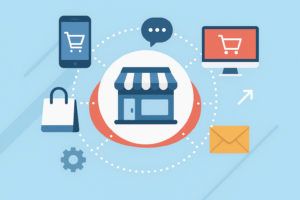 Omnichannel strategies help brands maintain consistency in pricing, promotions, and product availability across all touchpoints. For example, a customer might add a product to their cart using a mobile app, receive a discount notification on social media, and complete the purchase on a desktop site. All these interactions are synchronized through a single integrated system, delivering convenience and continuity.
Moreover, omnichannel integration enhances customer engagement. It allows businesses to collect valuable data from multiple sources—web traffic, social media interactions, in-store visits, and more. By analyzing this data, companies can create unified marketing campaigns that reach customers wherever they are most active. Additionally, integrating CRM systems with e-commerce platforms enables real-time updates on inventory, orders, and customer profiles, streamlining operations and boosting satisfaction.
The best e-commerce platforms in 2025 are built with omnichannel readiness at their core. They help businesses manage multiple digital storefronts, synchronize marketing efforts, and deliver consistent brand experiences. In an era where customers expect flexibility and personalization, omnichannel integration has become the ultimate strategy for building trust, driving sales, and nurturing long-term relationships.
Payment Gateway Innovations for Seamless Transactions
A smooth and secure payment process is vital to every online transaction. In 2025, payment gateway innovations are redefining how consumers make purchases and how businesses handle financial transactions. The best e-commerce solutions for businesses in 2025 incorporate advanced, secure, and user-friendly payment gateways that support multiple currencies, digital wallets, and even cryptocurrencies.
Modern consumers demand flexibility. They want the option to pay through debit cards, credit cards, PayPal, Apple Pay, Google Pay, or even decentralized blockchain-based systems. Offering diverse payment methods not only enhances user convenience but also increases conversion rates. Businesses that fail to provide flexible payment options risk losing potential customers during checkout.
Another key development is the rise of biometric authentication. Fingerprint and facial recognition technologies are making online payments more secure and faster, reducing fraud while improving customer trust. Similarly, tokenization—where sensitive payment details are replaced with encrypted tokens—ensures safe transactions across devices and platforms.
E-commerce platforms in 2025 also emphasize real-time payment tracking and automated reconciliation, simplifying financial management for businesses. With integrated payment analytics, companies can monitor transaction performance, detect anomalies, and enhance decision-making.
As the world becomes more digitally connected, the demand for seamless, secure, and efficient payment experiences continues to grow. Businesses that invest in modern payment gateways not only protect themselves from cyber threats but also offer customers the trust and convenience they expect from a cutting-edge online store.
Data Analytics and Business Intelligence in E-Commerce
Data is the lifeblood of modern e-commerce. Every click, search, and purchase generates valuable information that can guide business strategies. In 2025, data analytics and business intelligence (BI) tools have become essential components of the best e-commerce solutions for businesses. These tools transform raw data into actionable insights, helping brands understand customer behavior, optimize marketing campaigns, and improve operational efficiency.
Through advanced analytics, businesses can track key metrics such as conversion rates, average order value, and customer lifetime value. Predictive analytics can identify future buying trends and help companies prepare marketing strategies accordingly. For example, if data shows that a specific product sells better during certain seasons, businesses can align inventory and promotions to maximize revenue.
Business intelligence platforms also provide real-time dashboards, allowing decision-makers to visualize performance metrics and respond quickly to changes. Integrating BI with e-commerce systems creates a feedback loop where data continually informs actions, and actions generate more refined insights.
Moreover, AI-driven analytics can help detect potential issues, such as high cart abandonment rates or declining engagement, allowing businesses to address them proactively. As e-commerce becomes more data-dependent, companies that harness the full potential of analytics gain a significant competitive edge. Data-driven decision-making will define success in 2025, empowering brands to operate smarter, not harder.
Automation in E-Commerce Operations
Automation has become a cornerstone of digital efficiency. The best e-commerce solutions for businesses in 2025 rely heavily on automation to reduce manual work, minimize errors, and enhance productivity. Whether it’s inventory management, marketing campaigns, or customer communication, automation ensures that processes run smoothly and consistently.
For example, automated inventory systems track stock levels in real time and trigger restock orders when quantities run low. Marketing automation tools can schedule social media posts, send personalized email campaigns, and manage customer segmentation automatically. Chatbots handle routine customer service inquiries, freeing up human agents for complex issues.
Automation also extends to logistics and supply chain management. Integrated systems automatically select the most efficient shipping partners, calculate delivery costs, and update customers with tracking information. This not only improves operational accuracy but also enhances customer satisfaction.
Moreover, automation helps in fraud prevention and compliance management. Real-time transaction monitoring and AI-driven risk assessments protect businesses from financial losses. The cumulative effect of automation is significant—reduced operational costs, improved accuracy, and faster response times.
In 2025, businesses that embrace automation will operate more efficiently, scale faster, and offer superior customer experiences. The integration of intelligent automation tools within e-commerce solutions will continue to drive innovation, enabling companies to stay ahead in an increasingly competitive online environment.
Security and Trust: Safeguarding Digital Transactions
With the rapid expansion of online commerce comes an equally significant rise in cyber threats. Security has become a top priority for businesses and consumers alike. The best e-commerce solutions for businesses in 2025 prioritize robust cybersecurity measures that protect sensitive data, ensure privacy, and build consumer trust.
Secure e-commerce starts with SSL encryption, which safeguards communication between customers and the website. It prevents unauthorized access to personal and financial information. Additionally, multi-factor authentication (MFA) adds another layer of protection, ensuring that only verified users can access accounts or complete transactions.
Businesses are also adopting AI-driven fraud detection systems that monitor real-time activity to identify and block suspicious behavior. These systems analyze patterns such as multiple login attempts, unusual IP addresses, and inconsistent purchase histories to prevent cyberattacks before they occur.
Another essential aspect of e-commerce security is compliance. Regulations such as GDPR and PCI DSS require businesses to handle customer data responsibly. Compliance not only protects the business legally but also enhances its credibility. Customers are more likely to shop with brands that demonstrate transparency and strong data protection practices.
Trust is the foundation of every successful e-commerce brand. By implementing strong security frameworks, businesses assure customers that their data and transactions are safe. In the competitive digital marketplace of 2025, security isn’t just a technical requirement—it’s a powerful trust-building strategy that drives loyalty and repeat purchases.
Social Commerce: The Rise of Shopping on Social Media
The line between social media and e-commerce continues to blur in 2025. Social platforms such as Instagram, TikTok, and Facebook have evolved into powerful online marketplaces where brands can connect directly with consumers. The best e-commerce solutions for businesses in 2025 seamlessly integrate social commerce features, enabling users to browse and purchase products without leaving their favorite social apps.
Social commerce thrives on engagement. Unlike traditional e-commerce websites, social platforms allow for interactive content, influencer marketing, and real-time communication. Customers can watch product demos, read reviews, and instantly make purchases—all within the same app. This integration shortens the buyer’s journey and increases impulse purchases, significantly boosting sales.
Businesses are also leveraging social analytics tools to monitor engagement rates, audience demographics, and conversion performance. These insights help brands refine their marketing strategies and target audiences more effectively. Additionally, user-generated content, such as customer photos and video testimonials, plays a critical role in building trust and authenticity.
E-commerce platforms that integrate with social networks provide centralized management of sales, inventory, and customer interactions across multiple channels. This ensures that branding and communication remain consistent. As social commerce continues to expand, it offers businesses a new way to connect, inspire, and sell—turning social media followers into loyal customers.
Sustainable and Ethical E-Commerce Practices
Sustainability has become a defining factor in consumer decision-making. By 2025, customers are increasingly aware of the environmental and ethical implications of their purchases. The best e-commerce solutions for businesses in 2025 support sustainability through eco-friendly technologies, ethical supply chains, and transparent operations.
Modern consumers prefer brands that align with their values. They seek companies that use recyclable packaging, support fair labor practices, and offset carbon emissions. E-commerce platforms now include features that allow businesses to highlight sustainability credentials directly on product pages, helping shoppers make informed choices.
From a technical standpoint, cloud-based solutions contribute to sustainability by reducing physical server usage and energy consumption. Additionally, data-driven inventory management minimizes waste by predicting demand accurately and preventing overproduction. Many businesses are also adopting “green delivery” options, collaborating with logistics providers who use electric vehicles or carbon-neutral shipping methods.
Ethical e-commerce is not only good for the planet but also for business reputation. Transparency in sourcing, fair pricing, and responsible marketing foster trust and brand loyalty. As awareness continues to grow, sustainability will no longer be an optional feature—it will be an integral part of what defines successful e-commerce operations in 2025 and beyond.
The Impact of 5G Technology on E-Commerce
The introduction of 5G technology has revolutionized how consumers interact with online businesses. With lightning-fast connectivity, low latency, and high data capacity, 5G enhances every aspect of the e-commerce experience. The best e-commerce solutions for businesses in 2025 take full advantage of 5G capabilities to deliver faster, richer, and more interactive online experiences.
5G enables faster page loading times, smoother video content, and instant payment processing. This drastically improves user satisfaction and reduces cart abandonment rates. Businesses can now offer immersive shopping experiences such as augmented reality (AR) product previews, where customers can virtually “try on” clothes, visualize furniture in their homes, or explore products in 3D.
Additionally, 5G supports greater automation in logistics and warehouse operations through IoT (Internet of Things) connectivity. Devices and sensors communicate in real time, tracking inventory and optimizing delivery routes. This reduces operational costs and ensures timely order fulfillment.
For consumers, 5G-powered e-commerce means richer content and enhanced interactivity. For businesses, it means improved scalability, innovation, and speed. As this technology continues to spread globally, it will redefine digital commerce, setting a new standard for how products are discovered, experienced, and purchased online.
The Future of B2B E-Commerce Solutions
While much of the e-commerce spotlight focuses on B2C transactions, B2B e-commerce is experiencing explosive growth in 2025. Businesses are increasingly turning to digital platforms to streamline procurement, manage vendor relationships, and automate sales processes. The best e-commerce solutions for businesses in 2025 cater to both consumer and enterprise needs, offering features specifically designed for bulk transactions, custom pricing, and complex order management.
 B2B buyers expect the same convenience as B2C shoppers—fast navigation, personalized experiences, and flexible payment options. Advanced e-commerce solutions now support dynamic pricing models, contract-based discounts, and account-specific product catalogs. Integration with ERP and CRM systems ensures smooth operations and accurate data flow between departments.
Automation plays a critical role in B2B e-commerce, from quote generation to invoice management. AI tools also help predict demand, identify upselling opportunities, and enhance customer retention. Businesses using robust B2B e-commerce systems benefit from increased transparency, reduced overhead, and improved customer relationships.
In 2025 and beyond, B2B digital transformation will accelerate as companies recognize the efficiency and scalability that online platforms provide. Investing in adaptable, feature-rich e-commerce solutions will empower B2B enterprises to stay competitive in the global market.
Emerging Trends Shaping the Future of E-Commerce
E-commerce continues to evolve rapidly, driven by new technologies and shifting consumer expectations. In 2025, several emerging trends are shaping the future of online retail. Among these are voice commerce, AI-driven personalization, blockchain integration, and metaverse shopping experiences. The best e-commerce solutions for businesses in 2025 are designed to adapt to these innovations, ensuring brands remain at the forefront of digital transformation.
Voice commerce allows users to make purchases through voice assistants like Alexa, Google Assistant, and Siri, offering convenience and speed. Blockchain technology enhances transaction transparency, enabling secure and traceable digital payments. Meanwhile, the metaverse—an immersive virtual world—presents opportunities for brands to create digital storefronts where customers can explore, interact, and purchase in a 3D environment.
Sustainability and inclusivity are also expected to play a larger role in shaping customer preferences. Businesses that embrace diverse representation, ethical production, and green technologies will earn greater customer loyalty.
As technology advances, e-commerce will continue to merge innovation with human-centered design. The brands that stay agile, open to experimentation, and aligned with consumer values will define the next generation of digital success stories.
Conclusion
E-commerce in 2025 is no longer a single-channel experience—it’s an interconnected ecosystem powered by technology, personalization, and trust. From AI and automation to sustainability and omnichannel integration, the best e-commerce solutions for businesses in 2025 enable companies to thrive in a digital-first world.
At Appledew UK, we understand that e-commerce success is about more than just having a website—it’s about building a dynamic, adaptable, and customer-focused platform that drives growth. As the digital marketplace evolves, businesses that embrace innovation will continue to lead the way, shaping the future of global commerce. Investing in the right e-commerce solution today means securing long-term success, visibility, and resilience in the fast-paced world of tomorrow.