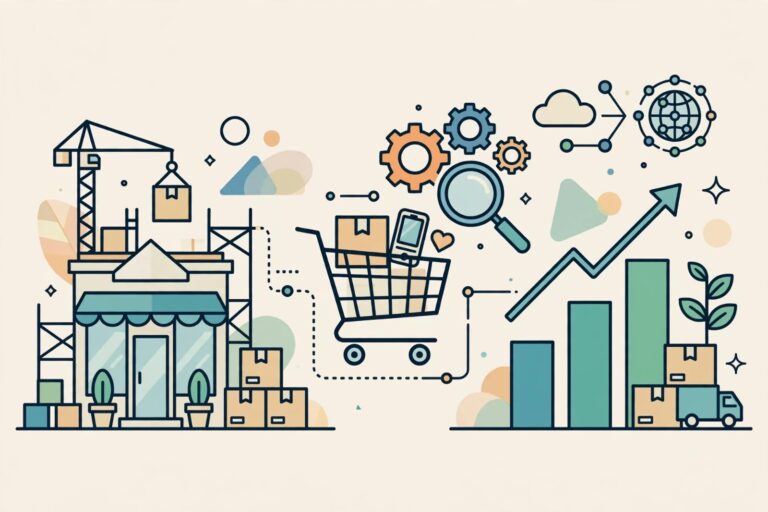

In today’s competitive online marketplace, businesses are shifting rapidly toward E-Commerce Solutions that empower them to streamline operations, attract customers, and scale sustainably. From advanced online store development to personalized shopping experiences, E-Commerce Solutions are no longer optional—they are the backbone of digital transformation. This comprehensive guide explores the strategies, technologies, and innovations shaping the future of online retail.
Introduction: The Role of E-Commerce Solutions in Modern Business
The digital revolution has redefined how businesses connect with customers, sell products, and grow globally. The rise of E-Commerce Solutions has not only made online transactions seamless but also given organizations a chance to scale beyond geographical limitations. In today’s landscape, where mobile-first strategies, AI-driven personalization, and data analytics rule the game, e-commerce is more than just having a website—it’s about building an integrated ecosystem of technology, trust, and customer satisfaction.
Companies must recognize that every touchpoint, from product discovery to checkout, needs to be optimized for user experience. The ability to create scalable, secure, and customizable online solutions has turned e-commerce into the most powerful channel for growth. With competition becoming fierce, businesses that fail to adapt risk falling behind. This blog, developed exclusively for Appledew UK, will walk you through the depth and breadth of e-commerce strategies designed to empower businesses in 2025 and beyond.
The Evolution of E-Commerce Solutions
The journey of E-Commerce Solutions began with basic online catalogues and static websites, where customers could browse products but often had limited payment or delivery options. Over time, technology advanced, and so did customer expectations. With the rise of digital payments, user-friendly interfaces, and stronger internet connections, the shift toward full-scale e-commerce ecosystems became inevitable.
Today, e-commerce platforms are no longer simply about showcasing products; they are intelligent systems designed to personalize the shopping journey, optimize sales funnels, and integrate seamlessly with supply chains. The rise of mobile commerce has accelerated this trend further, as customers now expect to shop on-the-go with convenience and speed. Cloud-based infrastructure has also transformed e-commerce, allowing businesses to manage stores, analyze customer behavior, and scale quickly without heavy upfront investments.
Another key part of this evolution is trust. In the early days of e-commerce, security was a major barrier. Customers feared sharing their card details online. Over the years, the integration of advanced payment gateways, encryption technologies, and fraud detection systems has revolutionized digital transactions. Today, trust is built through transparent policies, secure checkouts, and consistent service delivery.
Globalization has also played its role. Small businesses once limited to local sales can now reach international markets with just a few clicks. Platforms such as Shopify, WooCommerce, and Magento have made launching a store easier than ever. Meanwhile, enterprise-level businesses use custom-built solutions that cater to millions of customers worldwide. This democratization of e-commerce has allowed brands of all sizes to participate and thrive.
The evolution of E-Commerce Solutions is ongoing. Emerging technologies like AI, AR/VR, and blockchain continue to reshape how businesses sell and how consumers interact with products. Looking ahead, the focus will be on creating hyper-personalized experiences, enabling secure yet frictionless transactions, and ensuring sustainability in business practices.
Building Scalable Online Stores
A strong foundation is vital for any business that wants to succeed in e-commerce. The scalability of an online store determines how well it can handle growth in traffic, sales, and product inventory without compromising performance. Building scalable online stores means designing a system that adapts as the business grows, preventing crashes, slow load times, or data bottlenecks.
The first step toward scalability is choosing the right platform. Open-source options like WooCommerce offer flexibility, while hosted platforms like Shopify provide ease of use. Enterprise solutions like Magento or BigCommerce are designed for large-scale operations. Each option comes with unique strengths, but the common factor is the ability to scale seamlessly with demand.
Performance optimization plays a critical role in building scalable online stores. Fast-loading pages improve user experience and contribute to higher search engine rankings. Using Google PageSpeed Insights helps identify performance bottlenecks and provides actionable recommendations to maintain speed and scalability.
Another crucial aspect is database management. As customer and product data grow, the underlying infrastructure must support quick retrieval and secure storage. Cloud hosting solutions like AWS and Google Cloud provide elasticity, allowing businesses to expand storage and processing power instantly when traffic spikes occur. This prevents downtime during peak seasons, such as Black Friday or holiday sales.
Scalability also extends to functionality. A store should be capable of integrating new features like AI-driven recommendations, advanced payment methods, or loyalty programs without disrupting existing systems. Modular development and API-driven architecture make this possible, ensuring future upgrades don’t require a complete overhaul.
Customer experience must always remain at the heart of scalability. Even as a store grows, navigation should remain simple, checkouts seamless, and support systems reliable. Businesses that neglect these factors often face abandoned carts, frustrated users, and negative reviews. Scalability ensures that growth enhances customer satisfaction rather than compromising it.
Ultimately, building a scalable online store means future-proofing your business. It’s about anticipating challenges, investing in adaptable technologies, and focusing on delivering a consistent customer journey regardless of scale.
The Importance of Mobile Commerce
The rapid adoption of smartphones has transformed the way people shop, giving rise to the era of mobile commerce, also known as m-commerce. Unlike traditional desktop shopping, customers now prefer purchasing directly through their mobile devices because it offers convenience, speed, and accessibility. For businesses, ignoring this trend is no longer an option. To succeed in today’s competitive market, companies must adopt E-Commerce Solutions that prioritize mobile optimization.
Mobile commerce is more than just having a responsive website. It’s about creating an ecosystem where every element—from product browsing to checkout—is seamless on smaller screens. This includes fast-loading mobile pages, intuitive navigation, and simplified payment processes. Consumers expect quick access to product information and effortless transactions, and any friction during the journey often leads to cart abandonment.
A critical factor that drives the success of m-commerce is mobile app development. Many successful e-commerce businesses invest in dedicated apps that provide customers with tailored experiences, push notifications, and loyalty rewards. These apps also enable features like one-click payments, voice search, and AI-driven product recommendations, making shopping more interactive and personalized.
 Another key component is mobile payment integration. The availability of digital wallets such as Apple Pay, Google Pay, and PayPal has revolutionized how people pay for products and services. Offering multiple payment options not only increases convenience but also builds customer trust. In emerging markets, mobile banking and fintech apps are enabling millions of new users to join the digital economy, further highlighting the necessity of mobile-friendly solutions.
SEO also plays an important role in mobile commerce. Search engines prioritize mobile-first indexing, meaning that mobile performance directly impacts a website’s ranking. Slow, unoptimized websites risk losing visibility and customers. Therefore, investing in mobile optimization isn’t just about user experience—it’s a direct factor in organic traffic and revenue growth.
The rise of social commerce has also fueled mobile shopping. Platforms like Instagram, Facebook, and TikTok allow users to discover and purchase products without leaving the app. This shift has blurred the lines between browsing and buying, creating an opportunity for businesses to capture sales directly through social media channels.
Ultimately, mobile commerce is the backbone of modern e-commerce success. Businesses that fail to adapt risk alienating the majority of customers who prefer mobile-first shopping. By investing in mobile-friendly platforms, apps, and payment systems, companies can create a frictionless experience that drives loyalty, conversions, and long-term growth.
Secure Payment Gateways and Customer Trust
Trust is the foundation of every successful online business, and nowhere is it more critical than during the payment process. Customers must feel confident that their financial information is safe when making a purchase. This is why secure payment gateways are essential in every E-Commerce Solution. A reliable gateway not only ensures smooth transactions but also builds credibility, which directly influences customer loyalty.
A payment gateway acts as the bridge between customers, merchants, and financial institutions. It encrypts sensitive data like credit card numbers, preventing cybercriminals from intercepting information. Without such measures, online businesses would face constant risks of fraud, chargebacks, and data breaches. For customers, a single incident of insecurity is enough to lose trust in a brand permanently.
To ensure maximum protection, businesses must adopt SSL certificates, PCI DSS compliance, and advanced fraud detection tools. These elements reassure customers that their data is encrypted and processed securely. Offering widely recognized gateways such as PayPal, Stripe, and Authorize.Net further enhances trust, as customers are more likely to complete a purchase if they see familiar and secure options at checkout.
The rise of multi-factor authentication (MFA) and biometric verification has also added new layers of security. Many modern gateways now allow customers to verify payments using fingerprints, facial recognition, or one-time passcodes. These measures not only reduce fraud but also increase confidence in the brand’s commitment to safeguarding customer information.
Transparency is another key factor in building trust. Clear refund policies, visible security badges, and upfront communication about transaction processes help customers feel secure. Hidden fees or unclear terms often create suspicion, leading to abandoned carts and negative reviews. Businesses must prioritize clarity in payment policies to strengthen long-term relationships with customers.
Furthermore, secure gateways play a vital role in enabling global expansion. Customers from different countries have varying preferences for payment methods, ranging from digital wallets to local banking systems. Offering a wide range of trusted payment options ensures inclusivity, helping businesses reach new markets while maintaining credibility.
In an age where data breaches are increasingly common, a strong payment security strategy is not just a technical necessity but a brand differentiator. By investing in secure gateways and prioritizing customer trust, businesses create a safe environment that encourages repeat purchases and builds lasting loyalty.
Artificial Intelligence in E-Commerce
The integration of Artificial Intelligence (AI) into E-Commerce Solutions has redefined the way businesses operate, market, and interact with customers. AI is no longer a futuristic concept—it is actively powering online retail through predictive analytics, machine learning, and automated processes that make the customer journey smarter and more efficient.
One of the most visible applications of AI is in product recommendations. Platforms like Amazon and Netflix use AI algorithms to analyze browsing behavior, purchase history, and preferences to suggest products that customers are most likely to buy. This level of personalization increases conversion rates while improving customer satisfaction.
AI also powers chatbots and virtual assistants, which provide instant support and resolve queries without the need for human intervention. These systems work 24/7, delivering accurate information, processing returns, and even suggesting products, making them an indispensable part of modern e-commerce platforms.
Another significant advantage of AI lies in demand forecasting and inventory management. Businesses often struggle to balance stock availability with customer demand. AI systems analyze sales patterns, seasonal trends, and even external factors like economic shifts to predict future demand accurately. This helps businesses reduce waste, avoid stockouts, and optimize their supply chains.
Fraud detection is also strengthened through AI. By monitoring transactions in real time, AI can identify unusual activity and flag potentially fraudulent purchases. This not only protects businesses but also builds trust among customers, who feel safer when they know advanced systems are guarding their data.
Additionally, AI-driven visual search tools allow customers to upload images and find similar products instantly. This innovation bridges the gap between browsing and buying, offering a more engaging shopping experience.
As AI continues to evolve, its role in e-commerce will only expand. Businesses that embrace AI-driven E-Commerce Solutions gain a competitive edge, offering efficiency, personalization, and trust that modern consumers expect.
Personalization and Customer Experience
In today’s digital marketplace, personalization is not just a feature—it is a necessity. Customers expect brands to recognize their preferences, recommend relevant products, and deliver tailored experiences. Businesses that invest in personalized E-Commerce Solutions create stronger connections with their audiences and drive long-term loyalty.
Personalization begins with data collection and analysis. Every click, search, and purchase leaves behind valuable insights that can be used to customize the shopping experience. By leveraging big data, businesses can deliver relevant product recommendations, personalized email campaigns, and special discounts that resonate with individual customers.
A personalized experience also improves customer retention. When shoppers feel that a brand understands them, they are more likely to return and purchase again. Features such as personalized landing pages, loyalty programs, and targeted advertising campaigns enhance this connection, making customers feel valued.
Moreover, personalization isn’t limited to product suggestions. It also extends to content marketing and communication. For example, sending customers tailored newsletters based on their browsing history increases engagement and click-through rates. Similarly, offering dynamic website content ensures that every visitor sees what is most relevant to them.
Technology plays a critical role here. AI, machine learning, and CRM systems allow businesses to automate personalization at scale. This makes it possible to provide unique experiences to thousands of customers simultaneously without sacrificing quality.
Personalization also impacts customer experience at checkout. Simplifying forms, auto-filling saved details, and offering preferred payment options create a frictionless journey. Customers who experience convenience during checkout are far less likely to abandon their carts.
Ultimately, personalization transforms shopping from a transactional process into a meaningful relationship. Brands that prioritize this strategy through advanced E-Commerce Solutions can differentiate themselves in crowded markets and ensure sustainable growth.
The Role of Big Data and Analytics
The success of modern e-commerce businesses depends heavily on how effectively they use big data and analytics. With millions of transactions happening online every day, companies have access to vast amounts of information. The key lies in analyzing this data to uncover patterns, predict behavior, and make informed decisions.
Big data allows businesses to understand customer preferences at a deeper level. By studying browsing histories, purchase behaviors, and feedback, companies can predict what products are likely to perform well. This helps in creating marketing campaigns that resonate with the right audience at the right time.
Analytics also plays a major role in inventory management. Businesses can track which products are in demand, which are underperforming, and when seasonal spikes occur. This not only prevents overstocking but also ensures popular items are always available. As a result, businesses save costs while improving customer satisfaction.
Furthermore, big data improves pricing strategies. Dynamic pricing models use real-time data to adjust product prices based on demand, competition, and customer segments. For example, airlines and ride-sharing platforms adjust their prices instantly to maximize profits and customer value. E-commerce stores can use the same strategies to stay competitive.
Analytics also strengthens customer service. By studying common complaints and feedback trends, businesses can identify weak areas and improve them. This proactive approach not only resolves issues but also boosts customer loyalty.
When combined with AI, big data takes personalization to the next level. Machine learning algorithms can deliver highly accurate product recommendations, predict churn rates, and optimize advertising spend for maximum returns.
In conclusion, big data and analytics are the backbone of intelligent E-Commerce Solutions. They empower businesses to make data-driven decisions that increase efficiency, boost revenue, and enhance customer satisfaction.
Social Commerce and Its Growing Impact
The rise of social commerce has revolutionized the way people discover and purchase products online. Social platforms like Instagram, Facebook, and TikTok are no longer just spaces for social interaction—they have evolved into powerful sales channels that merge entertainment with shopping. For businesses, integrating social commerce into their E-Commerce Solutions is no longer optional, it’s essential.
Social commerce thrives on visual storytelling. Unlike traditional online stores, where customers actively search for products, social platforms introduce products to users organically through posts, reels, and influencer partnerships. This creates a seamless transition from discovery to purchase without requiring customers to leave the app.
Another driving factor is the trust built through influencers. Customers are more likely to buy from brands recommended by people they follow. This makes influencer marketing one of the strongest tools in social commerce, as it creates authentic engagement and credibility.
Social platforms also offer native shopping features, such as Instagram Shops and Facebook Marketplace, where users can browse, save, and purchase products directly. These tools simplify the buying process and reduce drop-offs, leading to higher conversion rates.
In addition, social commerce supports community-driven sales. Customers often engage in comments, reviews, and discussions before making a purchase, creating a sense of community around a brand. This interaction not only improves trust but also strengthens customer loyalty.
The power of social commerce lies in its ability to reach audiences where they already spend their time. Instead of pulling customers to external websites, businesses meet them within their favorite platforms. This reduces friction and makes shopping feel natural rather than forced.
As these platforms continue to evolve, the future of e-commerce will be closely tied to social-first strategies. Businesses that adapt quickly by building strong social commerce integrations will gain a significant advantage in reaching younger, mobile-first audiences.
SEO Strategies for E-Commerce Websites
Search Engine Optimization, or SEO, is the lifeblood of every successful online store. Since most online shopping journeys begin with a search engine, businesses must optimize their websites to rank high for relevant keywords and attract organic traffic. Following Google’s Search Quality Guidelines ensures that your content meets standards for accuracy, trustworthiness, and user satisfaction.
The first pillar of e-commerce SEO is on-page optimization. This includes optimizing product titles, descriptions, meta tags, and images with target keywords. Each product page must be treated as an opportunity to rank on search engines. Adding unique, keyword-rich content not only improves visibility but also reduces duplicate content issues that are common in e-commerce.
Another critical factor is technical SEO. Search engines prioritize websites that load quickly, are mobile-friendly, and have a clear site structure. An e-commerce site with broken links, duplicate categories, or slow checkout processes will lose both rankings and customers. Structured data and schema markup also help search engines understand product details, reviews, and prices, which enhances click-through rates from search results.
 Link-building is another powerful strategy. Backlinks from reputable websites act as endorsements, boosting the credibility and ranking of an online store. Guest blogging, influencer collaborations, and digital PR campaigns can generate high-quality links that drive both traffic and authority.
In today’s world, local SEO is also important. Many customers search for products and services within their geographical area. Optimizing for local search terms, using Google Business Profiles, and encouraging reviews can help capture this valuable audience.
Content marketing plays a significant role in e-commerce SEO. Publishing blogs, guides, and tutorials around your products not only educates customers but also drives traffic. For example, a fashion e-commerce store could write blogs on styling tips, while a tech store could publish product comparisons and reviews.
Ultimately, SEO is not a one-time effort but an ongoing process. Businesses that consistently update their strategies, monitor analytics, and adapt to algorithm changes ensure that their websites remain competitive. Strong SEO strategies are the backbone of long-term success in E-Commerce Solutions, driving consistent organic traffic and sustainable growth.
UX/UI Design Principles for Online Stores
The success of an e-commerce website goes far beyond the products it sells—it depends heavily on the user experience (UX) and user interface (UI) design. In the digital marketplace, first impressions matter. If customers find a website confusing, unattractive, or difficult to navigate, they are likely to leave without making a purchase.
A well-designed UI ensures that the website is visually appealing, while UX ensures that the customer journey is seamless from start to finish. Together, they form the foundation of customer engagement and satisfaction.
One of the most important UX principles is simplicity. Online stores should not overwhelm customers with cluttered layouts or too many options. Instead, they should offer clean designs with intuitive navigation that guides users effortlessly toward products and checkout. Clear categories, filters, and search bars help customers find what they need quickly.
Consistency is equally critical. Fonts, colors, and layouts must remain uniform across the website to create a cohesive experience. Branding elements should be subtly incorporated without distracting users from the shopping process. For instance, using brand colors for call-to-action buttons enhances recognition while keeping the design functional.
Speed and responsiveness are major UX factors. Slow-loading websites frustrate customers and increase bounce rates. Implementing Core Web Vitals as part of your UX strategy ensures websites perform efficiently and meet Google’s ranking standards.
Another important design principle is trust signals. Including customer reviews, ratings, and secure payment icons reassures visitors that the store is credible. High-quality product images, zoom features, and videos also help customers make informed decisions, reducing return rates.
The checkout process is often where sales are lost. Complicated forms, unexpected fees, or limited payment options discourage customers from completing their purchases. A well-optimized checkout process should be short, clear, and transparent, with options for guest checkout and multiple payment methods.
Good UX/UI design is not static—it evolves based on customer feedback and testing. Regular A/B testing of product pages, call-to-action buttons, and layouts helps businesses understand what resonates with their audience.
In conclusion, strong UX/UI design principles are essential in building successful E-Commerce Solutions. They enhance customer satisfaction, reduce abandonment, and create memorable shopping experiences that lead to repeat purchases.
Integrating Chatbots and Virtual Assistants
The role of chatbots and virtual assistants in e-commerce has grown significantly, reshaping how businesses communicate with customers. These AI-powered tools provide real-time support, streamline customer service, and enhance the shopping experience. In an age where instant communication is expected, chatbots are becoming indispensable for modern E-Commerce Solutions.
One of the biggest advantages of chatbots is 24/7 availability. Unlike human agents, chatbots never take breaks, ensuring customers receive assistance anytime they need it. This builds trust and reduces frustration, especially for international customers shopping across different time zones.
Chatbots also improve efficiency by handling repetitive queries such as order tracking, return policies, or product availability. This frees up human support teams to focus on more complex issues, reducing operational costs while increasing customer satisfaction.
In addition, advanced chatbots use natural language processing (NLP) to understand and respond to customer queries in a conversational manner. This makes interactions smoother and more engaging, often resembling human conversation.
Virtual assistants take personalization further. By analyzing customer data, they can recommend products, suggest discounts, and even predict customer needs before they arise. For example, if a customer frequently buys skincare products, the virtual assistant can suggest related items or notify them of new arrivals.
The integration of chatbots also contributes to higher conversion rates. By assisting customers during critical moments—such as answering product questions at checkout—they help reduce cart abandonment and encourage purchases.
Furthermore, chatbots play a role in collecting feedback. By asking short, conversational questions, they provide valuable insights into customer satisfaction, allowing businesses to improve products and services.
As voice technology grows, virtual assistants like Alexa, Siri, and Google Assistant are becoming key players in voice commerce. Businesses integrating voice-enabled features into their platforms create new opportunities for customers to shop hands-free, further enhancing convenience.
Ultimately, chatbots and virtual assistants are not just tools for customer service—they are powerful sales and engagement drivers. When integrated effectively, they help businesses save costs, scale operations, and deliver personalized experiences that strengthen customer loyalty.
The Importance of Logistics and Fulfilment
Behind every successful online store is a strong logistics and fulfilment system. While customers may see only the front-end website and products, the true strength of e-commerce lies in how quickly and efficiently orders are delivered. In fact, fast and reliable fulfilment often determines whether a customer will return to shop again.
The logistics process begins with inventory management. Businesses must ensure that stock levels are accurately monitored to avoid overselling or disappointing customers with unavailable products. Technology-driven inventory systems allow businesses to track products in real time, reducing errors and ensuring smooth operations.
The next step is order processing and shipping. Customers today expect fast deliveries, often within one or two days. This expectation has been set by giants like Amazon, but even small businesses must adapt by partnering with reliable courier services or using fulfilment centers that offer quick turnaround times.
Packaging is another critical factor. Well-packaged products not only ensure safety during transit but also enhance the customer experience. Eco-friendly packaging is gaining importance as more customers prioritize sustainability when making purchase decisions. Businesses that align logistics with environmental responsibility earn customer trust and long-term loyalty.
Returns management is equally important. A simple and transparent return policy reassures customers, making them more likely to buy. Streamlined return systems also allow businesses to recover products quickly and reintroduce them into inventory without major losses.
Technology plays a crucial role in logistics. Integrating fulfilment software with e-commerce platforms allows for real-time tracking, automated shipping updates, and efficient order management. Customers appreciate being informed about their order status, and transparency reduces anxiety while improving trust.
For businesses expanding internationally, logistics become more complex. Customs clearance, international shipping costs, and local delivery partners must all be managed efficiently. Global fulfilment solutions can simplify this process, ensuring smooth operations across borders.
In summary, logistics and fulfilment are the backbone of e-commerce success. Without efficient systems in place, even the most innovative online stores will struggle to meet customer expectations. Businesses that prioritize speed, accuracy, and sustainability in fulfilment gain a significant competitive advantage in today’s fast-paced digital marketplace.
Cross-Border E-Commerce Expansion
In an interconnected world, businesses are no longer confined to domestic markets. Cross-Border E-Commerce Solutions allow brands to extend their reach to international customers, driving new revenue streams and building global recognition. Expanding into international markets is no longer just an option—it has become a necessity for businesses that want to stay ahead in today’s highly competitive digital economy.
One of the primary advantages of cross-border expansion is the ability to tap into diverse customer bases with varying demands. However, this also brings challenges such as language barriers, cultural differences, and regional regulations. Companies must ensure that their websites are localized, offering multilingual support, local currency options, and region-specific promotions. Localization not only makes shopping seamless for foreign customers but also builds trust by showing that the business values their unique needs.
Another essential factor is logistics. Efficient E-Commerce Solutions need reliable international shipping, customs clearance support, and partnerships with global courier services. Slow delivery or hidden fees can break customer trust, making transparent policies and accurate delivery estimates critical. Payment gateways also play a vital role, as customers prefer to use familiar, region-specific payment methods.
Cross-border compliance is another major concern. Every country has unique laws regarding data protection, product standards, and taxation. Businesses must adopt solutions that integrate compliance management into their e-commerce operations. By leveraging automation and real-time data tracking, companies can reduce the risks associated with global trade.
Ultimately, cross-border E-Commerce Solutions enable brands to go beyond geographical limitations, diversify income streams, and strengthen brand presence. When businesses integrate cultural sensitivity, strong logistics, and compliance into their strategy, they unlock unprecedented growth opportunities worldwide.
Subscription-Based E-Commerce Models
The subscription economy has revolutionized how customers purchase products and services. From streaming services to subscription boxes, Subscription-Based E-Commerce Solutions have become a powerful way to build customer loyalty and secure recurring revenue. For businesses, this model ensures predictable income, while customers enjoy the convenience of automated purchases tailored to their preferences.
The strength of subscription models lies in personalization. Customers can subscribe to monthly or quarterly packages of products they use regularly, such as beauty items, groceries, or even digital software. This recurring system builds a long-term relationship, keeping customers engaged and loyal to the brand. Businesses can also analyze customer behavior patterns to refine offerings, ensuring products stay relevant and exciting.
Additionally, subscription models significantly improve customer lifetime value (CLV). Unlike one-time purchases, subscriptions guarantee multiple touchpoints with customers, creating opportunities for upselling and cross-selling. Brands can introduce premium tiers, exclusive benefits, or limited-edition products for their subscribers, adding more value while boosting revenue.
Automation is another critical factor in subscription-based systems. Integrated E-Commerce Solutions allow businesses to manage billing cycles, automated renewals, and inventory forecasting. This reduces operational costs and ensures a smoother experience for customers. At the same time, flexible cancellation policies and user-friendly dashboards give customers control, increasing satisfaction and reducing churn rates.
Subscription e-commerce also opens opportunities for creative marketing. From personalized packaging to curated content, brands can offer an emotional connection that goes beyond the transaction. This connection transforms subscribers into brand advocates, strengthening word-of-mouth marketing and organic growth.
By embracing Subscription-Based E-Commerce Solutions, businesses gain stability, build long-term trust, and create a strong foundation for sustainable growth in the digital landscape.
Omnichannel Retail Experiences
The customer journey is no longer linear. Shoppers switch between devices and platforms before making a purchase, which makes Omnichannel E-Commerce Solutions a necessity for modern businesses. Omnichannel strategies ensure that customers experience consistency across physical stores, websites, apps, and social media channels.
For example, a customer might research a product on Instagram, read reviews on a website, and then complete the purchase in-store or through a mobile app. With omnichannel integration, businesses can unify this fragmented journey, providing a seamless and convenient shopping experience.
 One critical aspect of omnichannel retail is data synchronization. Every customer interaction, whether online or offline, generates valuable data. Businesses that use integrated CRM systems can track customer behavior across channels, gaining insights into buying habits, preferences, and pain points. These insights allow for personalized marketing campaigns that enhance engagement and boost conversions.
Inventory management also plays a significant role. Customers expect real-time visibility of product availability, whether browsing online or visiting a physical location. E-Commerce Solutions must integrate stock updates across all platforms to prevent disappointment caused by unavailable products. Similarly, flexible options such as click-and-collect or same-day delivery improve customer convenience.
Another factor is branding. Omnichannel strategies emphasize consistency in messaging, tone, and design. When customers recognize a brand across multiple channels, they develop deeper trust and loyalty. Personalized promotions based on customer journeys—like sending an app notification after cart abandonment—strengthen engagement further.
In today’s competitive market, businesses that fail to adopt omnichannel solutions risk losing customers to brands offering more convenience and personalization. By integrating Omnichannel E-Commerce Solutions, companies can ensure that customers receive a unified, frictionless experience that fosters satisfaction and long-term loyalty.
The Future of E-Commerce with AR and VR
Technological innovation has always driven the evolution of online retail, and Augmented Reality (AR) and Virtual Reality (VR) E-Commerce Solutions are shaping the future of how customers shop online. These technologies bridge the gap between physical and digital shopping, creating interactive experiences that boost customer confidence and engagement.
For instance, AR allows customers to visualize how furniture would look in their homes or how clothing would fit their style before making a purchase. This reduces uncertainty and minimizes product returns, which are common challenges in e-commerce. VR, on the other hand, offers immersive shopping experiences by enabling customers to walk through virtual stores, interact with products, and make decisions in a lifelike environment.
The use of AR and VR also transforms brand storytelling. Businesses can create virtual showrooms, product demonstrations, or interactive campaigns that engage customers at a deeper emotional level. This innovative approach not only differentiates brands from competitors but also strengthens brand loyalty.
From a technical perspective, AR/VR integration requires robust E-Commerce Solutions that can support high-quality visuals, real-time updates, and compatibility with multiple devices. Businesses also need to optimize for accessibility, ensuring that users can enjoy AR and VR experiences on both smartphones and dedicated devices.
Moreover, these technologies can be combined with data analytics to deliver personalized recommendations. For example, customers might see how a recommended outfit fits their body shape using AR or participate in a VR shopping event curated for their preferences. This level of personalization significantly increases conversion rates.
As AR and VR adoption grows, businesses that implement these solutions will not only improve customer engagement but also redefine the very nature of online shopping. AR and VR E-Commerce Solutions represent the next frontier of digital retail, where immersive experiences replace static browsing.
Sustainability and Green E-Commerce Solutions
Modern consumers are more conscious of environmental issues, and businesses must respond with Sustainable E-Commerce Solutions that prioritize eco-friendly practices. Sustainability is no longer just a trend; it’s a key factor influencing customer decisions and brand loyalty.
One area where businesses can make an impact is packaging. Replacing plastic with recyclable, biodegradable, or reusable packaging significantly reduces environmental harm while appealing to eco-conscious customers. Similarly, optimizing logistics through green delivery options, such as electric vehicles or carbon-neutral shipping, demonstrates a brand’s commitment to sustainability.
Energy efficiency is another critical factor. Businesses should consider hosting their e-commerce platforms on green data centers powered by renewable energy sources. This not only reduces carbon emissions but also positions the brand as socially responsible. Additionally, integrating paperless invoicing and digital receipts further reduces waste.
Transparency plays a vital role in sustainable branding. Customers want to know where products are sourced, how they are manufactured, and what impact their purchases have on the planet. By providing clear product details, certifications, and sustainability reports, businesses can build trust and loyalty.
Technology also supports sustainability initiatives. AI-powered systems can optimize supply chains to reduce waste, predict demand accurately, and minimize overproduction. Businesses can also adopt circular economy models, such as take-back programs where customers return used products for recycling or repurposing.
Green E-Commerce Solutions not only benefit the environment but also strengthen brand reputation. Companies that adopt eco-friendly practices attract a growing segment of environmentally conscious consumers who are willing to pay more for sustainable products. This creates opportunities for long-term growth while contributing positively to the planet.
Conclusion: The Future Growth of Businesses with E-Commerce Solutions
As the digital world evolves, E-Commerce Solutions continue to play a central role in shaping business success. From cross-border expansion to immersive AR/VR technologies, the opportunities for innovation and growth are limitless. The brands that embrace personalization, sustainability, and omnichannel integration will be the ones that thrive in the years to come.
The future of e-commerce lies not only in advanced technology but also in the ability to connect with customers on a deeper level. Businesses that combine innovation with trust, convenience, and responsibility will build stronger relationships and achieve sustainable success.
At Appledew UK, we are committed to helping businesses unlock the full potential of E-Commerce Solutions. By empowering companies with strategies, insights, and modern technologies, we pave the way for lasting growth in an ever-changing digital landscape.
AI Implementation Prompt – Ready to Use
You are an expert E-Commerce consultant and developer. Using the information in the blog post titled
"Future-Ready E-Commerce Solutions for Business Growth in the Digital Age," create a detailed action plan to implement
the strategies discussed. Follow these instructions:

1. Summarize the key areas of e-commerce solutions covered in the blog:
   - Scalable online stores
   - Mobile commerce optimization
   - Secure payment gateways
   - AI-driven personalization
   - Social commerce strategies
   - UX/UI improvements
   - Logistics, fulfilment, and cross-border expansion
   - Subscription-based models
   - Omnichannel retail experiences
   - AR/VR technologies
   - Sustainability and green e-commerce solutions

2. For each area, provide a **step-by-step implementation plan** with actionable items.

3. Suggest **tools, platforms, or software** for each strategy (e.g., Shopify, WooCommerce, Stripe, AI recommendation engines, AR/VR plugins, logistics solutions).

4. Align recommendations with **Google Search Quality Guidelines** (E-A-T: Expertise, Authoritativeness, Trustworthiness).

5. Prioritize actions by **impact and ease of implementation**.

6. Provide a structured output with **headings, bullet points, and numbered lists** for clarity.

7. Optional: Suggest ways to **measure success** for each strategy using analytics or KPIs.

Finally, create an **“AI Implementation Checklist”** that can be directly used by a business owner or developer to implement the strategies from the blog post.