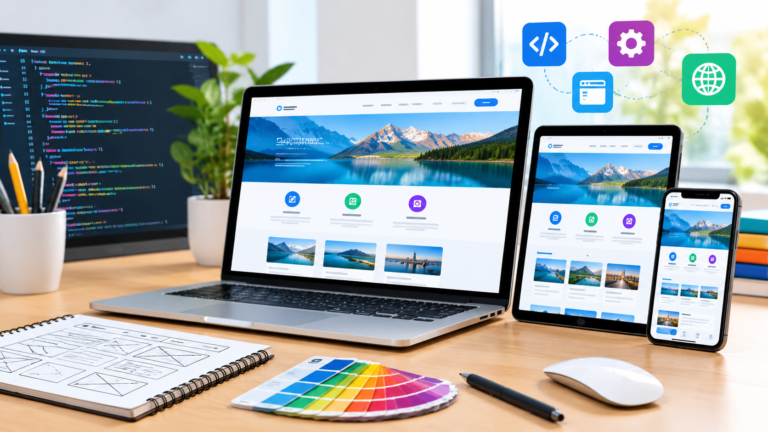

Discover how Website Design and Development can revolutionize your business in today’s competitive digital landscape. Learn strategies, technologies, and creative insights that drive performance and build credibility online.
Introduction
In today’s ever-evolving digital world, your website serves as the cornerstone of your brand identity. A well-structured, visually stunning, and technically sound website can make the difference between success and obscurity. Businesses that invest in professional website design and development gain a significant edge by capturing attention, engaging visitors, and converting them into loyal customers. At Appledew UK, we understand that a website is not just an online address — it’s the digital heartbeat of your brand. From captivating design to seamless performance, our goal is to help businesses stand out with websites that reflect their vision, values, and goals.
This comprehensive guide explores the art and science behind website design and development, diving deep into every aspect that defines modern web experiences. Whether you’re a small business owner, an entrepreneur, or part of a larger corporation, understanding these principles will empower you to make strategic decisions that enhance your online success.
The Evolution of Website Design and Development
The journey of website design and development has come a long way since the early days of static HTML pages. What began as basic layouts with minimal graphics has evolved into complex, dynamic, and responsive systems that deliver interactive and personalized experiences. In the early 1990s, web pages were little more than text and hyperlinks. Fast forward to today, and we have advanced frameworks, multimedia integration, and interactive features that make websites more engaging than ever before.
This evolution reflects the growing expectations of online audiences. As internet speeds increased and devices diversified, users demanded visually appealing, fast-loading, and user-friendly sites. Designers and developers had to adapt quickly, incorporating aesthetics with functionality. The shift from desktop-only layouts to responsive design marked a turning point, ensuring that websites looked flawless on smartphones, tablets, and desktops alike.
Today’s design trends emphasize minimalism, accessibility, and immersive storytelling. Websites are no longer mere information hubs; they are digital experiences. Developers employ languages like HTML5, CSS3, and JavaScript frameworks to build dynamic interfaces, while designers use creative tools and principles to communicate brand identity effectively. Together, design and development work in harmony to craft experiences that are both beautiful and functional, setting the stage for digital success.
Understanding the Core Elements of Web Design
At the heart of every successful website lies a well-thought-out design. Web design is not only about aesthetics; it’s about how users feel and interact with your platform. A great design captures attention instantly, communicates your message clearly, and makes navigation effortless.
 One of the core elements is layout structure. The layout defines how information is organized and presented. Designers follow grids and frameworks to maintain balance and consistency across the site. Typography is another vital component; the right fonts enhance readability and convey personality. Color schemes influence emotion and perception — warm tones evoke energy, while cool tones express professionalism.
Imagery and multimedia elements breathe life into your content. High-quality visuals, videos, and animations can captivate users and strengthen your brand image. However, these elements must be optimized for performance to avoid slowing down the site. White space, also known as negative space, ensures visual clarity and prevents clutter.
Lastly, accessibility is key. Modern web design must be inclusive, allowing users of all abilities to navigate seamlessly. Alt text for images, clear contrast ratios, and keyboard navigation options are essential. A truly successful design harmonizes creativity, functionality, and usability — transforming visitors into customers and advocates.
The Development Backbone: Bringing Designs to Life
Design may attract the eye, but development powers the experience. It’s the backbone that brings static visuals to life, transforming concepts into fully functioning digital environments. Front-end and back-end development form the core of this process, each serving distinct but complementary roles.
Front-end development focuses on what users see and interact with — the buttons, forms, animations, and layouts. It involves HTML, CSS, and JavaScript to create responsive interfaces. Back-end development, on the other hand, manages what happens behind the scenes — databases, servers, and applications that handle user requests, process data, and deliver content efficiently.
Developers must ensure smooth integration between these two ends, maintaining website speed, security, and scalability. Frameworks like React, Angular, and Vue have revolutionized front-end performance, while tools like Node.js, Laravel, and Django enhance back-end capabilities.
A successful development process is like an orchestra — every element must work in perfect harmony. When executed well, it creates a seamless digital experience that’s intuitive, reliable, and high-performing.
Responsive Web Design: Adapting to Every Device
In an age where users access the internet on multiple devices, responsive web design is non-negotiable. It ensures that websites automatically adjust their layout and content to fit different screen sizes — from wide desktops to compact smartphones.
Without responsiveness, businesses risk losing potential customers who encounter poor navigation or distorted visuals. Google also favors mobile-friendly sites in its ranking algorithm, meaning responsiveness directly impacts SEO performance.
The key to achieving responsiveness lies in flexible grids, scalable images, and CSS media queries. Developers test across various devices to ensure consistency and usability. A responsive site not only improves accessibility but also enhances engagement and retention.
Users appreciate when a website feels natural on their device, without zooming or side-scrolling. Ultimately, responsive design builds trust, showing that a brand values user experience on every platform.
User Experience (UX) Design: The Heart of Every Successful Website
At the core of every high-performing website lies User Experience (UX) design, the art of crafting interfaces that are intuitive, engaging, and emotionally satisfying. UX design is not about decoration; it’s about connection. When users visit a site, their journey from entry to conversion must feel effortless. Every scroll, click, and interaction should align with their goals while subtly guiding them toward your desired action.
An exceptional UX design begins with deep user understanding. Designers research user behavior, preferences, and expectations through surveys, analytics, and usability testing. They then map out user journeys — visual representations of how people navigate from page to page. By anticipating user needs and removing friction points, UX designers ensure a smooth, enjoyable digital experience.
Navigation plays a vital role. A cluttered or confusing menu can frustrate visitors, leading them to abandon the site prematurely. Simplified navigation, clear calls-to-action, and strategically placed content create a natural flow. Moreover, micro-interactions — such as hover effects, progress bars, or subtle animations — add delight and keep users engaged.
Accessibility is also integral to UX design. A truly user-friendly website accommodates individuals with disabilities through features like screen-reader compatibility, descriptive alt text, and keyboard-friendly structures. These inclusions not only expand your audience but also demonstrate your brand’s empathy and inclusivity.
Ultimately, great UX design bridges human psychology and digital functionality. It transforms a simple visit into a meaningful experience that fosters trust and loyalty. In an online world flooded with options, an intuitive and engaging UX can make your website stand out as both functional and emotionally resonant.
The Importance of UI (User Interface) Design
While UX focuses on the overall experience, User Interface (UI) design concentrates on the visual and interactive elements users directly engage with. It’s about the look, feel, and style that make a website aesthetically appealing and easy to use. Effective UI design ensures that every visual component — buttons, icons, menus, and images — is strategically placed and visually consistent.
The beauty of UI design lies in its ability to communicate brand identity instantly. A well-designed interface reflects the tone, professionalism, and values of the company. For instance, a luxury brand might use sleek typography and minimal layouts, while a creative agency might embrace vibrant colors and dynamic visuals. These choices evoke emotion and shape user perception before a single word is read.
Clarity and consistency are essential in UI design. When users know what to expect from colors, buttons, and layout patterns, they navigate confidently. Consistent spacing, font hierarchy, and contrast guide the eye naturally and prevent cognitive overload. Designers often follow UI frameworks like Material Design or Apple’s Human Interface Guidelines to maintain this balance.
Interactivity also defines UI design. Smooth transitions, subtle hover effects, and responsive buttons make users feel connected to the site. Every animation must serve a purpose — to enhance usability, not distract.
In today’s competitive landscape, businesses that invest in refined UI design are more likely to capture and retain audience attention. When aesthetics meet usability, visitors perceive the brand as credible, modern, and trustworthy. A harmonious blend of UX and UI creates a digital experience that feels effortless, beautiful, and unforgettable.
The Role of Content in Website Design and Development
Content is the soul of every website. Without meaningful content, even the most visually appealing design loses its impact. In the world of website design and development, content is not just text; it’s a strategic tool for communication, engagement, and conversion. Whether through words, visuals, or videos, the goal is to tell a compelling story that resonates with your audience.
Every great website begins with a clear content strategy. Designers and content creators collaborate to structure information hierarchically — ensuring users can easily find what they’re looking for. Headlines must be concise yet powerful, while paragraphs should maintain clarity and relevance. Tone consistency is crucial; your voice should mirror your brand identity, whether professional, friendly, or innovative.
Moreover, SEO (Search Engine Optimization) must align with content creation. Integrating relevant keywords like website design and development naturally within your text helps search engines understand your page’s purpose, improving its ranking potential. However, keyword stuffing is counterproductive. The best content is authentic, helpful, and written for people first, algorithms second.
Visual content plays a parallel role. Infographics, images, and videos capture attention and improve retention. They simplify complex ideas, making your message more digestible. Equally important is content freshness — regularly updating blogs, case studies, and testimonials signals to both users and search engines that your brand is active and evolving.
Ultimately, content fuels connection. It educates, inspires, and persuades, turning casual visitors into loyal clients. A website’s design may attract attention, but its content keeps users coming back — proving that the synergy between design, development, and storytelling is the true formula for success.
Website Performance Optimization
No matter how beautiful or well-designed a website is, it must also perform efficiently. Website performance optimization ensures that pages load quickly, operate smoothly, and deliver a seamless user experience. In a world where attention spans are shrinking, even a two-second delay can result in lost visitors and lower conversions.
Optimization starts with speed. Images should be compressed, scripts minimized, and caching enabled to reduce load times. Developers leverage tools like Google PageSpeed Insights or GTmetrix to measure performance metrics and identify bottlenecks. Lazy loading — where images only load as users scroll — is another technique that enhances perceived speed without compromising quality.
Server performance plays an equally vital role. Hosting providers, CDN (Content Delivery Networks), and optimized databases ensure stability even during traffic spikes. Back-end developers must also write clean, efficient code to avoid unnecessary bloat that can slow performance.
Moreover, website speed directly affects SEO rankings. Search engines prioritize faster websites, rewarding them with better visibility. A slow site, on the other hand, signals inefficiency and negatively impacts user trust.
Optimization is an ongoing process. As websites grow, new features and content can affect performance. Regular testing, updates, and maintenance are necessary to sustain speed and reliability.
A well-optimized website isn’t just about numbers — it’s about experience. Users should be able to explore your content effortlessly, without waiting or encountering lag. When performance and design align, your site delivers a flawless journey that reflects professionalism and care.
The Power of SEO in Website Development
SEO, or Search Engine Optimization, is the digital engine that drives organic traffic to your website. Without it, even the most visually stunning site remains invisible to potential visitors. Integrating SEO into the website development process ensures your website not only looks great but also performs well in search engine rankings.
 On-page SEO focuses on optimizing content and structure. Developers and marketers collaborate to implement meta titles, descriptions, heading hierarchies, and keyword integration. Clean code and semantic HTML help search engines crawl and index pages effectively. Meanwhile, off-page SEO, like backlinks and social signals, builds credibility and authority.
Technical SEO is equally crucial. Proper URL structure, XML sitemaps, SSL certificates, and mobile responsiveness all contribute to search visibility. Developers also ensure fast loading times and structured data markup, which enhance rich results in search engines.
The synergy between SEO and web development is powerful. Every design element, from image names to internal links, influences search rankings. Even accessibility features like alt text benefit SEO.
Businesses that incorporate SEO during the development phase gain long-term benefits. Instead of retrofitting optimization later, they start strong with a foundation built for visibility. Over time, this approach drives sustained organic traffic, higher engagement, and stronger conversions.
In today’s competitive landscape, SEO isn’t optional — it’s essential. When paired with professional design and technical excellence, it ensures your website reaches its full potential as a digital growth engine.
The Importance of Security in Website Development
In an era of data breaches and cyber threats, website security has become a fundamental aspect of modern web development. No matter how attractive or functional your site may be, it’s only as strong as its weakest security link. Protecting both your business data and your users’ information builds trust, compliance, and long-term credibility.
The first step in securing a website is SSL encryption. An HTTPS connection not only safeguards data transmission but also improves SEO rankings, as search engines favor secure sites. Firewalls and malware scanners prevent unauthorized access, while regular updates ensure vulnerabilities are patched promptly.
User authentication and password management systems must be robust. Implementing two-factor authentication (2FA) adds an additional layer of defense. Developers also use secure coding practices to prevent common exploits like SQL injection or cross-site scripting (XSS).
Backups are equally important. Automated and offsite backups guarantee that your website can recover quickly from unexpected failures or attacks. Security monitoring tools continuously scan for suspicious activity, alerting administrators before issues escalate.
Beyond technology, trust is a key component. Displaying security badges and privacy policies reassures users that their information is handled responsibly. Businesses that prioritize security not only protect themselves but also strengthen their reputation.
In summary, security is not an afterthought — it’s a foundation. A well-secured website reflects professionalism, reliability, and respect for user privacy. It’s a silent promise that your digital presence is both safe and resilient.
Choosing the Right CMS Platform for Your Website
Selecting the right Content Management System (CMS) is one of the most crucial decisions in website design and development. A CMS empowers website owners to manage, update, and publish content without requiring deep technical expertise. With a variety of options available today, from WordPress and Joomla to Shopify and Webflow, the choice depends on your specific business needs, goals, and technical comfort level.
WordPress, the most popular CMS globally, offers flexibility and scalability for businesses of all sizes. It supports countless plugins, making it ideal for customization and SEO optimization. Shopify, on the other hand, is perfect for e-commerce platforms, offering seamless product management and secure transactions. For those who prefer visual design freedom, Webflow provides advanced design tools with clean, exportable code, bridging the gap between design and development.
A CMS not only simplifies content management but also accelerates the development process. Developers can integrate advanced functionalities through extensions or APIs, while designers can maintain brand consistency without hardcoding every change. Moreover, CMS systems support collaboration — allowing teams to edit, review, and publish simultaneously.
Security, performance, and scalability must also guide your choice. Regular updates, strong community support, and backup solutions ensure your site remains stable and secure over time.
Ultimately, the best CMS aligns with your long-term digital strategy. Whether you’re running a small blog or a complex enterprise website, your CMS should adapt as your brand grows. By choosing wisely, you lay the foundation for a manageable, secure, and future-ready digital presence.
Integrating E-commerce Functionality
In today’s fast-paced digital marketplace, integrating e-commerce functionality into your website can dramatically expand your business reach and revenue. Modern web development has made online selling more efficient, secure, and customizable than ever before. Whether you’re launching a new online store or adding e-commerce to an existing website, seamless integration is key to success.
An e-commerce-enabled website requires several core components: product catalog management, secure payment gateways, inventory tracking, and customer accounts. Developers often rely on platforms like WooCommerce, Shopify, or Magento, which provide the flexibility to manage all these functions within a single system. The design must also prioritize clarity and convenience — ensuring that customers can easily browse products, add them to their cart, and complete their purchase without confusion.
User trust plays a major role in conversion rates. SSL certificates, visible security icons, and transparent return policies reassure buyers that their data and transactions are protected. Developers must also optimize performance to prevent cart abandonment caused by slow loading times.
Additionally, mobile commerce is rapidly dominating online sales. A responsive, mobile-optimized checkout experience ensures you don’t lose customers on smaller screens. Integrating multiple payment options such as PayPal, credit cards, and digital wallets enhances accessibility and convenience.
E-commerce functionality doesn’t end with transactions. Order tracking, personalized recommendations, and automated email confirmations build lasting relationships with customers. As technology advances, artificial intelligence and analytics tools now allow businesses to predict customer behavior and offer personalized experiences.
By merging functionality with design, businesses create an engaging digital store that not only sells but builds trust and loyalty — a true hallmark of exceptional website design and development.
The Importance of Website Maintenance and Updates
Building a website is only the beginning. Continuous maintenance and updates are vital to ensure your website remains secure, efficient, and aligned with evolving digital standards. Many businesses overlook this phase, but neglecting maintenance can lead to broken links, outdated plugins, poor performance, and even security vulnerabilities.
A well-maintained website operates smoothly, offering users an uninterrupted experience. Developers must regularly update software, themes, and plugins to prevent compatibility issues and patch potential threats. Content updates are equally important — fresh blogs, case studies, and product information show visitors that your business is active and relevant.
Backups are an essential part of maintenance. Regular automated backups guarantee data recovery in case of crashes, cyberattacks, or human error. Moreover, performance audits should be conducted frequently to analyze loading times, usability, and mobile responsiveness.
From a technical perspective, maintenance includes monitoring uptime, fixing broken links, and updating SSL certificates. For SEO, regular content and metadata updates help sustain or improve search rankings. Ignoring maintenance can cause search engines to lower visibility due to outdated or inaccessible content.
Think of website maintenance as digital hygiene — it’s ongoing, necessary, and beneficial. It’s not just about avoiding issues but enhancing the overall digital experience. By proactively managing updates, your website remains modern, secure, and competitive — ensuring long-term success in the digital ecosystem.
Visual Branding and Design Consistency
A strong visual identity is essential in website design and development, as it communicates your brand’s story before a single word is read. Visual branding involves consistent use of colors, typography, imagery, and design elements that together form a cohesive and recognizable look. When users visit your website, they should instantly sense your brand’s personality and values through its visuals.
Color psychology plays a key role in design consistency. Colors evoke emotions — blue suggests trust and professionalism, while orange radiates energy and creativity. Designers choose a palette that aligns with brand objectives and ensure its consistent application across all pages. Typography also reinforces identity. The right font combination adds personality and improves readability, whether you’re using modern sans-serifs for tech brands or elegant serifs for luxury services.
Imagery should be authentic and aligned with your messaging. High-quality visuals convey credibility and professionalism. Consistency in layout and spacing ensures users don’t feel disoriented when moving between pages. Repetition of design elements such as icons, shapes, and buttons strengthens recognition.
Beyond aesthetics, visual branding builds trust and memorability. Visitors who experience consistency across your website, social media, and marketing materials are more likely to perceive your brand as reliable and cohesive.
In short, visual branding transforms design into identity. A well-designed website doesn’t just display information — it embodies your brand. By maintaining visual harmony, your digital presence becomes an extension of your values, instantly recognizable in an increasingly crowded online space.
The Role of Analytics in Web Development
In the digital age, data is the compass that guides smart decisions. Website analytics provide invaluable insights into how visitors interact with your site, what engages them, and where improvements are needed. Without analytics, businesses operate blindly, unable to measure the effectiveness of their design, content, or marketing strategies.
Tools like Google Analytics, Hotjar, and Matomo enable developers and marketers to track metrics such as traffic sources, bounce rates, page views, and conversion rates. These numbers reveal user behavior patterns that shape future updates and redesigns. For instance, high bounce rates on specific pages may indicate slow performance or confusing navigation, while increased engagement on blog posts signals effective content strategy.
Analytics also play a critical role in SEO and digital marketing. By tracking keyword performance and visitor demographics, businesses can refine their targeting efforts. Event tracking — such as button clicks, downloads, or form submissions — helps measure the success of specific CTAs (calls-to-action).
Developers integrate analytics scripts during the website development stage to ensure data collection starts from day one. Regularly reviewing these insights helps improve user experience, optimize load times, and adjust content structure for better engagement.
Data-driven development transforms intuition into strategy. Every decision — from design changes to marketing campaigns — becomes measurable and purposeful. With analytics, websites evolve intelligently, continuously improving based on real-world performance rather than guesswork.
By leveraging analytics effectively, businesses gain the power to refine their online presence, maximize ROI, and maintain a competitive edge in the ever-changing digital marketplace.
Emerging Web Technologies Shaping the Future
The world of website design and development is constantly evolving, driven by technological innovation and user expectations. Emerging web technologies are reshaping how developers and designers create, optimize, and deliver digital experiences. Staying updated with these technologies is crucial for businesses seeking to remain competitive and relevant in an ever-changing digital environment.
One of the most transformative advancements is Artificial Intelligence (AI) and Machine Learning (ML). These technologies enable websites to adapt to user behavior, personalize experiences, and automate content recommendations. Chatbots, powered by AI, enhance customer support by providing real-time responses and assistance, creating a more interactive user experience.
Progressive Web Apps (PWAs) have also revolutionized how websites function. PWAs combine the best of web and mobile applications, offering offline access, push notifications, and faster load speeds. They deliver app-like experiences without requiring users to download anything, improving engagement and retention.
Voice Search Optimization is another growing trend. As smart devices like Alexa and Google Assistant gain popularity, optimizing websites for voice queries ensures they remain accessible and discoverable through natural speech patterns.
Developers are also embracing WebAssembly, which allows high-performance applications to run directly in browsers, bridging the gap between web and desktop software. Meanwhile, blockchain technology is being used to enhance security, data transparency, and transaction reliability.
These innovations signify that the future of web development is not just about functionality but intelligence and adaptability. Businesses that embrace these technologies early position themselves as leaders in the digital space, offering smarter, faster, and more engaging online experiences that align with modern consumer expectations.
Sustainable Web Design: Building for a Greener Digital Future
As the digital world expands, the environmental impact of the internet is becoming impossible to ignore. Every website consumes energy — from servers powering data centers to devices accessing content. Sustainable web design aims to minimize this footprint by creating energy-efficient websites that are both fast and environmentally conscious.
The foundation of sustainable design lies in optimization. Lightweight websites that load quickly require fewer server requests and less power. Techniques such as image compression, efficient coding, and reduced JavaScript usage all contribute to lower energy consumption. Developers also use green hosting providers that rely on renewable energy sources, helping to offset carbon emissions.
 Designers play an equally vital role by prioritizing simplicity and usability. Clean layouts, minimal animations, and optimized color palettes reduce both visual and computational load. Fast-loading websites not only benefit the environment but also improve user experience, boosting engagement and SEO performance.
Sustainability also extends to content management. Reducing unnecessary media, archiving outdated files, and maintaining efficient databases ensure long-term performance and reduced digital waste. Educating clients about eco-friendly practices, such as using compressed images or limiting auto-play videos, fosters a more sustainable digital ecosystem.
In essence, sustainable website design and development reflects a brand’s responsibility toward the planet. It proves that innovation and environmental awareness can coexist harmoniously. As businesses and designers embrace green digital practices, the web becomes not only a space for connection but also a platform for collective responsibility and positive change.
The Future of Website Design and Development
The future of website design and development promises innovation beyond imagination. The next generation of websites will be smarter, faster, and more immersive than ever before, blending creativity with cutting-edge technology. With the rapid pace of digital evolution, what we see today is merely the foundation for what’s to come.
Artificial Intelligence will continue to redefine user interaction. Automated design systems will generate personalized layouts based on user preferences, while AI-driven analytics will refine site performance in real time. Augmented Reality (AR) and Virtual Reality (VR) experiences are becoming integral, allowing users to interact with products and environments virtually before making decisions.
Meanwhile, 5G technology will make websites significantly faster and more data-intensive. This will enable richer multimedia, instant streaming, and advanced interactivity without performance trade-offs. Headless CMS solutions are also on the rise, separating the front-end and back-end for greater flexibility and faster content delivery.
Web accessibility will become even more standardized, ensuring inclusivity for all users, regardless of their abilities or devices. Moreover, cybersecurity innovations will strengthen website protection against evolving threats.
Design trends will shift toward minimalism, personalization, and emotional storytelling, where websites connect deeply with users through authenticity rather than visual overload.
Ultimately, the future of website design and development revolves around adaptation and intelligence. Businesses that embrace new technologies, prioritize user experience, and maintain authenticity will continue to thrive in the digital landscape — creating experiences that are not only functional but truly transformative.
Conclusion
In the ever-expanding digital ecosystem, website design and development stand as the backbone of every brand’s online identity. From conceptualization to execution, every element — design, development, content, and performance — contributes to creating a meaningful digital presence. A well-crafted website is not merely a collection of pages; it’s a living reflection of your business vision, values, and purpose.
Throughout this guide, we’ve explored the evolution, components, and strategies that shape successful websites in today’s competitive world. The harmony of creativity and technology defines modern web design, while performance optimization, user experience, and security ensure lasting impact. Emerging technologies continue to push the boundaries, offering limitless opportunities for innovation and personalization.
At Appledew UK, we believe that every brand deserves a digital platform that not only looks exceptional but performs flawlessly. Our mission is to design and develop websites that inspire trust, enhance visibility, and drive real results. Whether you’re launching a new business or redefining your online presence, investing in professional website design and development is the first step toward sustainable growth and digital excellence.
Your website is the face of your brand in the digital world — let it speak with clarity, creativity, and confidence. The future belongs to those who build not just websites, but experiences that resonate, engage, and endure.
AI Implementation Prompt for Blog Post:
Title: Transforming Digital Presence: The Ultimate Guide to Website Design and Development for Modern Businesses
Instructions for AI:
You are tasked with implementing and expanding on the blog post content titled “Transforming Digital Presence: The Ultimate Guide to Website Design and Development for Modern Businesses.” Follow these steps carefully:
- Content Structuring:
- Break down the blog post into sections and sub-sections exactly as outlined in the original article.
- Convert each heading into actionable items for website design and development projects.
- Ensure clarity, logical flow, and readability for users and search engines.
- SEO and Keyword Optimization:
- Identify and naturally integrate relevant keywords for website design, development, UX, UI, CMS, e-commerce, SEO, and sustainable web design.
- Use semantic keywords, meta titles, meta descriptions, headings (H1-H3), and alt text for any images.
- Follow Google’s Search Quality Evaluator Guidelines to maintain high content quality and trustworthiness (E-A-T: Expertise, Authoritativeness, Trustworthiness).
- Practical Implementation Guidelines:
- For each section (e.g., UX Design, Responsive Web Design, CMS Selection), provide concrete steps, best practices, tools, and technologies that a business can implement today.
- Include examples, case studies, or illustrative scenarios wherever possible.
- Highlight emerging technologies (AI, PWA, WebAssembly, AR/VR) and sustainable practices, showing practical applications.
- Content Enhancement:
- Add actionable bullet points, checklists, or step-by-step instructions to help businesses implement recommendations.
- Include performance, speed, and security tips aligned with modern development practices.
- Suggest metrics to track success, such as website speed, bounce rates, conversion rates, and engagement analytics.
- Visual and Interactive Suggestions:
- Recommend types of visuals, infographics, UI/UX layouts, and interactive elements that align with the blog’s sections.
- Suggest ideas for multimedia integration (videos, animations) to increase engagement.
- Readability and Engagement:
- Ensure content is conversational but professional.
- Maintain clarity for readers of all technical levels (from small business owners to developers).
- Add headings, subheadings, and short paragraphs for easy scanning.
- Final Output:
- Produce a fully expanded guide with actionable strategies and AI-driven suggestions ready for publication or internal implementation.
- Highlight sections where AI tools can automate tasks like content generation, UX testing, SEO analysis, and performance monitoring.
Call to Action (Optional):
- At the end, encourage readers to take next steps such as requesting website audits, consulting for development, or using AI tools to implement recommendations.